The Keys to the Kingdom

Happiness isn’t a verb; it’s a state of mind.

Remember that famous line Dorothy was told to repeat in The Wizard of Oz?:

There’s no place like home.

Dorothy wasn’t hankering for Kansas. She missed home: Auntie Em and Uncle Henry. She hungered for the love and ease that home represented.

Finding Our Way Home

When we are tired or angry, it’s hard to find our way home. The road can get bumpy and long. It’s easy to lose our way.

Home is a kingdom that resides in our heart.

It’s easy to find our home when we are well-rested and fed. When the road is smooth and predictable, home a key just waiting for you to unlock and open the door.

The challenge arrives when we are starving, confused, distraught, depressed or brimming with anger. Then, home feels like a mirage in an emotional desert.

Fortunately, there are four keys that will open the door to the Kingdom inside all of us.

Key #1: Acknowledge What Is

Whether it’s a flat tire or the death of a loved one, you are suddenly faced with bad news. Observe the news. Watch it. Don’t hide behind busy-ness or booze. Allow yourself to fully note what is right in front of you.

The pain of acknowledging what is now prevents the pain from festering later.

Unaddressed pain or problems only grow, making the road to Home that much longer.

Key #2: Accept What Is

Your cat has cancer or you just got fired. Whatever the problem or source of pain, you’ve already acknowledged what’s occurred. Now it’s time to accept it.

Accepting something painful means allowing ourselves to feel whatever emotions come up and through us.

Like acknowledging the negative situation, when we allow the less-than-pleasant emotions to go through us, we are that much closer to Home.

Acceptance over something negative or unwanted, acceptance over the myriad of unpleasant emotions we experience breeds self-compassion — a signpost on the road to Home that you are getting closer.

Key #3: Angle the Headlights Home

If you’re driving on a dirt road at night, you’ll need headlights on to help you find your way home.

Do you focus your headlights on the side of the road? Of course not. You do that, and you’ll likely get into an accident. It’ll be a long time before you make your way home then!

Appreciation is the headlight Home.

Whatever we focus on grows. Ever notice if you feel a little “off” or under-the-weather, if you head into work or get busy doing something you enjoy, you start to feel better? Why is that?

We are spirits having a physical experience, so what we focus our energy on manifests an outcome.

There is a momentum of energy that builds upon itself when we focus on appreciation. Well, the same is true for focusing on the negative, but why would we want to do that?

Right now, think of three things you could appreciate right now. Here’s my three:

  • My children’s health.
  • My ability to type the words you are reading.
  • My ability to hear the sound of a fan whirring softly above me

Already, my mind is lit up like those headlights on a dirt road at night. I’m literally lit up with other things I feel appreciation for.

How do you feel now?

Appreciation fosters only more appreciation.

Appreciation brings us Home.

Key #4: The Spiritual Chiropractor

I see a chiropractor once a month for maintenance. But there was a time when it wasn’t just keeping my spine aligned. Like my life, my spine was all over the place.

The physical is often a manifestation of what is occurring emotionally.

The body keeps score. It’s difficult to open the key to our inner Home if we are in need of some spiritual WD-4.

We creatures of flesh and blood often forget that we are spiritual beings experiencing this temporary physical dimension. 

But the body often “acts up” as whispers to remind us that we have traveled down the wrong path.

So what is the “spiritual chiropractor?” that can bring us Home even faster? 

Alignment. Alignment with your Highest Self. Alignment is:

  • that inner voice that tells you not to get in the elevator alone with a stranger that makes you feel uneasy. 
  • that inner knowing that the manuscript you are working on is meant to be written. 
  • trusting you are right where you need to be, however it looks to the outside world
  • going within for clarity

A Different Kind of Road Trip

This is not AAA. There is no fee for your Triptik to the Kingdom. All travelers are welcome to choose this road.

  • Acknowledgment
  • Acceptance
  • Appreciation
  • Alignment

The road Home that Dorothy hungered for did not require her clicking those shiny red shoes.

The road Home arrives when you understand the Keys to the Kingdom are always in you.
Walking on Eggshells?

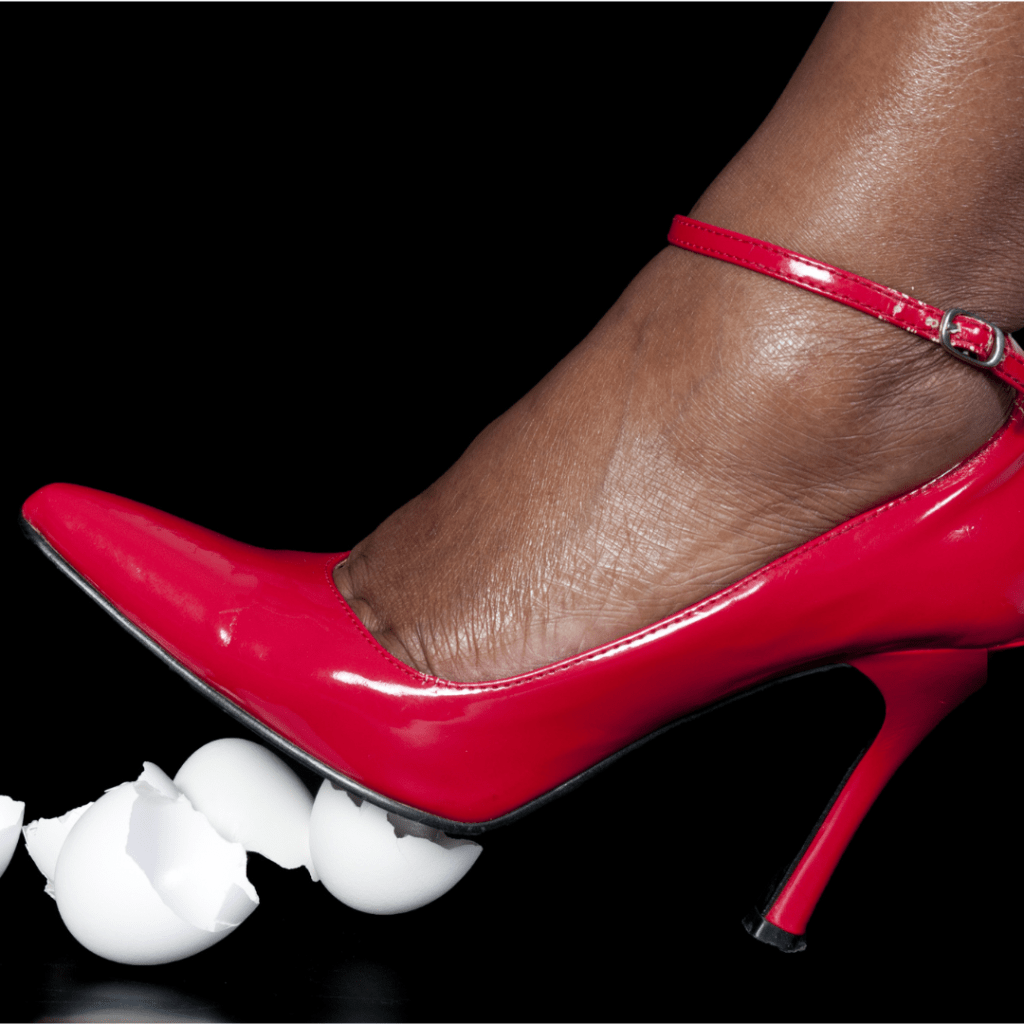
When we tiptoe around someone to please them, we hurt ourselves much more in the process.

Intimidations. Threats. Manipulating facts. These are some of the tactics an abuser uses to maintain their control.

I know because I’m on the receiving end of it right now. Have been for over 7 years. It’s only getting worse.

Abusers are often the Sirens found in mythology: they woo their victims until they don’t know what hit them.

I think of a victim of abuse as a lobster in a pot, the heat slowly getting turned up, until they are boiled alive.

If you recognize the pattern I’m about to share with you, I strongly advise you to do whatever you can to get out of that simmering pot.

The Early Years

The love-bombing commences. The romance. The remembering of small details, the overflowing with thoughtfulness. The feeling that you are starring in your own Hallmark movie.

You’ve just entered the pot. The water is warm. It feels so damn good.

Sure, every once in a while the abuser will say something that gives you pause. But you are so in love with this person by now, you rationalize the pause away. You make excuses for some minor controlling behaviors.

The Middle Years

Welcome to life inside the pot that is now starting to feel very steamy.

Still, your Abuser is so good to you. Well, except when they’re not.

As the water starts to simmer, you find yourself feeling a little uncomfortable.

Because you’ve been in the relationship for a fair amount of time at this point, you’ve lost your way. Up is down and down is up.

Being in an abusive relationship is living like Alice down the rabbit hole. Nothing makes sense.

What’s worse, you don’t trust yourself any more. You’ve lost your inner compass, your sense of what’s wrong and right.

Besides, it’s not that hot in the pot. There are even days when it still feels good. So long as you don’t upset the Abuser who put you in the pot in the first place.

Abusers and Eggshells

Eggshells are delicate and can easily break. Abusers are the eggshells. Once we are past the love-bombing phase, it becomes the victim’s unspoken job to ensure they don’t hurt their “delicate” partner.

Well-worn phrases by Abusers are steeped in manipulation and guilt:

  • If you hadn’t done __________, I wouldn’t be in such a bad mood.
  • You are so naive. There’s no way you can do/handle ____________.
  • I treat you like a child because you act like one.

You may be told what clothing you can and cannot wear. What foods you can and cannot eat. You may have a curfew, even though you are an adult.

Again, guilt is a weapon to keep the victim in place:

“I only do this because I care about you, and it’s my job to protect you.”

Freedom’s Price

When I finally realized I was a lobster boiling in that pot, I did everything I could to get out of the relationship.

Abusers don’t like to lose. Especially ones without the capacity for self-reflection.

It’s years since I left my abuser. Years since I had to walk on eggshells in his presence.

Unfortunately, the attacks are still coming. When you have deep pockets and are an abuser, there are creative ways to continue bullying someone.

The price of freedom doesn’t guarantee the end of attacks.

But it sure beats losing your life to a boiling pot.

Freedom Over Eggshells

Looking back, I don’t recognize the woman I was with the Abuser. She was constantly walking on eggshells to please the Abuser.

Walking on Eggshells:

  • never satisfies the abuser
  • only hurts the victim of abuse more

Better to walk on those damn eggshells and be true to yourself.

When you realize that the abuser WANTS their victim to be fearful, guilt-ridden, on-edge, and gaslit, you start to wake up your inner compass.

So crack some eggs, walk with your head held high, embrace your beautiful self.

No, we can’t control what an abuser will do, but we are now free to live life on our terms.

Looking for Sweet Revenge?

Playing dead is the sweetest step in the sweetest revenge.

Maybe someone betrayed you. Manipulated you. Lied. Cheated. Insulted.

Whatever the flavor, someone hurt you and now there’s a surging flood of anger in your veins. You. Want. Revenge.

The “R” Word

When we fill wronged by someone, we want justice. We want them to feel what they made you feel. We want them to pay for their mistreatment and misdeeds.

But when we hunger for revenge, do we really know what we are asking for?

The word revenge comes with that nifty little prefix at the front: RE

re: back or again

Then there’s that solid root word in revenge: VENGE— a Latin word:

venge: protect, avenge, punish

Did You Hear Yourself?

Do you know what you are asking for with revenge? (GIPHY)

So, when you ask the Universe for revenge, you are essentially asking to experience punishment or a sense of vengeance again.

Think of revenge as a wound you keep picking: it’s only going to grow more irritated and bloody with time.

Now what about this idea of venge meaning protection? Are you really protecting yourself when you are punishing someone else? The fact that you are doing so “again” sounds downright exhausting.

The Cat and Mouse Game

I get it: you’re hurt. Angry. Hungry for justice. But we’ve already established that revenge — the idea of punishing someone else — will only inflict more pain back onto you.

Revenge is a cat and mouse game. You are the mouse. When you seek vengeance, you are only making the cat claw at you more.

The only way to end the cat and mouse game: to play dead. To surrender to the injustice, cruelty, mistreatment, and any other terrible behavior of the someone who has hurt you.

When we surrender to the what is of someone’s awful behavior, we are no longer dependent on them for peace.

Make no mistake: abuse of any kind is unacceptable. I am not saying: Allow this person who hurt you to keep hurting you. On the contrary, I’m saying:

Live your life. Focus on things and people that bring you genuine pleasure and happiness.

The cat only has power if you allow it to. Each time you get into the ring with the cat, the game will only continue.

Get out of the ring. Play dead.

Then you can enjoy your life. And what a beautiful life it is. The sweetest revenge is living your best life, filling it with appreciation for even the smallest of things: the sound of birds outside a window, the air you fill your lungs with.

When we let go of the need to justify our anger, life’s sweetness returns.

And when you feel angry, let it out to people you trust.

Don’t go seeking understanding from the source of your pain.

This life can be amazing and awful. It’s up to you how you choose to perceive it. How sweet is that?

—-

Under Attack?

The Friendship Diet

Discover the connection between food and relationships in my book: The Friendship Diet

Letting Our Kids Fail

And the invaluable gifts that arrive when we do

Sometimes, the best parenting involves letting go.

One of my kids is struggling. Struggling to make a decision. Afraid to make the wrong one.

The decision will effect the rest of his life. No one else’s. Not mine. Not his father’s. His life.

Fortunately, the decision is not life threatening.

“What do I do?” he asks me.

Finding Your Voice

We humans learn best through action. Sure, we can preach about what matters, the lessons we’ve learned from life, but ultimately, none of it sticks and penetrates the heart and mind like experiencing it (whatever “it” is) for ourselves.

We find our voice, our inner compass through trial and error.

My son wants me to tell him what to do, to take the stress over making a decision off of his shoulders.

But removing the burden of responsibility and choice from his psyche would thwart his growth in the long run.

The Gift of Biting Your Tongue

Do I have a strong opinion? Absolutely. And when he asks for this, I share it with him. But to advise him is to remove an opportunity for his self-awareness; to shove my opinion as fact upon him is to deprive him of self-discovery.

Much better for me to bite my tongue until I taste blood than navigate and discern the world for my teen.

So instead, I listen.

Cultivating Autonomy

My son struggled with the “what if” of his decision. I listened as he played out each scenario.

I listened.

By the time he was finished, he looked like a balloon that had lost all of its air.

“We can’t control the actions of others or life’s outcomes. We can only control our choices, moment by moment.”

Needless to say, he didn’t like my answer.

Yet, he did make a decision. From my vantage point, the decision is based in fear and steeped in a need for survival.

But it is not my place as a parent of a teenager to tell him what to do. Again, the decision he is making affects him alone and is not life threatening.

Regardless of his decision and my opinion of it, he has taken a closer step in his autonomy. 

There are already consequences of his choice out of fear. It is downright painful to watch. 

But when a toddler falls and cries, we kiss the boo-boo and remind them they can just “get back up.”

When there’s salt in my son’s wound, I comfort him, reminding him that he did the best he could based on what he thought at that time.

Humans are self-correcting creatures. When we allow our kids to self-correct, making adjustments based on new information, independence is fostered.

Cultivating Confidence

The consequences of my son’s decision is offering opportunities for him to make new decisions. Those decisions are continuing to be fear-based.

“I’m in survival mode,” he says.

Okay then. He’s doing what he thinks he has to do. I remind him there’s always another way. 

(Again: No one is in danger, nothing is life threatening and the consequences of his actions affect him alone.)

I can see the self-proclaimed “survival mode” in the tightness of his jaw, the rolling of his eyes if I even hint at broaching the subject. Translation: I know what I’m doing here.

There’s a confidence brimming inside of my son now. He knows he’s supported — simultaneously knowing I’m not in favor of his decision yet respect his choice.

Cultivating Trust

When we surrender to what we can’t control, (i.e. another’s decision), a bridge of trust is built:

  • The trust you foster for your child is returned to you.
  • The trust your child feels from you bolsters inner trust in themselves.

Caveats

I am not promoting trusting your teen to take illegal drugs until they “figure it out” nor am I suggesting a child decide on whether or not to treat a life-threatening condition.

Giving our children a chance to explore what works and doesn’t — while under our guidance — offers them the gift of self-awareness. 

Encouraging autonomy when the stakes are small, allowing them space to “fail” will offer first-hand experience in getting back up on their figurative (or literal) feet.

Behind the Curtain:

Life Backstage Tells a Different Story

The front row has nothing on the real drama backstage.

The other day I was venting to my sister about pressing financial matters.

“I guess I’ll just be working well into my 70’s.”

“You could be like those older ladies I see at Macy’s. They are at least that age and so adorable working there.”

My sister’s tone was genuine, making the delivery of her words sting that much more.

“Great idea! That’s always what I wanted to do late in life.” My voice dripped with sarcasm.

“I think it would be fun.” 

Now the gloves were off. Like a water hose finally unplugged, I unleashed my anger her way.

“Fun? How can you say that? Why the hell would I want to work at some meaningless job in retail out of necessity in my 70’s?!”

Behind the Curtain of Anger

My sister hadn’t done anything wrong. The anger I unfairly threw her way stemmed from a genuine fear of which her words had, inadvertently, fanned the flames.

Fear is the backstage entity often cloaked in anger. When we aren’t in alignment with ourselves, the slightest comment or action of another can be perceived as salt on a wound.

My sister had genuinely tried to comfort me. She, of course, could only do this from her own vantage point:

“I’d love to have a job like that someday. My career involves so much responsibility. I can’t imagine not working even after I retire, so doing something in retail part time would be fun.”

Wearing Someone Else’s Shoes Hurts

When we look for comfort from someone else, we need to remember that they:

  • only possess their own vantage point
  • are not responsible for the other person’s inner alignment

My sister can hear that I’m experiencing a fiscal crisis, but that is not the same as experiencing it. Likewise, I can hear my sister express her potential enjoyment at working in retail later in life, but I can’t make myself share this sentiment.

Asking someone to feel what you are feeling is like shoving your shoe onto someone else’s foot: it’s not going to fit and can be downright painful.

It’s important to know what you are asking for from that person in the first place. My sister was only sharing her thoughts on the idea of working in her 70’s.

 But I had never been clear about where I was standing: blazing, unfiltered fear.

Say Where You Are

I hadn’t acknowledged the intense fear and instead danced in front of the figurative curtain with haughty anger.

My attitude had been a defiant “Can you believe this bullshit?” but inside, behind the curtain, I was peeing in my pants.

How could we expect anyone to be there for us emotionally if we don’t tell them where we are emotionally?

Spend Time Backstage

After touring the backstage area of my psyche, I got real with the fear. 

When we spend time in the discomfort of fear, acknowledging its presence, and facing it head on, the fear itself dissipates. 

The fiscal situation is still there, but my spiritual awareness of the bigger picture has kicked in, and with it, I know that my health is the most invaluable gift there is and not worth sacrificing to the external (and temporary) reality.

Backstage is where fear likes to lurk; it is a stealthy entity, hiding behind anger. But when we face our fear head-on, peeling back the curtain to the what-ifs that plague our psyches, light pours in, leaving no room for fear to hide.

When Lightning Strikes

Sometimes it takes a strike of lightning to wake us up.

Last month, lightning struck Washington DC. Four people went under a tree for shelter. Only one survived.

Sole Survivor

Amber Escudero-Kontostathis is twenty-eight and the sole survivor of the Lafayette Square lightning strike. When the summer storm began, Amber and three others went for cover under a tree just north of the White House.

  • Six bolts of lightening struck down where the four were waiting out the storm. Six bolts of lightning within 30 seconds.
  • High school sweethearts, James Mueller (76) and Donna Mueller (75) died from the lightening under that tree.
  • Brooks Lambertson (29) died shortly after from injuries caused by the lightening.
  • Amber Escudero-Kontostathis went 10 minutes without oxygen to her brain and without a heartbeat at all.

Life After Lightening Strikes

Amber lives with the physical sensation of surviving a lightning strike on her body:

Her nerves are misfiring. Her foot will sometimes feel like it is bare in snow. On the worst days, she feels like there are “10,000 grains of salt moving through each pore” of her feet. Source: The New York Times

There is the spiritual component of survival for Anna who frequently awakens to a “feeling similar to a dream of falling, except the thing that jolts her is a glowing ball of light the size of a playground ball speeding toward her face.”

When Amber Escudero-Kontostathis, 28, drifts into a light sleep, she is frequently awakened by a feeling similar to a dream of falling, except the thing that jolts her is a glowing ball of light the size of a playground ball speeding toward her face.

And of course, Anna struggles with the mental anguish that comes from the miracle of surviving something that something that kills approximately 43 people a year.

Amber died on her birthday and was brought back — twice.

“I am not really comfortable being the one,[who survived]but it’s the hand I was dealt, and I am grateful for it, and I am going to make sure I do not let those three people down. I carry them with me in thought and in action every day.”-Amber Escudero-Kontostathis — NY TIMES

Amber’s Lesson for All of Us

Shortly after the August 4th deadly lightening strike, I was picking my son up from school. Thunder crackled and boomed around us as he got in the car, and bolts of lightening kept us company on the drive home.

We drove by a teenaged boy sitting with an umbrella. There were cars behind us. I couldn’t stop. He was sitting under a tree.

“That boy needs to get somewhere inside.” I said.

“Why? He’s protected from the tree,” my son said.

And there it was: a different kind of lightening, for sure. But striking (for me) all the same. I’d assumed my son knew that trees were a fantastic conductor of electricity. After all, he is in his second year of high school and taking rigorous STEM courses. Of course he would know that a tree was the worst place to go for shelter during a thunderstorm.

The Danger of Assumptions

Amber, James, Donna, and Brooks all assumed — like my son that heading under a tree during a thunderstorm brought protection.

It made me wonder: what other things do I assume my son knows?

My son now knows that heading under a tree during a lightening storm is the worst place to go. We talked about the roots of the tree offering a fast conductor for an electrical storm. 

Indoors are the safest places. Cars are safe as well. It’s the metal doors and roof that protect us — not the rubber tires.

The odds of getting struck by lightning in the U.S. in any year is 1 in 700,000. It’s far from common. And maybe that’s why my son made the same assumption Amber, James, Donna, and Brooks did. Maybe that’s why I assumed my son knew how to stay safe during a lightning storm.

Regardless, it makes me wonder: 

  • What other assumptions do I walk around with? 
  • What lessons do I want to impart to my son instead of assuming he already knows them?
  • What assumptions do I walk around with that need to be addressed?

A heartfelt prayer of peace to the August 4th victims of the Washington D.C. lightening strike — both here and on the Other Side.

A Tasty Writing Treat:

A delicious writing prompt for writers and teachers

Take a bite out of this writing challenge!

Writers know that good (fiction)writing involves basic ingredients:

  • an overall arc
  • main character
  • conflict
  • a theme

Hershey’s or Lindt

Just as with baking, we writers have our basic ingredients to make a story. After that, it’s all nuances and quality. Consider Hershey’s and Lindt chocolate: both are known for their cocoa-inspired taste, but the difference in quality is worlds apart. One only needs to look at their different marketing campaigns to notice the visual difference alone.

The Baking Mold

The talented children’s author, Laura Numeroff created her famous, If You Give a Mouse a Cookie picture book more than thirty years ago.

When we consider baking akin to writing, Numeroff’s If You Give a Mouse a Cookie book is a delectable mold to study the craft of storytelling. Here’s a brief sample of her simple genius:

If you give a mouse a cookie, he’s going to ask for a glass of milk.
When you give him the milk, he’ll probably ask you for a straw.
When he’s finished, he’ll ask for a napkin.

The End is the Beginning

Numeroff’s story ends the way it begins:

He’ll hang up his drawing and stand back to look at it [on the fridge].
Looking at the refrigerator will remind him that he’s thirsty. So…
he’ll ask for a glass of milk. And chances are if he asks for a glass of milk,
he’s going to want a cookie to go with it.

Want the full version of Numeroff’s story? Click here🙂

Making Another Cookie

Numeroff took this clever idea and created several other “recipes” in her craft:

  • If You Give a Moose a Muffin
  • If You Take a Mouse to School
  • If You Give a Pig a Pancake

My Cookie

Here’s my creation based on Numeroff’s recipe

https://media.giphy.com/media/lojdXP2iv1MbFa925R/giphy.gif

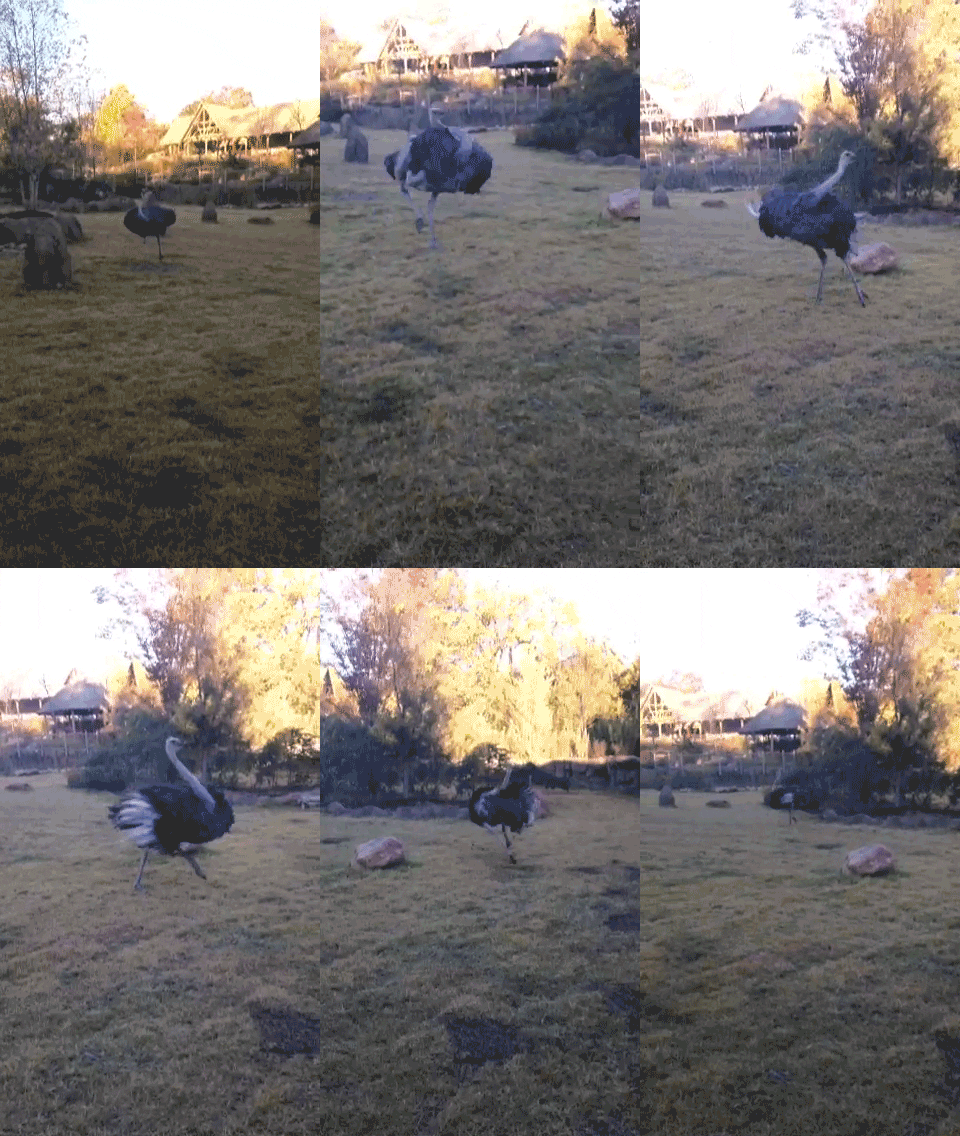
If You Give an Ostrich Power… (GIPHY)

If you give Ostriches power
there will be chaos in the world
When there is chaos, the ostriches will bury their heads in the sand
When the ostriches tire of putting their heads in the sand
they will point their beady eyes at others for the problems in our world
when they see their saggy eyes on Instagram, 
they will want to spend money on themselves to look better
when they return from another trip to Mar-a-Largo
they will be energized to point their beady eyes at others again
refusing to take any responsibility
 the sand will start to look really good to them again.
And chances are, when they bury their heads in the sand
there will be even more chaos in this world.

I’d love to hear your “Circle Story” creations:-)

Are You Easy?

Calling all self-proclaimed “people pleasers!” Peace is a direct manifestation of living in alignment with your intuition.

I was twenty-five and had just found my husband dead.

Someone had recommended a therapist for me. I called and the receptionist answered.

“Is this an emergency?”

“Uh, no, no, it’s not an emergency.”

We scheduled a first appointment to see the therapist a good week later.

What We Think Matters

Back then, my inner dialogue went something like this:

I don’t want to make waves. I want to be easy, not a burden for others. This therapist obviously has a lot of patients to see if she can’t see me, a new patient, in the next 24 hours. I’m in terrible pain right now, but I am not bleeding, not on death’s door. I do not have the right to call my situation an emergency, since I’m still alive and breathing on my own. So, I will sit with the pain, shock, and fear I do not know how to process until it is a better time for this recommended therapist to meet with me.

The Balm of Self-Compassion

Writing this now, I want to hug that young woman I was, look her in the eyes and grab her firmly by her hunched shoulders. I write with tears in my eyes, yearning for that young adult to honor her experience and the feelings that were emerging, to explore the pain instead of holding it in her body like a grenade until it was convenient for a therapist to see her.

The Allure of Being Easy

There are many levels and forms of “being easy” for others.

We contort ourselves under the false notion that doing so will help us somehow belong, experience love, and feel worthy

The desire to feel a sense of belonging and acceptance is normal; after all, we are social creatures, spiritually wired to connect and even flourish through connection. The problem arrives when we subjugate our own needs to please others.

When our sense of self is inextricably tied to the approval of others, we lose our inner compass. 

We starve ourselves, either physically or spiritually, to feed what we believe others want.

The Most Important Question

The late playwright, George Bernard Shaw is famous for his pithy line:

“Youth is wasted on the young.”

I argue that it doesn’t need to be. You don’t need to be a twenty-five-year-old widow to discover the lesson that you can stop being easy, NOW — regardless of your number of years on Earth.

So, what can we do to help dissipate the often, knee-jerk reaction some of us have to please others at the expense of ourselves?

We can check-in with ourselves. We can cultivate a habit of asking ourselves a simple but profound question: What do I think?

If I could go back to that young adult who had just found her dead husband, I would ask her: What do you think?

She would say:

I am fucking scared! I am broken and lost. I don’t know how one minute, I was sleeping next to my husband, his warm hand on my stomach and now he is dead. I need a therapist NOW; this IS an emergency. My heart, mind, and soul cannot comprehend what just happened. I need someone to process what feels impossible to process NOW.

Easy is Overrated

Easy is overrated. Easy is the Corset of Life: it might look easy and effortless on the outside, but inside, we are slowly losing oxygen. 

Easy doesn’t avoid growth; it just postpones growth.

 The longer we are easy, ignoring what’s under the hood of our psyches, the greater the spiritual repair fee. But make no mistake, there’s a price for Easy.

The Impossibility of Pleasing Others

We will never please everyone, no matter how much we bend over backwards. There’s a comfort in knowing that when we start to please ourselves first, honoring our birthright gut, life actually gets easier.

Doormat Syndrome

Feeling like a doormat in this life? Consider whether you are a victim or active volunteer…

Most of us humans want to do good in this world. We want to help people. And this is a beautiful thing. But there is a fine yet distinct line between helping other and losing ourselves in the process.

Pilot Philosophy

The pilot’s directive in case of a flight emergency is always the same: put your oxygen mask on first.

Yet in life, many of us tend to ignore our own needs in order to care for another. 

Living in the Gray

Nothing is black or white in this life. There’s gray. There are, of course, times when we put aside our own needs to attend to another. When:

  • an infant needs to be fed
  • a loved one is close to the end of their life
  • someone is in danger

But even in the examples above, there is gray: 

  • The infant can be fed within 5–10 minutes
  • You can get something to eat/go to the restroom at the hospital during your vigil
  • You can call an ambulance/the police without putting yourself in direct danger (again, even here the situation is filled with gray based on the nature and scope of danger)

Recognizing Patterns

My cousin regularly caters to her grown children and subsequently complains that they don’t appreciate her and treat her like a doormat. If she has plans, and they arrive, unannounced from out of town, she changes her plans. Some are carnivores and some are vegan. Regardless, the expectation is that “mom” (my cousin) will “take care of it.”

So she…

  • shops, prepares, and serves the meals to her grown children’s families’ tastes. Then she washes up the kitchen — solo.
  • does her children’s and grandchildren’s laundry
  • cleans the house after them daily

And then they leave and don’t call her unless they need money.

My cousin’s pattern:

Doormat + Complainer=Resentment and Helplessness

Victim or Volunteer

A wise therapist said:

If there’s a negative situation you keep experiencing, you have to ask yourself: What am I getting out of it?

There’s always a positive in the negative. There’s always some kind of reward we receive that keeps us stuck in that negative pattern.

My cousin might complain, but it is never to her daughters or their husbands. She will complain to the rest of the family. She will complain to friends. But she stays quiet when it comes to the source of her unhappiness.

Why? I can’t speak for her. One reason might be fear — the fear of what might happen if she tells her grown children how she truly fells.

“My grandchildren are my whole life.” We become the stories we regularly say to ourselves and others. 

Another potential reason? There’s a comfort in the roles we play for a long time. My cousin is quite comfortable in her victim role. It’s a false safety net, trapping her in its familiar web.

Growth happens when we step out of our comfort zone.

It is uncomfortable to sit with the notion that she is a volunteer, not a victim. It is uncomfortable to sit with one’s responsibility for an unpleasant experience.

The late First Lady, Eleanor Roosevelt wisely said: “No one can make you feel inferior without your consent.”

Nothing is stopping my cousin from speaking up, allowing the figurative chips to fall in her self-caged prison.YOU are the author of your life. What’s your narrative going to be? (GIPHY)

The Greatest Storyteller

The greatest storyteller is the one reading this right now. It’s YOU. Whether you are a victim or a volunteer is always up to you. If you don’t like the narrative, change it.

Changing a narrative is not so simple as “okay, now I am no longer a victim.” That is the physical equivalent of a child shoving their strewn toys under their bed. The mess has simply moved and still not dealt with. 

Changing the narrative requires great courage. The willingness to see the patterns we’ve created and the WHY behind those patterns.

Only when we’ve looked with both eyes open can we start planting new seeds and growing a different, empowering narrative — with you as the hero.

When Life Bites

How Life is Like a Mosquito Bite

Mosquito bites are one of our greatest teachers.

Mosquitoes. Those winged creatures capable of spreading disease and driving us crazy with swollen bumps on our skin.

Who knew they were also one of life’s greatest teachers?

It’s Not Personal

Great news: It’s only female mosquitoes who come after us humans. They need our blood. Think of them as winged vampires, needing their next human sacrifice so their species can continue. Without their next “blood meal” this flying insect wouldn’t be able to produce her eggs.

Sometimes, people get under our skin–just like a mosquito. But it’s never personal.

So the next time someone cuts you off in traffic or your cousin hangs up on you for no good reason, remember: it’s not personal.

Poor behavior of others is never about you. It’s what the hurt person is doing to cope in that moment. Just like that mosquito biting into your flesh–sure, it may sting or itch, but it’s not about you; it’s about what they need.

A Different Kind of Condom

The prefix dis means not. The body can experience a lack of ease (dis-ease) throughout a human’s life. Mosquitoes, like humans, can carry diseases. And while mosquitos are known to be “the most formidable transmitters of disease in the animal kingdom,” there are plenty of diseases we humans carry.

We have COVID-19, people! We have STD’s and Monkeypox!

And I’m not even a doctor! (though I play one on TV;-)

So what can we humans do to protect ourselves from the bites of mosquitoes and human nature? We wear:

  • condoms to protect against STD’s.
  • masks to help stave off the never-ending variants of COVID-19
  • bug spray to fight off creepy crawlers

There’s also different kinds of condoms to protects us from getting figuratively bitten: earplugs, the technology to block a caller, the ability to close our eyes.

So cover up, let it go, and stop scratching that itch. Now go out there and thank those mosquitoes for being such fantastic teachers!

*Post originally published on The Orange Journal. (8/4/22)