The Validation Dish

There’s something I notice lately, something women tend to do more than men. Something girls tend to do more than boys. I’ve seen manifestations of this affliction most of my life: the apology without real cause, the explanation that is typically unnecessary, the quick laughter to mask the hurt. But it wasn’t until recently that I noticed a visual/auditory pattern as well: parenthetical statements.

Huh?

Hear me out. The other night, I was out with a group of women, and I noticed a regular pattern, subtle but distinct, to the banter of us. Statements like:

“I haven’t felt the same since I got COVID, well, I think I haven’t felt the same.”

“I just want a man who is, you know, kind. I don’t need to care about his looks, not really, you know. I just want him to be, I don’t know, nice.”

“I told him I was still reading, so why did he turn off the light. That really pissed me off—that’s bitchy of me, probably it is, right? I don’t think he meant it to be mean, but I was reading in bed, so it’s like I don’t matter, right?”

You see what I mean?? I felt this out-of-body aha moment that night, noticing a specific kind of halting cadence to our statements, like a toddler learning to walk, but not quite ready to let go of the furniture.

I kept thinking, most men would articulate those sentences, sans those parenthesis—they would be the figurative toddler standing, teetering, falling and getting right back up without any need to grab onto a nearby chair!

Those same statements, uttered from the mouths of men might sound more like this:

“I haven’t felt the same since I got COVID.”

“I just want a woman who is kind.”

“I told her I was reading, and she turned off the light. 

#3 would be a clear conclusionary statement or likely would not be articulated in the first place because our imaginary gentleman wouldn’t need the big V: validation.

If you are a man reading this, feel free to disagree. After all, this is an opinion- piece and I am speaking in generalizations. There are women out there who possess the confidence to speak without a barrage of caveats weighing down their sentences; there are men who throw pauses into their words like a trapeze artist on a balance beam!

It’s one thing to be uncertain and articulate that uncertainty. It’s another, more subtle yet dangerous thing to crave validation or worse yet, lack faith in yourself.

Here’s what I know:

My friend’s breathing is more labored post COVID.

My friend wants to meet a kind, nice man who she is attracted to and deserves to be attracted to.

My friend was pissed that her husband turned off the light when she was reading.

When we sit with how we feel, when we accept all of our emotions, we no longer feel the deceiving call for external validation.

Whatever your gender, I challenge you to pay attention today and notice how you speak, how the sentences form on your tongue and in your mind. Embrace your inner compass, without the need to justify, apologize or gain the approval of others.

 External validation is a hunger that never satisfies. Go within for approval and you’ll never starve.
The Gift of Discomfort

            When we allow ourselves to experience pain, true healing and growth begins.

My friend *Camile cried to me over the phone this past weekend. She suspects that her new husband is cheating on her. If her fears are correct, this would be her second marriage strained, if not destroyed, by infidelity.

Fact: Camile husband keeps an extra cell phone for his work as a doctor. 

Fact: Camile is not allowed to know the number or have access to this additional phone.

Fact: The two haven’t been intimate since COVID began…

Flash back to three years ago when Camile discovered her first husband (now an ex) sexting with his nurse. Once Camile caught him red-handed, her ex said he “wanted out anyway.” 

It’s worth noting that for month’s prior to Camile’s sexting find, she’d wanted to confront her then husband. But each time, the mere idea of broaching the topic made her queasy with discomfort.

Within months of Camile’s split from her ex, before the divorce was even finalized, she started dating the man who is now her current husband.

Tonight, as Camile broke down to me, I could hear the familiar tinkle of a glass that had accompanied our talks back in 2017.

“What are you drinking?”

It was a rhetorical question. My dear friend’s imbibing companion was always the same: Riesling.  While she isn’t much of a drinker, she does become a fan of the white grape wine whenever heartache arises.

Camile chooses wine in lieu of facing her pain. I tend to go for the chips and ice cream. Some of us choose inedible comfort food when a challenge of the heart grows imminent: gambling, smoking pot, retail therapy.

The last time I heard Camile drinking her beloved Riesling was during her divorce proceedings. Once her current husband entered the picture, I can’t recall her enjoying the beverage.

To avoid pain and suffering is human nature, but sometimes, the very thing we are trying not to experience actually prolongs if not worsens it. Camile never truly mourned the end of her marriage, never honored her feelings of anger and betrayal. Tonight, those lessons are knocking on her door again. 

What lessons are knocking on your door? What pain and heartache do you run from and subsequently continue to experience?

There is a gift in acknowledging everything from discomfort to heartache. If we don’t pause long enough to accept the gift, we run the risk of repeating pain in merely a new guise.

 While it sounds counter-intuitive, when we allow ourselves to experience pain, true healing and growth begins.

The Wallis Simpson Dish

The Duchess of Windsor offers a cautionary tale to pay attention to our whys, so we can change our patterns and experience different results

The other night, I took pleasure in watching the 2011 Netflix W.E. It’s a romantic historical drama, directed by Madonna, that sheds a different light on the famous love story between King Edward VII and the American socialite, Wallis Simpson. 

King Edward is known as the intrepid man who gave up the monarchy in order to marry the twice-divorced woman he loved.

Sounds romantic, yes?

History paints a picture of a man who wooed someone tirelessly, who sacrificed his royal status in order to be in the company of the woman he adored.

Madonna’s portrayal of that history offers an entirely different perspective: Wallis Simpson’s.

According to both the historical film, W.E. and historian Anne Sebba, (That Woman: The Life of Wallis Simpson, Duchess of Windsor), Wallis never wanted to leave her second husband and marry King Edward. She was content to be the King’s mistress. She neither wanted King Edward to upend the British monarchy nor be the cause of it.

What fascinated me about this story is the why behind Wallis’s actions, the why behind her choices. Why did Wallis agree to marry someone she was content to be mistress to? Why did she want to be a mistress in the first place?

Unearthing the why of our actions is the bedrock of change.

Wallis’s father died a mere five months after she was born. Subsequently, her childhood involved watching her mother’s dependence on the Warfield’s (Wallis’s paternal side of the family) fortune. The purse strings were manipulated by a controlling uncle.

As an outsider, the why behind Wallis’ actions grows clearer as we look at those early years: Wallis grew up dependent on men for money. It is what she knew. It is no wonder then, that she used her quick wit and independent nature to attract affluent men with power.

Yet if we look closer, there is a paradox in each of her romantic relationships:

Husband #1: Earl Winfield Spencer Jr., a US Navy aviator. Externally, the aviator held a position of power and respect. Behind closed doors, Spencer Jr was an abusive alcoholic.

Husband #2: Ernest Simpson, described as an ironically “dependable” man who asks for Wallis’ hand in marriage while he is still married to another. Wallis, most interested in security, agreed.

Husband #3: King Edward VII is described by a staff member (Hon. John Aird) on vacation with the King and Wallis, “the prince…lost all confidence in himself and follows W around like a dog.” Again, there is this need for power and stability—both of which the King fulfills due to status and their seemingly co-dependent relationship.

A trove of affectionate, candid letters between Wallis and her second husband exist between 1936-1937. In these secret letters, both Wallis and Simpson refer to King Edward condescendingly as “Peter Pan.” 

An excerpt from one of Wallis’ letters to Simpson stands out:

“I don’t understand myself, which is the cause of all the misery. Give me courage. I’m so lonely.”

Wallis wrote the above just days before King Edward VII abdicated the throne, for her. She was living with a man who adored her and yet she felt “so lonely.”

Chances are, you are not an American socialite nor married to British royalty. However, its’ likely there are patterns in your personal relationships. Wallis offers a cautionary tale to pay attention to our whys, so we can change our patterns and experience different results.

Wallis was a paradox: her independent spirit that men found attractive is what they wanted to possess. Her hunger for financial security and power caused her to sacrifice emotional freedom.

When we place our financial or spiritual well-being onto another, we are limiting and serving a detrimental dish to ourselves and others.

Holiday Shopping Made Easy

2020 Holiday Gift Guide

The holidays have a tendency to sneak up on me each year, but with the backdrop of our pandemic reality, time seems particularly skewed these days. How are we less than two months away from a new calendar year??

Whether you are one super-prepared holiday shopper, or you are scratching your head, wondering what gift to get your family and friends this season, consider the following venues to get your shopping groove on–you won’t be disappointed:

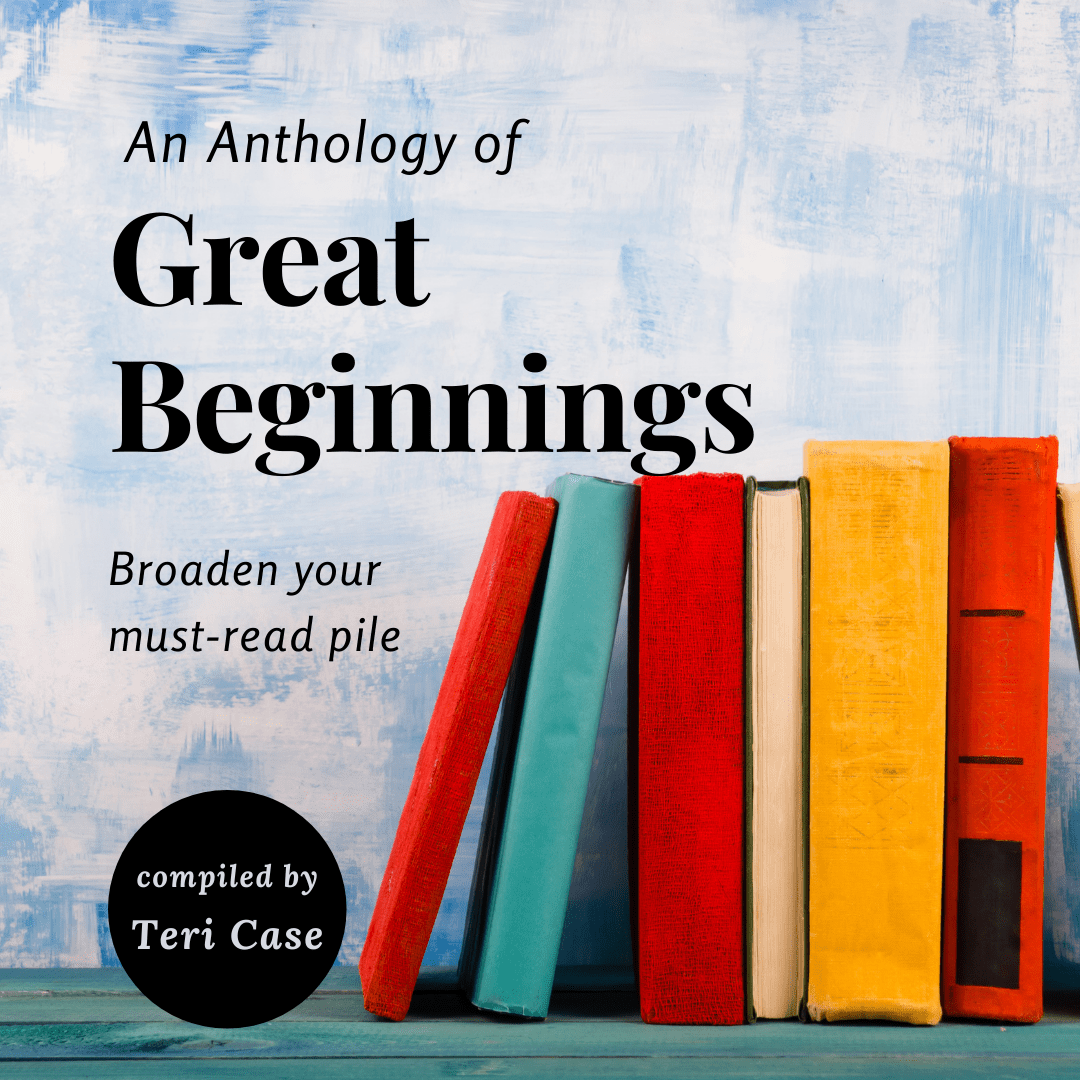
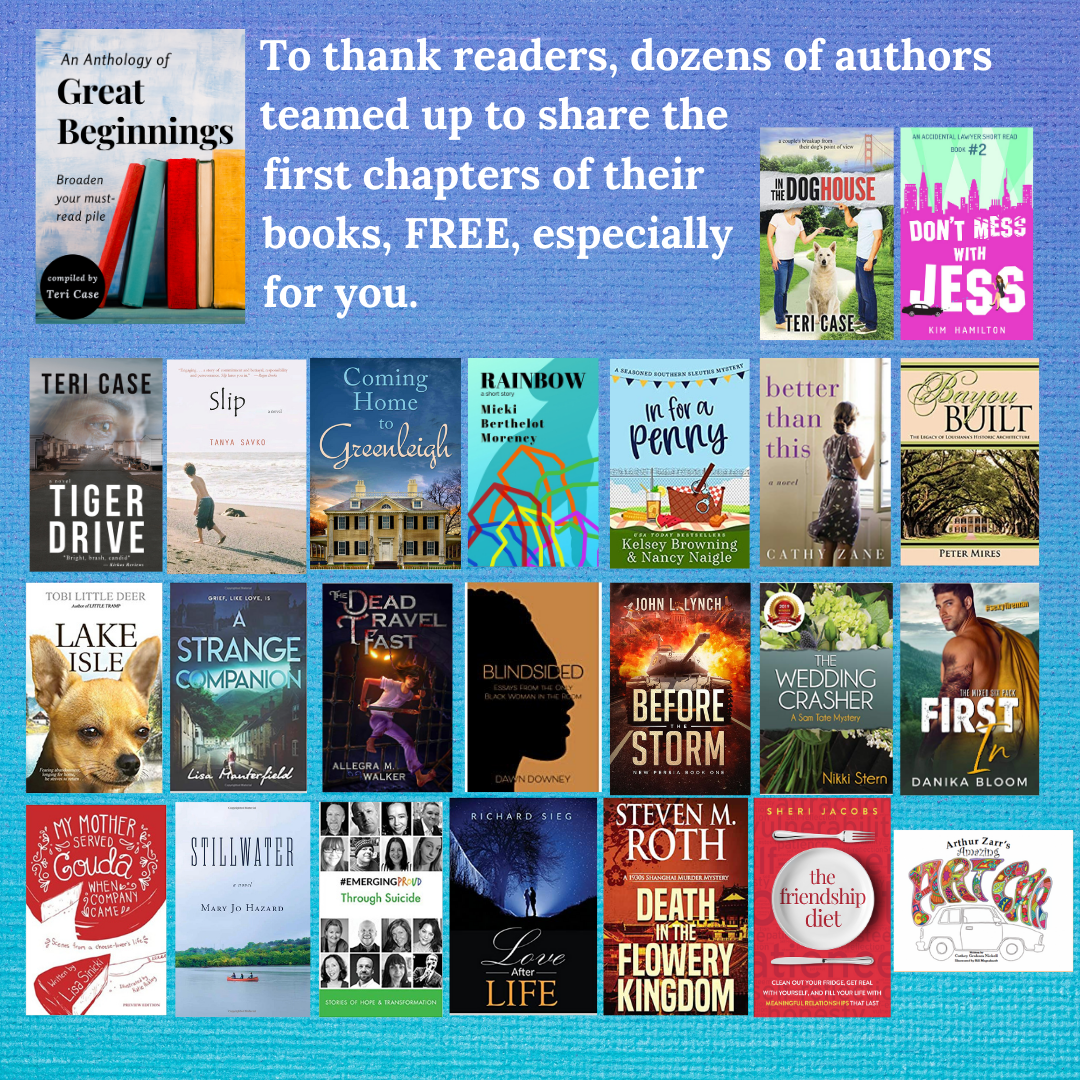
(1)Teri Case, the author of TIGER DRIVE and IN THE DOGHOUSE (a personal favorite:) offers gift-givers the chance to read GREAT BEGINNINGS: AN ANTHOLOGY, for free. Here’s the link: https://BookHip.com/NMLQAW

The overflowing-with-talent, Teri Case created a beautiful (and free!) anthology entitled Great Beginnings. More than thirty authors–myself included–joined together to share the first chapters of their books. This anthology includes the first chapters of everything from award-winning fiction to non-fiction. It’s the perfect gift for an avid reader. Consider it a literary appetizer for the book lover in your life.

Thanks to Katie Carlisle Gonzales for creating a one-stop-shopping source

(2)This 2020 Gift Guide was made possible by Katie Carlisle Gonzales, someone a dear friend and colleague of mine (author, Cathey Nickell) met, (well, virtually anyway!) through a Facebook group called Moms and Ladies of Southwest Houston. Katie had the idea to create a holiday shopping guide. The guide includes links to over 30 businesses, offering a wide variety of shopping items that you might not think of or know about otherwise. Check out the link here >>> https://bit.ly/34OY1qO

Bring a mask!

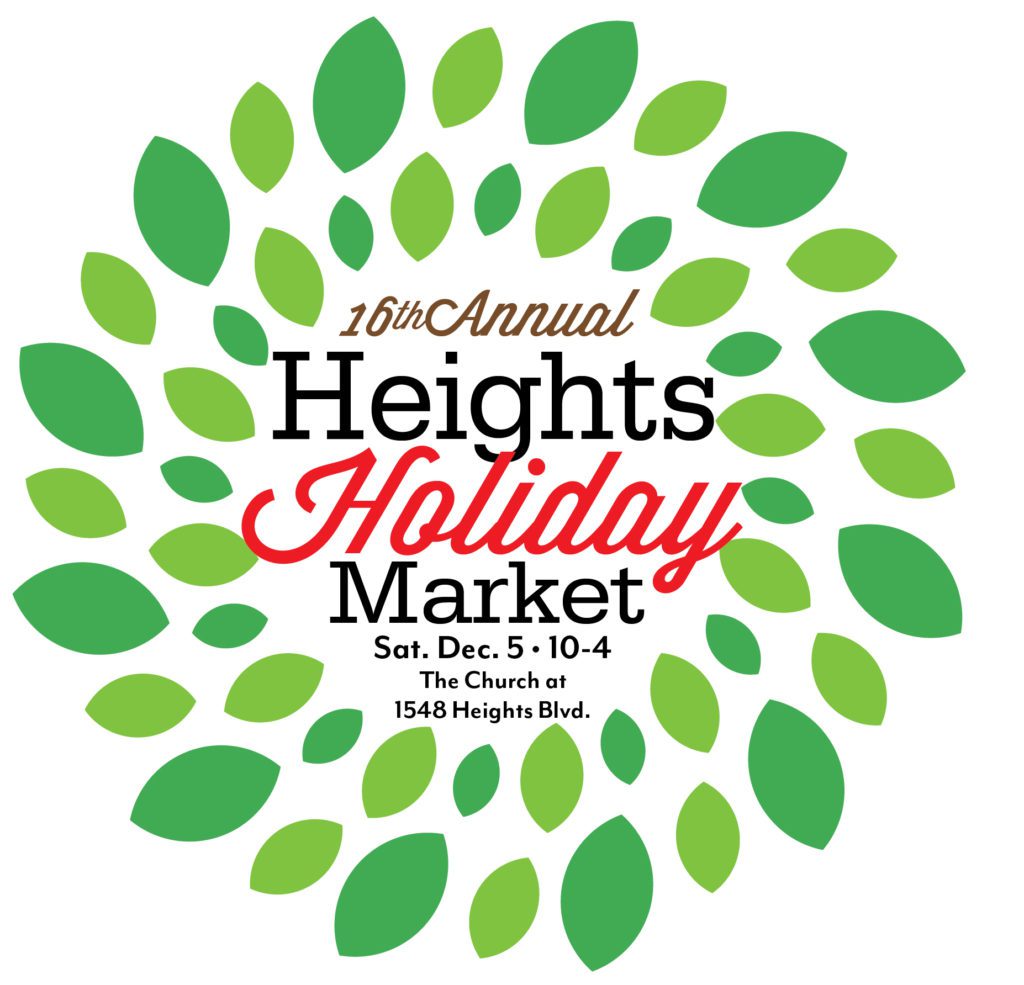
(3) How about an open-air outdoor holiday shopping market? Expect to see about 30 vendors at the 16th Annual Heights Holiday Market from 10am-4 pm, Saturday December 5th, at The Church at 1548 Heights Blvd. Author Cathey Nickell will to be autographing and personalizing her two children’s books: Arthur Zarr’s Amazing Art Car and Yazzy’s Amazing Yarn. Artist Bonnie Blue will bring her “Women That Rock” artcar/van, and she’ll be selling her hand-painted driftwood Santas (and more). Such a fun photo op for the kids! You’ll also find a coffee truck, a taco vendor, and so many amazing one-of-a-kind gift ideas, so please join us if you’re in the Houston area. Masks are required for both vendors and visitors. #houstonheightsholidaymarket

Thank you, Kristine Hall and Lone Star Literary Life for creating a thorough Holiday Gift Guide!

(4) I’m also in another online Holiday Gift Guide,thanks to Lone Star Literary Life, a wonderful organization that helps readers find stories and helps Texas authors find their ideal audiences. Owner and publisher Kristine Hall has put together a Holiday Gift Guide, and I’m in it! You can find my book, The Friendship Diet: Clean Out Your Fridge, Get Real with Yourself, and Fill Your Life with Meaningful Relationships that Last here >>> https://www.lonestarliterary.com/content/2020-hgg-nonfiction-books… and if you go to the Lone Star Literary Life website, Kristine has put together some other gift guides for fiction and children’s books as well (go to the LSLL website and look under the “Features” tab).

There is no doubt, 2020 has NOT been an easy one. I hope you find a potential gift(s) for your loved ones. The epithet applies now more than ever: It’s the thought that counts. A gift need not cost anything, it’s the idea behind the present itself that matters. It is also in the act of giving, of thinking of others, that our lives tend to experience greater sweetness.

Wishing you a sweet and healthy end to 2020 and a fresh start, bursting with wonderful possibility in 2021.

The Pricey Parenting Dish

Each time we give into the short-term, “It’s just easier” mindset, we may be paying a greater price in the long run.

As a mother, I strive to find balance on that delicate tightrope of demonstrating loving compassion and “tough love.” I’m there for my kids, but I’m also not a doormat, challenging them to take responsibility, yet not “Tiger Mothering”( Amy Chua, Yale Law Professor and author of the 2011 Memoir,  Battle Hymn of the Tiger Mother.)

But the other day, a friend of mine said something that resonated with me, making me realize that my so-called “tough love” could use a good more muscle. Here’s what she shared:

“*Brent is 20 years old. Everything is done for him. We’re lucky enough to afford a housekeeper, and I do everything else domestic-wise. So today I thought, ‘It’ll be good for him to do something other than learn virtually at home. I’ll ask him to take out the trash.’ But guess what? He couldn’t even do that. He didn’t know what to do with wrapping the trash up. I had to literally show him how to tie the bag. He watched me do it and said it will still confusing. The light dawned on him when I told him it was like tying shoes.”

Brent is a bright young man who maintains excellent grades at a respected university. He is witty, respectful and kind. His SAT score and GPA opened several academic doors at prestigious colleges. And yet, tying a trash bag was a genuine conundrum for our scholar.

I recall sitting at my son’s martial arts class when he was in the third grade. A mom sat beside me as we watched our kids through the clear class that separated us from our pre-pubescent ninjas-in-training. That day, her son had forgotten the required belt for class; mine had left the required black pants. Their lack of preparation for class immediately bonded us.

“Honestly, I try. I try to let him fail, but it’s just easier if I do it all. I don’t have the patience. I work at all day at my firm. I’m tired by the time I get home. If I want something done, I do it myself.”

That was 9 years ago. Today, both of our sweet ninja warriors are young men, a little over 6 months away from graduating high school. They drive cars, they shave, they are excelling in their Advanced Placement courses.

And yet…I think back to that moment in the martial arts class and wonder if I often took the easier road with the short-term benefits. I work full time and still find it “easier” to cook, clean, bake, wash, dry and fold for my teenagers. 

I’m trying to change my ways, focusing on the long term gain these days. There’s still time before the older one heads to college, still time before the younger one enters high school.

I’m a work in progress: yesterday, I gave my sons eggs, sliced cantaloupe and a warm tortilla purposely on the side just to see what they would do without a fork. That’s right, a full plate of food with eggs needing to go in that tortilla but no fork nearby. They needed to actually get up from the table to get their respective forks.

They ate with their hands…

But there IS progress: 

Both have learned to soak bowls that once contained oatmeal and glasses that once held smoothies.

One regularly “squeegies” the shower after use.

Both know to empty their trash cans on Sunday afternoons.

Progress! Both know how to cook basic things now.

Work-in-progress: I’ll leave folded clean laundry outside their door; they merely walk around it like a benign obstacle course.

I prefer the “pain” of taking time out to teach them these basic life responsibilities/skills rather than the long-term suffering waiting for a potential life partner/spouse.

Just some food for thought to all parents out there. We owe our kids a domestic education—for themselves and their future family.

“What Memes Are You Ingesting?

“We all have thoughts that were given to us by our families, our society, our culture. These given thoughts are so pervasive and so ingrained that they seem like part of our very being, but that’s exactly why we need to dig in and examine them if we want a life worth living.”-Wayne Dyer

Memes are those humorous images or brief videos that spread like wildfire on the Internet. But memes aren’t always so innocuous or merely copied and pasted into our web browser.

According to Merriam-Webster, a meme is “an idea, behavior, style or usage that spreads from person to person within a culture.” Much like COVID-19 possesses the potential to spread from person to person through respiratory droplets, a meme is spread between people either in person or digitally. 

While memes range in emotional variance from belly-laugh-inducing to call-to-action-inspiring, there are dormant ones that, received unaware, can be downright dangerous. They’re words or actions that we ingest without giving ourselves time to chew. We swallow these memes without even taking a breath to consider them. 

These dormant memes can manifest in our personal or professional lives. Their danger lies in our inability to discern them; digesting them unconsciously wreaks havoc on our spirit and psychological wellbeing. 

Here are some virus memes I’ve heard in the past two weeks:

“I’m so stupid.”

“I’m depressed.”

“I’m disorganized.”

“I’m lazy.”

“I’m fat.”

Notice they start with the pronoun I. These statements are nothing more than memes. Someone at some point told them they were stupid, depressed, disorganized, lazy and fat. And they accepted the meme without question until it became part of their belief, their psyche.

Much like a malignant growth that needs to be removed, it is important to consider the statements you find yourself thinking or saying often. If it’s something negative about yourself, there’s a good chance you are allowing a virus meme to dwell in your psyche. If the words or behavior hurt you, I encourage you to work on its extraction from your life. Consider replacing it with an inspiring meme.

I leave you with an inspiring quote from Wayne Dyer regarding memes: “We all have thoughts that were given to us by our families, our society, our culture. These given thoughts are so pervasive and so ingrained that they seem like part of our very being, but that’s exactly why we need to dig in and examine them if we want a life worth living.”

Dig in and know your hunger!

Limbo Life

On the precipice, our perspective is heightened.

Everywhere I look these days, someone or something is “on the edge.” Listen to the media, scroll through your Twitter feed or even share a dialogue with a family member or friend, and you’ll find a wait-and-see mentality that often shows up with several audible sighs and shaking of the head.

There are societal divides–sometimes violently visible, sometimes unspoken yet loud, emanating between humanity as it holds what feels like its last inhale. This divide can be felt on the phone with an uncle or a colleague or a best friend. Politics are no longer “politics” but carry a weight like a spiritual albatross that makes the space between people feel electric.

But there is another divide existing in our pandemic, killer-hornet, presidential election world of 2020: the conflict within ourselves.

You see, it’s not just humanity that’s globally on the cusp of a major shift; it’s each of us as individuals. The pandemic is forcing us to “get real” with ourselves; it seems the more we try to skirt around the fact of it, the louder COVID-19 grows. We keep trying to adapt our pre-pandemic lens to our current pandemic reality, and based on the ever-increasing numbers around the world, we need to change our prescription, our perspective, our actions.

We can see our limbo, our very discomfort and frustration with existing in the space where we are, as a chance to gain perspective and make changes. Those changes need to start with ourselves. The backyard of humanity first gets cleaned up by the individual choosing to pick up their own figurative rake–not by forcing that rake into someone else’s hand. Limbo offers an opportunity on the ledge of possibility: to see what you see and not someone else; to respect what someone else sees yet not feel compelled to change them; to address your issues and not others’.

On the precipice of change, our perspective is heightened. Limbo is the RESTROOM pit stop on the highway of life. Embrace your respite–even its potential discomfort. There are lessons to be divined on this limbo ledge that won’t be available for long.

Serving Ourselves a Dare

The fear paradox: the greater we avoid something, the more likely it is to consume us.

Remember when you were a kid or teen and you dared your friends to do something scary? Sometimes it was something that in hindsight wasn’t so scary like going up to a police officer and asking him for the time; other times it was scary but—once again with that good ole’ hindsight—foolish and borderline dangerous, like eating something questionable like glue or a bug?

Regardless of what kind of dare you were given or gave, the intent was always the same: to get a thrill, a rise, a rush of adrenaline through our youthful veins. Even just giving someone a dare was enough to make our blood pump faster.

If you are reading this, chances are you fall into the adult demographic and your days are filled with lots of R’s (responsibilities). Time is limited while to-do lists are infinite; you are rarely in the now and more often than not, planning what needs to be accomplished or completed next.

One of my colleagues recently said, “I’m going to be like an ostrich and keep my head in the sand.” She was referring to our new virtual reality of teaching through so many new online platforms. A friend of mine shared with me this evening that she accepted a new position because “it’s safe.” As we get older—and with the uncertain backdrop of the ubiquitous pandemic—it’s understandable and downright tempting to want to cling to what is safe, to dig our head into the figurative sand until the unknown passes.

But what would happen if we, as author and professor, Brene Brown suggests in her eponymous book, DARING GREATLY, we became that young kid again (who still resides inside of us)? What if we chose to shake the sand off of our heads and see whatever is going on without judgement? What if we decided to not cling to safety so steadfast and instead, allowed ourselves to feel a little rush of fear as we considered other alternatives to earning money?

When we were children, we dared each other; as adults, we need to serve ourselves a dare: something that will reignite our soul and breathe fresh life into our lives.

Consider the pandemic, the growing violence in our world, the political tension—let’s not forget the killer hornets and potential meteor headed our way (the day before the US Election). Do we really have the control that we are so hungry for? Uncertainty is abound, and here’s the rub: the more we cling to things/people/circumstances for peace of mind, the less peace of mind we will experience. 

So what can we do? How can we serve ourselves a dish of happiness in such an uncertain world? We can find opportunities to dare ourselves—even if it’s over something that might seem small. 

My dare is often involving facing my fears. Fears embraced lose their power over us. And there’s nothing that feels more alive than meeting your fear head-on—talk about an adrenaline rush!

The great thing about being an adult is you don’t need to wait for someone to dare you. But since I’m still that kid inside who never grew up, I’ll take this moment to dare you, right now! Serve yourself a daring dish and watch your life change—dare I say, for the better!

Tween Hunger

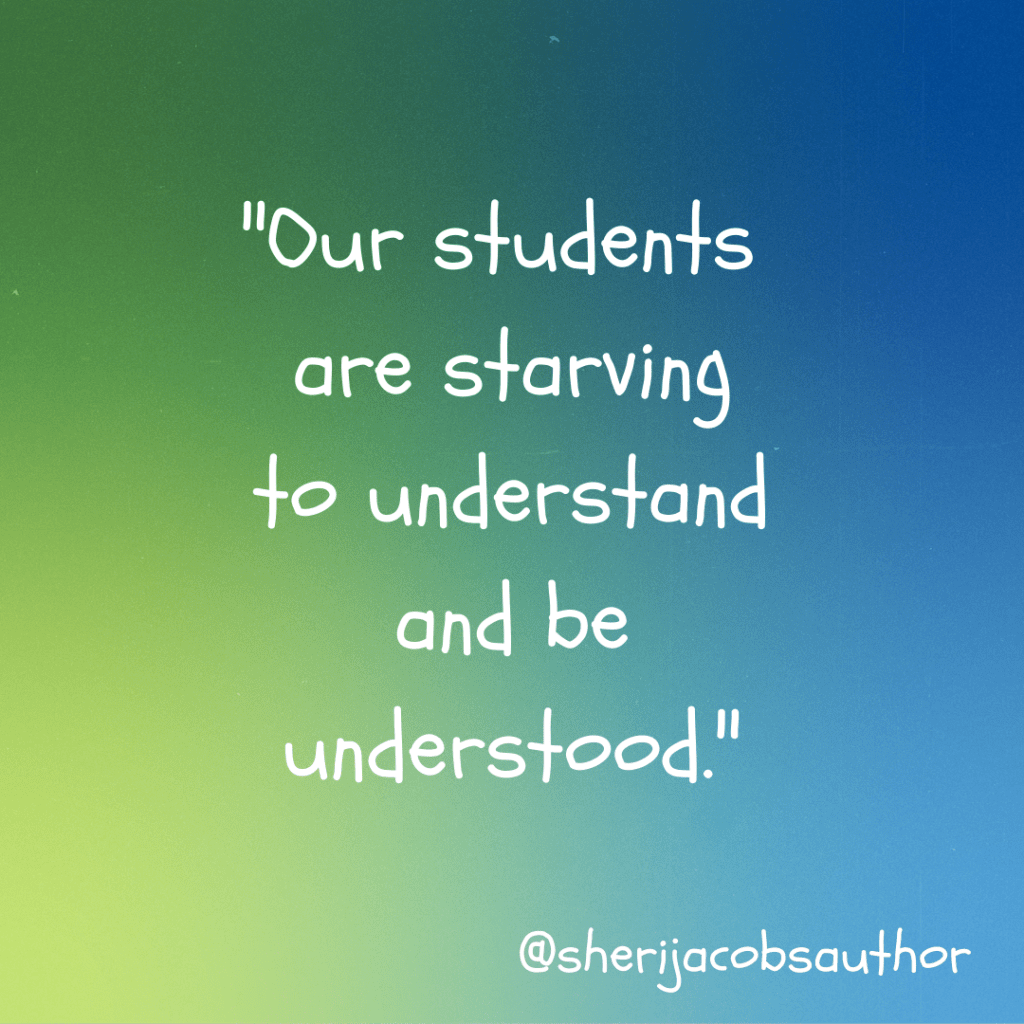
Our teens and tweens are starving for understanding and to be understood. They are scared; they are overwhelmed; they are victims of a system that is no longer working. 

I’m working virtually as a middle grade teacher these days. Teachers and students alike are expected to perform their respective roles as per pre-COVID protocol: showing up for class on time, paying attention, staying engaged, testing…testing…testing.

There is no doubt that we are all craving a return to normal, but when it comes to our educational system, do we really want to maintain the academic world we left in March of 2020? The bell ringing-standardized-test-taking-one-size-fits-all-remnant of the Industrial Revolution American educational system is past its expiration date and in need of a reboot.

Today’s educational system was literally designed to teach future factory workers to be “punctual, docile, and sober.” (Source: Quartz qz.com, Reporter: Allison Schrager). Before that, an education was considered only something reserved for the elite. And while two-hundred years ago, the factory-model of education may have served its purpose, in our 21st century, the same system that helped future factory workers learn punctuality and obedience in order to do what their managers told them, no longer works for our post-industrial era.

The pandemic highlights the cracks and fissures in our educational system. American education is a sinking ship and we are sending our children on a veritable Titanic, stopping up the ever-growing gaping holes with standardized tests. If we were sinking before COVID, our educational system is already on its way to full submersion. 

As an English teacher, I have the fortune of connecting to the tweens I work with through creative writing and open discussions regarding their respective connection to texts we read. This past week alone, the following comments, whether in writing or articulated verbally, were shared with me:

“I’m so stressed.”

“I’m having a mini heart attack.” (regarding testing/assignments)

“I am so insecure. I struggle with that.”

“My uncle died of COVID this summer. It’s been really hard.”

Here’s the crux of the problem, as I see it, with education: We are steaming ahead with a system that has not changed yet society has DRASTICALLY changed. We wouldn’t treat a diabetic with asthma medication, but that is exactly what we are doing to our children.

Our students are hungry for engagement, compassion, and challenges that help them grow academically, emotionally, spiritually and physically. But such growth is hard to come by when it is based in a world that relies on a battery of tests, when the educators which comprise this nucleus are bombarded with a barrage of to-do’s that are all about politics; veritable academic dog-and-pony shows that leave little time to actually engage in authentic student assessment and lesson planning. 

If you are a parent, give your child a much-needed hug; pay attention to what they are saying, how they are behaving. Based on these first six weeks of school with them and almost a decade of time in the classroom, I see that our teens and tweens are starving for understanding and to be understood. They are scared; they are overwhelmed; they are victims of a system that is no longer working. 

What is the solution? Elon Musk created the Astra Nova (New Star, in Latin) School that focuses on learning “simulations, case studies, fabrication and design projects, labs, and corporate collaboration….We redesign each year based on our students. We apply the lessons learned from every project, lab, and discussion to inform our next move.” (Interesting Engineering Source: Oleksandr Pupko)

Redesign…that’s the key word that is missing from our current system. We need to rethink, reflect, and redesign the antiquated world of education like Elon Musk has and does. 

In the meantime, I will continue to carve out lessons that inspire our students, reminding them that they matter, feeding their hunger to make a difference. To educators everywhere, I thank you. 

The Dish of a Hard Lesson

Our harshest teacher is often where we find our greatest strength.

We all have someone or something in our lives that pushes us to do the very thing we may not want to do or don’t think we can do. Today, I ask you to consider the following idea:

Our greatest teachers or lessons are often the ones that involve falling to our knees.

Why is this? Why can’t we get the lesson or experience like one would experience a massage? Why is our greatest teacher often the person who makes us feel ready to pull our hair out?

The Universe works in mysterious ways, but it is always working in its own intricate and beneficial way. We are like fish in a bowl, looking out at the world around us but only having a limited perspective of what reality is. Hindsight often offers us a better view in our respective fishbowls.

When I reflect upon the very things that I was certain would break me (the death of a loved one, the belligerent colleague, the litigious ex), it is hindsight that demonstrates time and time again, how each hardship, each challenge caused me to push past my comfort zone and grow. Each seemingly impossible situation or person caused me to get up off of my figurative knees and figure out a way. Had the person or situation not felt so overwhelming or heartbreaking, I would not be the strong, capable person I see myself as today.

We all arrive on this planet loving ourselves. We never see a baby embarrassed about the size of their derriere! But over time, many of us are taught to doubt ourselves. That doubt attracts us to all kinds of lessons and teachers. Once we get the lesson, the problem or problematic situation disappears.

Some of us—like myself—needed some tough lessons. It is once I thank those teachers that I notice they start bothering me. 

I encourage you to consider a figurative dish in your life—a person or situation that is challenging you (You know, the ones that cause your blood pressure to rise or the ones that make you feel like your heart is breaking and will never be whole again.). Serve yourself an alternate perspective: what if this person or situation is here to teach me another way? To show me an inner strength that was dormant until now? To help me realize what really matters and what I need to let go of?

When we thank our hardest teachers, we receive the invaluable gifts of peace and growth.