I Just Overdosed

On too much well-meaning advice
Ah, friends and family. Those well-meaning people in our lives who offer advice like candy on Halloween.

The problem?

 Taking in others’ advice is like sampling from an apothecary.

Opinions and Asses: Everyone’s Got One

Whether it’s when to leave a career or how to best file income taxes, opinions abound. We are not talking about those rare issues that offer very little gray area.

Nope. We are talking about those hem and haw mental challenges where we just aren’t certain what to do. Situations like:

  • whether to take a Gap Year after high school or head straight to university
  • plan a huge wedding or get married on the beach with only your immediate family and friends
  • have another child
  • change careers midlife

The Stealthy Side Effects of Advice

My issue was dealing with someone who was regularly hell-bent on making my life miserable. 

When we are in a painful or anxious place, we are more vulnerable to other’s well-meaning advice.

Everyone who cared about me offered up their opinions:

“Fight them in court.”

“Whatever you do, don’t go through the legal system. Only the lawyers win in court.”

“Ignore ‘em.”

“You need to see a therapist.”

“You don’t need a therapist. You need to go for a massage.”

“You need to keep busy and not think about it.”

The side effect of all of this mental and contradictory advice: my heart and head felt incapable of processing.

Here’s the danger of heeding others’ advice: the more you listen to others’ mental medicine, the less you can hear your own inner wisdom.

Word Drugs

It’s one thing to hear what another person has to say; it’s quite another to take in that advice.

Some of us are sensitive and not aligned (at the time — this too can always change) with our inner compass, so that even hearing the advice isn’t healthy for us.

When I’m not feeling centered, all I have to do is read the side effect warnings of a drug and the placebo effects begins.

But when we heed the opinions and suggestions of others, we are reneging our intuition to someone else. 

Accepting the opinions of others as your own is a form of mental ingestion. Digest enough of those varied words as yours and you’ve just mentally overdosed.

The Best Prescription

The best prescription when you feel uncertain about your next move is the one that arrives from within.

I’m not suggesting to stick your head in the sand like an ostrich (besides, that would be me giving you advice;-).

The best prescription is tuning into you. 

Maybe that means going for a walk or baking or meditating. Maybe it means drawing or taking a siesta for a couple of hours.

When we tune inwards for guidance, we find balance; we are better equipped to then hear the opinions of others without ingesting them.

Snowflake Humans

Humans are like snowflakes. Each of us is unique. And just like a snowflake, each of us is going to offer a perspective that is a one-of-a-kind-by-product from the alchemy of our environment and genetics:

Because a snowflake’s shape evolves as it journeys through the air, no two will ever be the same. Even two flakes floating side by side will each be blown through different levels of humidity and vapor to create a shape that is truly unique.-BBC

So, centered, it doesn’t surprise me that my friend who was, at one point, a victim of an abuser, gave me the advice to “Fight ’em in court.”

A family member who thankfully cannot relate to my situation but is perpetually burning the midnight oil, suggested I just “get a massage” and “don’t think about it.”

Everyone’s advice came from a loving place. But the verbal drugs they were offering were created in the lab of their own perspective.

Overdosing on others’ advice made me both fatigued and anxious. Without realizing it, “swallowing” their advice pills, I lost my way.

It wasn’t until I got quiet (lots of walks and naps:) that I realized what I needed to do — for me.

Signs of a Potential Overdose

Wondering what a potential Advice Overdose looks like? Here are some that I encountered:

  • anxiety
  • difficulty sleeping
  • irritability
  • difficulty concentrating
  • mental fatigue
  • upset stomach

Take Two and Call Me in the Morning

Joking — don’t take two of anything from me. (I’m not a doctor, though I play one on TV;-)

Be kind to yourself. Journal. Reflect. Take deep breaths. Do whatever you can to slow down and honor that voice always residing within you.

Our feelings offer a powerful guide in this life. When we slow down, we are more likely to pay attention and notice what feelings are coming up. Acknowledging them is the first step in finding the best self-prescription.
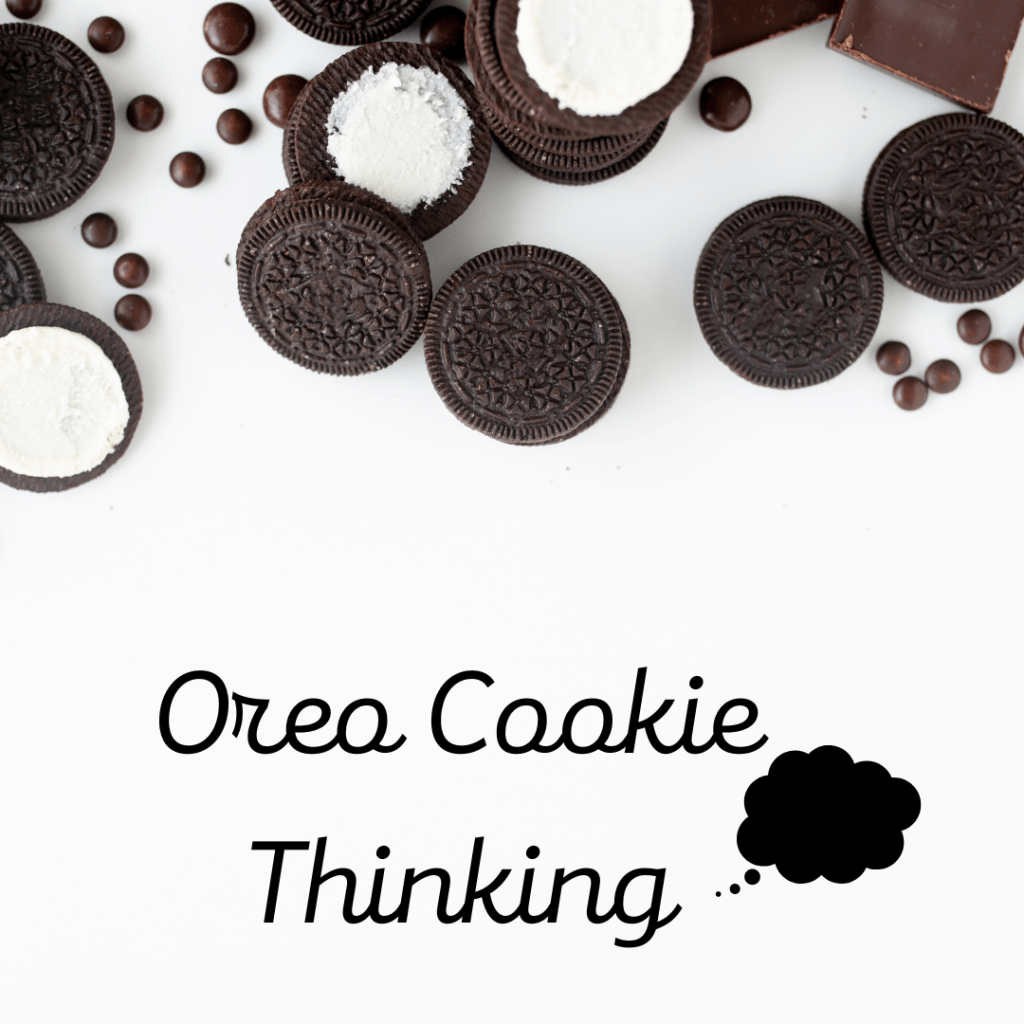
Oreo Cookie Thinking

The anxiety-driven thought process that isn’t good for anyone.

Oreo Cookie Thinking only feeds anxiety.

The homework assignment was easy enough: multiply each number by two.

My niece: I got this, Mom! I don’t need your help.

So, my sister left her daughter to work solo.

When the Problem Isn’t the Problem

My niece had completed the assignment correctly, multiplying each number as directed. But she had also added up each number — something that wasn’t part of the assignment.

When my sister pointed this out, all hell broke loose.

Forget it! I’m bad at math. I hate math. 

The problem wasn’t the math itself or my niece’s ability to do math. The real issue: all or nothing thinking.

It didn’t matter that:

  • my sister had pointed out what a great job her daughter did on the math homework.
  • my niece had, in fact, gotten all of the multiplication correct 

All my niece “heard” was the all-or-nothing inner dialogue waging war on her self-esteem:

  • I’m horrible at math.
  • I hate math.
  • The issue must be me, but instead of acknowledging this, I will hide behind hating math itself.

Oreo Cookies Are Only Good for Eating

Black or white thinking is a form of cognitive distortion that we all have to some extent. Believing that things are all good or bad, right or wrong. 

If we think of black-or-white thinking as an Oreo cookie, it helps us catch ourselves when we fall into the mental quicksand of dualistic thinking.

Oreo cookies are delicious to eat, but we don’t want to dwell in a black-or-white mindset.

When we keep Oreos in our kitchen pantries and not in our minds, we offer ourselves, and the world around us, greater compassion. 

The Skittles Life

Taste the rainbow of wonderful possibility with Skittles Thinking.

You know those high-fructose corn syrup rainbow candies? Now that’s the mental candy lifestyle that fosters a more flexible mindset.

Accepting our inner and outer world as colorful, ever changing, and perfectly imperfect allows us to grow more empathic to ourselves and others.

Life starts to look a lot more forgiving and wonderful when we see through the lens of kindness.

Oreo Thinking vs. Skittles Thinking

Oreo Thinking sounds like this:

  • I didn’t get chosen for the play because I have no talent.
  • He didn’t call because I’m unloveable.
  • I failed the test because I’m stupid.

Skittles Thinking sounds like this:

  • While it’s disappointing I didn’t get into the play, I look forward to joining the crew.
  • I miss talking to him; I’ll send him a text to say hello.
  • I know the material but allowed my nerves to get the best of me. I’ll speak to the teacher and ask if there’s a way for me to demonstrate my understanding of the material.

Fun with Food

Cognitive distortion sounds so serious, so off-putting to kids (and adults). The analogy of food makes cultivating awareness of cognitive errors much more palatable (and downright fun:-)

So, the next time you find yourself growing anxious about something, ask yourself:

Am I entering into Oreo Cooking Thinking?

Chances are, if you are feeling stressed or upset about something, there’s a strong likelihood you’ve entered into the all-or-nothing quicksand.

No worries — it’s never too late to put down that mental Oreo. 

And the great news: if you are flying high and in an easy-peasy mood, it’s likely you’ve picked up a mental bag of Skittles.

The choice is always in our cognitive hands.

The Day She Snapped

And what we can do to prevent further meltdowns

Sometimes, it’s the kindest people who experience the harshest meltdowns.

A dear friend of mine is the mother of a teen obsessed with musical theater. For the past decade, despite working full time and having one other kid to raise, her son has participated in community theater that requires my friend to drive far and wide all over New York, often late at night. 

A Window View

The other day, I was on the phone with my friend when her son came into the car from another rehearsal. Here’s how the dialogue went:

Teen: I’m hungry. 

Friend: (handing him string cheese) Here you go.

Teen: No, I want McDonald’s.

Friend: You can get that tomorrow after your PSAT test.

Teen: What the f$%&! No, I’m not taking that. I don’t even need it. I have plans with my girlfriend tomorrow.

Let’s just say, I got off that phone as quickly as possible.

The Backstory

My friend is a single mom. Everything has been on her. As her son was growing, there were several small occasions when her son spoke down to her and my friend placated or ignored the disrespectful behavior.

My friend’s empathy for her son eclipsed her judgement.

For years, my friend would say:

“He doesn’t have a father. I feel so bad for him. I want him to know how loved he is and how much he matters.”

Creating a Monster

Just prior to her son entering the car, my friend confided:

“I snapped the other day. I couldn’t take it anymore. I’ve created a monster.”

All those years of yes-ing her son in an effort to make him feel like he mattered, prevented him from learning respect and appreciating another person’s perspective — in this case, his own mother.

The Snap

We humans tend to snap when there’s been a buildup of tension and frustration. We snap after a long time of undisclosed and/or unaddressed unhappiness or resentment.

Like a zit that’s just come to a head, the snap is a manifestation of pent up emotion that needs to come out.

My friend snapped after her son told her he was going to be changing high schools because it had a better musical theater program. 

There was no discussion; in his 15-year-old-mind, changing high schools was going to happen.

Friend: I will look into the high school program.

Teen: I already know I want to do it. There’s nothing to look into. This is my life, not yours.

On and on this dialogue went until my friend, inevitably snapped:

“You know what? You are a child, a minor. Do you not understand that? You know what, just forget it. You’re going to do what you want anyway. Just do it; just do it! GO — what are you waiting for?! I don’t care anymore. Just do whatever the hell you want.”

And the teen’s response:

“It’s okay. I don’t have to do it.”

The Aftermath of a Snap

My friend felt such guilt for snapping at her son.

“You should have seen the look on his face. He looked so scared of me. I feel awful about it.”

And yet, a day later, her son was cursing up a storm in front of her, sometimes at her. There was no:

  • Thank you for picking me up from theater rehersals.

or

  • Thank you for bringing me a snack.

The Thing About Snaps

Snaps don’t address the core issue (in this case: lacking respect for a parent).

Snaps are nothing more than the surface of an emotional iceberg. 

It’s no wonder her teen returned to dictating what would and wouldn’t happen regarding the PSAT and McDonald’s. The roles in their relationship were never addressed in my friend’s snapping.

Love isn’t a Doormat

Whether married or raising kids solo, parenting is not easy. But loving our kids does not mean letting them run the show. 

We wouldn’t give a kindergartner the key to our car. Yet when we placate our children with blind consent, contorting ourselves to please them, we are effectively putting them in the driver’s seat.

There’s Still Time

I don’t know what transpired between my friend and her son after I hung up the other day. I can only hope she:

  • didn’t get him McDonald’s
  • insisted he take the PSAT
  • is going to look into the new high school and not blindly consent

As long as her son is under her roof and a minor, there’s still time for the roles to alter.

Of course, its’ easy for me to see what’s happening: I’m not in the situation. I’m a mere observer. But I can relate to those moments when a need to demonstrate love to my children eclipsed my better judgement. 

Self-compassion

My friend is trying her best. We are all just trying our best in this life. The word compassion means: to suffer with and take action. 

Self-compassion is looking within, exploring the why behind our respective snaps and doing something about it. Sometimes that means saying no to your kid, even if that no will illicit a temper tantrum.

Better a temper tantrum from our kid now than a giant snap from us later.

The Keys to the Kingdom

Happiness isn’t a verb; it’s a state of mind.

Remember that famous line Dorothy was told to repeat in The Wizard of Oz?:

There’s no place like home.

Dorothy wasn’t hankering for Kansas. She missed home: Auntie Em and Uncle Henry. She hungered for the love and ease that home represented.

Finding Our Way Home

When we are tired or angry, it’s hard to find our way home. The road can get bumpy and long. It’s easy to lose our way.

Home is a kingdom that resides in our heart.

It’s easy to find our home when we are well-rested and fed. When the road is smooth and predictable, home a key just waiting for you to unlock and open the door.

The challenge arrives when we are starving, confused, distraught, depressed or brimming with anger. Then, home feels like a mirage in an emotional desert.

Fortunately, there are four keys that will open the door to the Kingdom inside all of us.

Key #1: Acknowledge What Is

Whether it’s a flat tire or the death of a loved one, you are suddenly faced with bad news. Observe the news. Watch it. Don’t hide behind busy-ness or booze. Allow yourself to fully note what is right in front of you.

The pain of acknowledging what is now prevents the pain from festering later.

Unaddressed pain or problems only grow, making the road to Home that much longer.

Key #2: Accept What Is

Your cat has cancer or you just got fired. Whatever the problem or source of pain, you’ve already acknowledged what’s occurred. Now it’s time to accept it.

Accepting something painful means allowing ourselves to feel whatever emotions come up and through us.

Like acknowledging the negative situation, when we allow the less-than-pleasant emotions to go through us, we are that much closer to Home.

Acceptance over something negative or unwanted, acceptance over the myriad of unpleasant emotions we experience breeds self-compassion — a signpost on the road to Home that you are getting closer.

Key #3: Angle the Headlights Home

If you’re driving on a dirt road at night, you’ll need headlights on to help you find your way home.

Do you focus your headlights on the side of the road? Of course not. You do that, and you’ll likely get into an accident. It’ll be a long time before you make your way home then!

Appreciation is the headlight Home.

Whatever we focus on grows. Ever notice if you feel a little “off” or under-the-weather, if you head into work or get busy doing something you enjoy, you start to feel better? Why is that?

We are spirits having a physical experience, so what we focus our energy on manifests an outcome.

There is a momentum of energy that builds upon itself when we focus on appreciation. Well, the same is true for focusing on the negative, but why would we want to do that?

Right now, think of three things you could appreciate right now. Here’s my three:

  • My children’s health.
  • My ability to type the words you are reading.
  • My ability to hear the sound of a fan whirring softly above me

Already, my mind is lit up like those headlights on a dirt road at night. I’m literally lit up with other things I feel appreciation for.

How do you feel now?

Appreciation fosters only more appreciation.

Appreciation brings us Home.

Key #4: The Spiritual Chiropractor

I see a chiropractor once a month for maintenance. But there was a time when it wasn’t just keeping my spine aligned. Like my life, my spine was all over the place.

The physical is often a manifestation of what is occurring emotionally.

The body keeps score. It’s difficult to open the key to our inner Home if we are in need of some spiritual WD-4.

We creatures of flesh and blood often forget that we are spiritual beings experiencing this temporary physical dimension. 

But the body often “acts up” as whispers to remind us that we have traveled down the wrong path.

So what is the “spiritual chiropractor?” that can bring us Home even faster? 

Alignment. Alignment with your Highest Self. Alignment is:

  • that inner voice that tells you not to get in the elevator alone with a stranger that makes you feel uneasy. 
  • that inner knowing that the manuscript you are working on is meant to be written. 
  • trusting you are right where you need to be, however it looks to the outside world
  • going within for clarity

A Different Kind of Road Trip

This is not AAA. There is no fee for your Triptik to the Kingdom. All travelers are welcome to choose this road.

  • Acknowledgment
  • Acceptance
  • Appreciation
  • Alignment

The road Home that Dorothy hungered for did not require her clicking those shiny red shoes.

The road Home arrives when you understand the Keys to the Kingdom are always in you.

Are You Easy?

Calling all self-proclaimed “people pleasers!” Peace is a direct manifestation of living in alignment with your intuition.

I was twenty-five and had just found my husband dead.

Someone had recommended a therapist for me. I called and the receptionist answered.

“Is this an emergency?”

“Uh, no, no, it’s not an emergency.”

We scheduled a first appointment to see the therapist a good week later.

What We Think Matters

Back then, my inner dialogue went something like this:

I don’t want to make waves. I want to be easy, not a burden for others. This therapist obviously has a lot of patients to see if she can’t see me, a new patient, in the next 24 hours. I’m in terrible pain right now, but I am not bleeding, not on death’s door. I do not have the right to call my situation an emergency, since I’m still alive and breathing on my own. So, I will sit with the pain, shock, and fear I do not know how to process until it is a better time for this recommended therapist to meet with me.

The Balm of Self-Compassion

Writing this now, I want to hug that young woman I was, look her in the eyes and grab her firmly by her hunched shoulders. I write with tears in my eyes, yearning for that young adult to honor her experience and the feelings that were emerging, to explore the pain instead of holding it in her body like a grenade until it was convenient for a therapist to see her.

The Allure of Being Easy

There are many levels and forms of “being easy” for others.

We contort ourselves under the false notion that doing so will help us somehow belong, experience love, and feel worthy

The desire to feel a sense of belonging and acceptance is normal; after all, we are social creatures, spiritually wired to connect and even flourish through connection. The problem arrives when we subjugate our own needs to please others.

When our sense of self is inextricably tied to the approval of others, we lose our inner compass. 

We starve ourselves, either physically or spiritually, to feed what we believe others want.

The Most Important Question

The late playwright, George Bernard Shaw is famous for his pithy line:

“Youth is wasted on the young.”

I argue that it doesn’t need to be. You don’t need to be a twenty-five-year-old widow to discover the lesson that you can stop being easy, NOW — regardless of your number of years on Earth.

So, what can we do to help dissipate the often, knee-jerk reaction some of us have to please others at the expense of ourselves?

We can check-in with ourselves. We can cultivate a habit of asking ourselves a simple but profound question: What do I think?

If I could go back to that young adult who had just found her dead husband, I would ask her: What do you think?

She would say:

I am fucking scared! I am broken and lost. I don’t know how one minute, I was sleeping next to my husband, his warm hand on my stomach and now he is dead. I need a therapist NOW; this IS an emergency. My heart, mind, and soul cannot comprehend what just happened. I need someone to process what feels impossible to process NOW.

Easy is Overrated

Easy is overrated. Easy is the Corset of Life: it might look easy and effortless on the outside, but inside, we are slowly losing oxygen. 

Easy doesn’t avoid growth; it just postpones growth.

 The longer we are easy, ignoring what’s under the hood of our psyches, the greater the spiritual repair fee. But make no mistake, there’s a price for Easy.

The Impossibility of Pleasing Others

We will never please everyone, no matter how much we bend over backwards. There’s a comfort in knowing that when we start to please ourselves first, honoring our birthright gut, life actually gets easier.

The Underbelly of Nostalgia

It takes courage to look unflinchingly at our past without the rose-tinted glasses of “the good ‘ole days.”

Memories are a bit like movies: they stir emotions in us, but there’s a lot going on behind the scenes.

The reality of green screens, costumes, makeup— not to mention the panoply of human challenges that arrive when humans work together (i.e. sickness, fatigue, personality clashes, etc.), never make it into the final perfect cut.

Movie for One

Each of us enters a movie theater every day, 24/7. During sleeping hours we are unconscious of the action on the screens of our psyche. Sure, we might mention to a friend:

“I had the strangest dream about my house that started to leak and then fall apart from the top on down. What do you think that’s all about?”

Your friend might wax Freudian on you and say the house symbolizes your life or your marriage or your health. Regardless, the dream interpretation is intended to be considered by the receiver of the dream alone: YOU.

The movie that plays during our conscious hours loves to replay scenes of nostalgia: the “good ole’ days.” The days before:

  • the car accident
  • that family member died
  • puberty arrived
  • the big move
  • the surgery

The list goes on as do the scenes we replay for a dopamine hit of what we perceive as benign nostalgia.

A Fate Worse Than Death

Socrates is famous for stating the following shortly before his death:

“The unexamined life is not worth living.”

Ultimately, the Greek philosopher chose death over exile. For Socrates, to be exiled and unable to seek and examine life was a fate worse than death.

The Danger of Rose-Colored Glasses

There’s a subtle yet distinctive difference between appreciating memories of the past and altering them to fit the narrative you want to see.

Wearing rose-colored glasses in the face of something painful is like wearing beer googles when you start a relationship: it won’t end well.

The Fallout

So what’s the big deal? What’s so terrible about keeping our rose-tinted glasses on indefinitely?

“The body keeps score.” Bessel van der Kolk M.D.

Maybe you keep showing up to your family’s Thanksgiving dinners and smile while Uncle Bill gets drunker and louder as the evening meal continues. Your friendly exterior belies the stomach churning and shoulder knotting in your body.

Perhaps you find your personal movie theater replaying scenes from before you moved and left behind your family and friends. With rose-colored glasses, you find yourself saying things like:

“I miss them so much.”

or

“It’s so much better over there.”

But when you take off your rose-colored glasses, when you sit quite in that dark theater of your mind, you see a different movie playing: you miss the idea of them, of who you wanted them to be, not who they actually are.

After Death

When something dies, new life can begin. The same is true for those memories we’ve glazed with the high-fructose corn syrup of unhealthy nostalgia. 

A part of us has to die to accept the past as it was and not how we wished it would be.

 Acceptance means awareness has arrived and will affect our choices going forward.

And maybe then we can appreciate the past without the need to reach for those rose-tinted glasses. We can look back and see a life lived on our terms; embracing the reality of our experiences, so we are free to choose what to keep and what no longer serves us.

Training Bras and Shaving Legs

Hungry to grow up in youth; hungry to slow down in adulthood.

One of my earliest pre-teen memories was the recurring dialogue between me and my mother:

Me: I need a training bra.

Mom: There’s nothing to train.

Aggressive Insecurity

Oh, how I wanted a bra. After all, I was officially a two digit number (10) and any day now (it would be another four years), I was going to be blessed with Mother Nature’s Gift of Womanhood: the coveted period.

I obsessed about wearing a bra. Underneath that non-stop desire was insecurity. Desperate to be deemed “normal” by peers, hungry to fit in. I’d seen other girls in my 5th grade class, their white bra straps winking on shoulders like an unspoken Calling Card of Coolness, of Belonging.

A training bra signified a ticket to my Belonging.

I read and reread Judy Blume’s Are You There God? It’s Me, Margaret — folding the well-worn page where the tween protagonist does the ‘special’ breast-growing exercises while chanting the now famous words:

I must, I must, I must increase my bust.

If You Wear It, Boobs Will Come

My poor mother never heard the barrage of requests to get a training bra. It didn’t matter that I didn’t even know what a training bra was. I remember my unarticulated logic went something like this:

A training bra is a requirement, a prerequisite for boobs. I am doomed to walk the Earth as the only female in the world without “real breasts” if I don’t get that training bra. Why can’t my mother understand this??

In hindsight, my thought process was Field of Dreams: if I wear it, my boobs would come. 

Adolescent Blind Spots

No sooner had the sacred day arrived, the training bra in my pre-teen hands, that I started getting teased by a boy for sporting hairy legs.

Him: Why don’t you shave that?

Me: [horrified but hiding it] I don’t want to. [insert failed attempt at looking bored shrug]

I’d been so consumed with wearing that dang bra that I hadn’t even considered what was going on south of my torso!

Contemporary Boobs and Legs

It’s with a chuckle that I look back at that pre-teen girl who was yearning to develop so fast, she didn’t consider the beauty and wonder of her changing body right-then-and-there. Of course I didn’t. That’s youth, isn’t it? We are so hungry to grow up, eager to see what’s next, what’s next, we don’t appreciate the gift of the moment as its unfolding.

Now almost half a century on this Earth, I find myself grateful for my breasts and legs but not because of what other people will think. I appreciate the health of my body in general, and the gift of this existence.

Now, the bra is more a nuisance, a small harness more appreciated off than on. Hair removal is no longer something I do to please the “popular kids” but to please myself. 

Ordinary Miracles

What a gift this life is. The memories of my mom and I discussing the much-desired training bra is something I treasure. Even the boy who looked at my hairy legs with horror, while shame-inducing at the moment, was special in its own way. In hindsight, that moment was a hallmark of my continuing journey into womanhood. 

It’s the ordinary moments, the ones we often take for granted or hunger to rush through, that are often the most precious in retrospect. It’s why Memory Lane is flooded with commentary once we reach young adulthood. We cherish the past, the experiences we can merely capture with words — a scratch we just can’t quite itch.

Parallel Lives:

Writing the Story Behind the Surface

Discover a powerful writing technique for understanding ourselves and our experiences.

Teaching English to middle school students during the peak of Covid last year often rendered me daydreaming for a lobotomy. It wasn’t the students. It was the eggshell-like-fear the teachers and students felt each day, not knowing how close to sit or converse, not knowing when to remove our masks to eat.

The inconsistent hybrid learning didn’t make teaching or learning any easier. Students’ WIFI would cause them to freeze mid-sentence, someone’s volume in the classroom would cause a deafening high pitch, or a student would choose not to show their face in our Microsoft Team’s meeting.

Staff was still expected to meet progress report and report card deadlines, attend 504 accommodation meetings, create curriculum, monitor students’ progress, discipline, nurture—you name it, teachers were meant to do it. 

English teachers are the ones who receive poetry and stories and personal essays bleeding with pain. We are most commonly the ones who notify the guidance counselor and make that call to CPS. 

Even though I’m no longer in the classroom, I am still a teacher. I’m still the person students share their creative stories with, fiction and nonfiction. It is a gift to be on the receiving end of their writing.

The teenagers I work with instinctively know that writing is a process. It helps them connect the dots in their lives, helps them to understand the world around them and their place in it.

Here’s the truth: we are all students. We are all trying to make sense of this topsy-turvy world on a macro and micro level. 

The gifted writer, Anna Quindlen, addresses this need for writing as a means of processing our very lives. We write to know ourselves, and in many ways, to heal ourselves. Writing as self-reflection is therapeutic.

Dr. Charon and Parallel Charts

Dr. Rita Charon founded a writing technique at Columbia University’s medical school called Parallel Charts. In Quindlen’s book, Write for Your Life, Quindlen quotes a summary of Dr. Charon’s Parallel Chart technique assigned to 3rd year medical students:

“If your patient dying of prostate cancer reminds you of your grandfather, who died of that disease last summer, and each time you go into the patient’s room, you weep for your grandfather, you cannot write that in the hospital chart. We will not let you. And yet it has to be written somewhere.  You write it in the Parallel Chart.”

Students and Adults Alike: The Need for Parallel Charts

Whether we are a student grappling with a tough home life, or an adult challenged by a difficult boss, we all experience stressors that can’t always be handled head on. Parallel Charts allows us to process and work through difficult emotions and situations.

Quindlen offers us an opportunity to do Parallel Charts in any circumstance:

“Take a look at your calendar, or your class schedule. Dates, numbers, times, and yet, for each, there is an observation, or a sentiment, behind it, whether of that specific event or course or of how you were feeling that day. There is a story behind our to-do lists.”

The Magic of Parallel Charts:

There’s an alchemy that occurs when we write the underbelly of our thoughts, when we connect with the surface of the day’s experiences and take time to digest them. When we write that we have a doctor’s appointment at noon, there’s the feel of the plastic chairs in your mind, the kind man behind the desk who has a picture of his daughter and wife next to a block calendar. When we write what we are experiencing behind the scenes, we boost our connection to the world around us and our place in it.

Are You Laughing in Pain?

Great comedians like Robbin Williams and Lucille Ball did it. They laughed despite their pain. Learn the difference between humor as a release and humor as a deflective strategy.


I have a dear friend from college who I refer to as The Deflection King. When things get serious, he goes for humor. It takes intelligence to throw out the quick zingers he often does. Most of the time, his comedy is welcome, but there are times when his personal stand-up routine is both sad and frustrating.

What Does Deflection Mean Anyway?

The word deflect comes from the Latin word deflectere. De means away from + flectere means to bend. Humor is my friend’s way of deflecting a barrage of whatever unpleasant experiences come his way.

I happen to love humor, and like my friend, I’ve spent time on stages performing as a stand-up comic. Humor can be a fantastic balm to a hurting spirit. Humor sugar coats some often painful medicine, allowing it a more palatable digestion.

Humor as a Band-aid

But when we use humor to deflect, it becomes a coping strategy, a comedic Band-aid that prevents us from growing and moving forward. Deflection becomes armor that might keep us from getting hurt, but it also keeps us from experiencing life fully. Over time, that armor becomes a weight, and we might wonder why we feel so alone.

Deflection is defined as causing (something) to change direction by interposing something. Verbal deflection pushes loved ones away and keeps the deflector “safe” from feeling anything of substance. Deflection is the young sibling of Denial and will literally keep us away from the chance of experiencing a genuine connection.

My dear friend has a heart of gold. He is loyal to his family and friends. He also has uncanny comedic timing and possesses the ability to make a crowd wish they were sporting Depends. But this King of Deflection is in pain and no amount of sharp jokes will remove the turmoil in his eyes.

Comedians in Pain

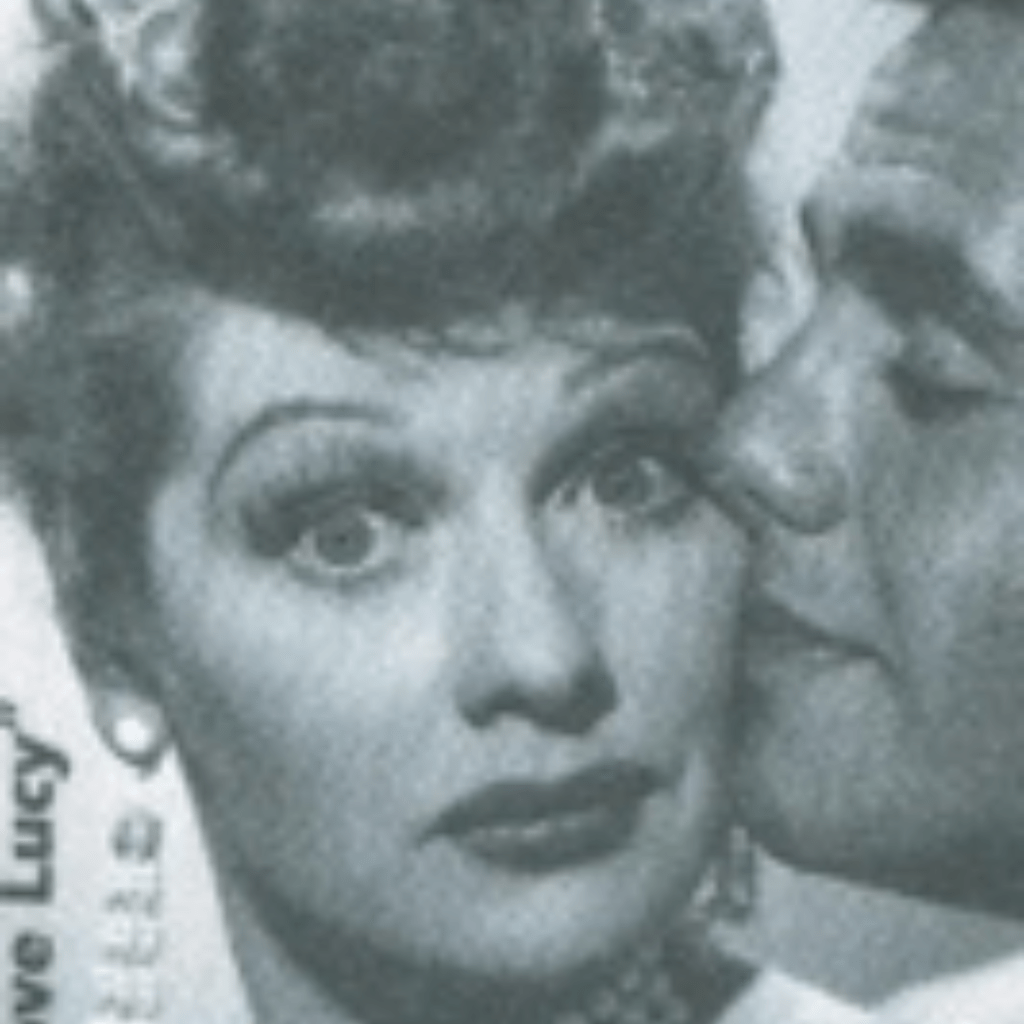
I think of the late and great Robbin Williams, bringing tears of laughter to millions of people through the years. I think of Christopher Titus whose mother and sister both committed suicide; I think of Lucille Ball whose offscreen personal life did not look anything like the slapstick humor the late comedic genius displayed onscreen. Humor can be wonderfully therapeutic, but we also need to be willing to look under the spiritual hood.

So, the next time you find yourself or a loved one tapping a funny bone, ask yourself: is there a bigger story here that I’m ignoring? Humor can often be the vehicle to truth.

They Myth of Empathy: What It Is and Isn’t

The notion that empathy can deplete our mental resources or hurt us is an unarticulated myth.We can appreciate someone else’s suffering without the need to experience it.

A good friend has a car accident. Your uncle has dementia. A sibling has breast cancer. In each of these situations, as in any challenging time in the lives of loved ones, our heart has the opportunity to open and experience compassion.

But sometimes, we humans confuse Compassion’s powerful sibling, Empathy, for a virus that’s potentially contagious. 

So, we close up, emotionally distancing ourselves from whatever turmoil a loved one is experiencing, not because we don’t care, but because we are afraid to care too much.

Empathy Fear in Action

Years ago, a friend of mine saw I was struggling with a family issue. When I articulated what was going on, she told me the following:

“You know I love you, but I can’t be around you while you are going through this. It’s too hard for me. Once it’s over, let’s get together.”

Despite knowing me for years, my friend equated “being there for me” with somehow catching the challenges I was facing.

What Empathy is Not

Empathy is not something that requires physical, emotional, or spiritual stamina. It doesn’t ask us to drain our health, bank account, or time. Empathy doesn’t infringe or demand. It isn’t a cosmic paramecium, feeding off of us to help another.

What Empathy Is

The prefix EM means to put into or bring to a certain state. The root word PATHY means feeling or suffering. To have empathy to imagine what another feels in a given situation. We are imagining the Other’s experience, but we are not in the situation itself. Empathy is the emotional lubricant that allows humanity to connect. By putting ourselves in another’s shoes, we stimulate Compassion.

Empathy in Action

My friend’s fear of empathy ironically prevented her from experiencing it. When someone loses a loved one, when there’s a difficult divorce, when a family member is robbed — the greatest thing we can do for that person is be present. The sufferer does not expect their friend to BE in pain, only to acknowledge that it’s there.

Empathy is a silent or verbal acknowledgement to let the sufferer know they are not alone. It can manifest in anything from a homemade pie to a text, letting them know you’re thinking of them.

The Myth of Empathy

There’s this unspoken fear that demonstrating empathy, allowing ourselves to “go there” for someone in pain, is going to break us. 

But the opposite is true: when we open our hearts to someone else’s pain, our heart gets stronger, not weaker. Our ability to put ourselves in another’s figurative shoes makes us more powerful, not less.

A Surprising Benefit to Empathy

When we lean into empathy for another’s suffering, we strengthen self-compassion for ourselves. By welcoming the unwelcome in others, we grow more understanding and forgiving of our own imperfections and challenges.