The Silent Struggle of the Sandwich Generation

And why it deserves attention
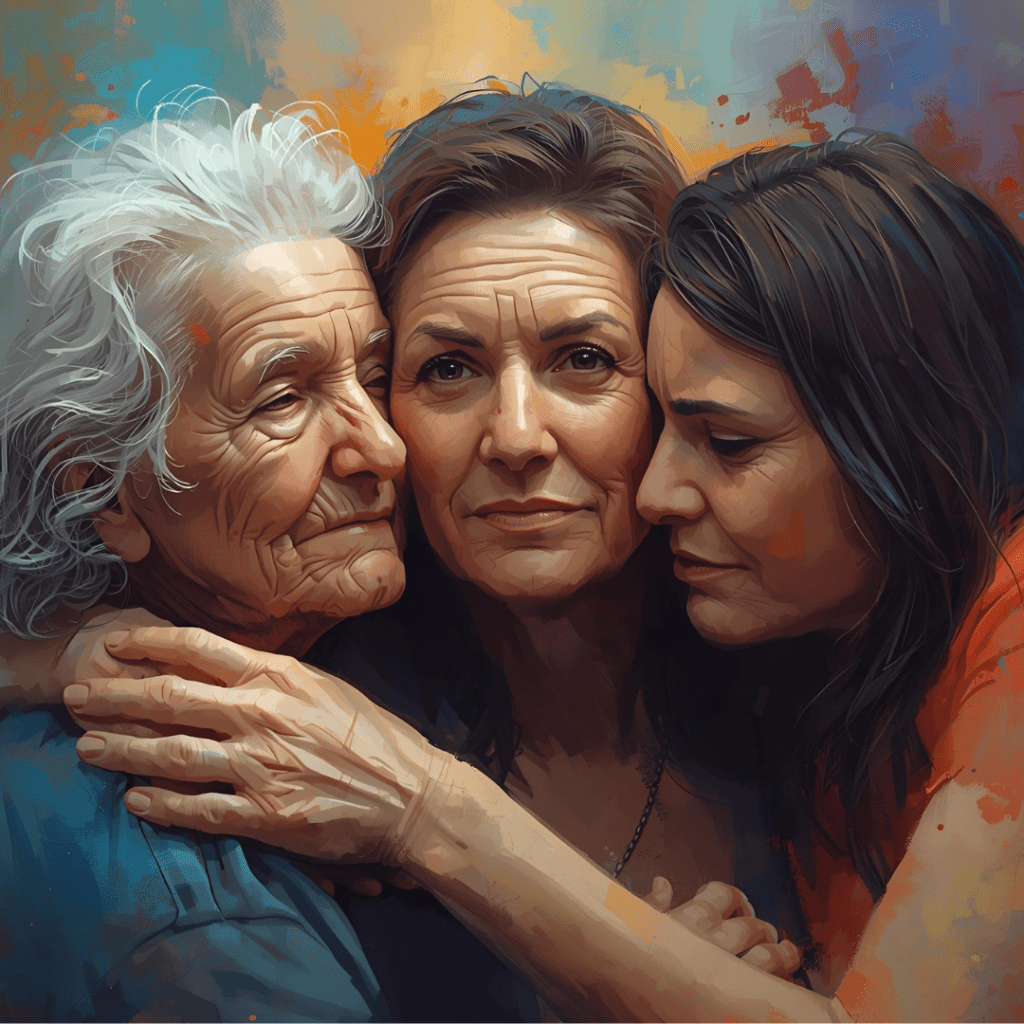
Image created using AI on Canva

“I forgot to put the car in park.”

Eight words from my mother that made my stomach drop. She lives a plane ride away. And I’d just begun a new job.

And my son was flying out for his freshman year of college the next day.

Aging isn’t for the feint of heart. And aging with aging parents and aging kids is…well, a damn lot of aging.

No one tells us that growing pains continue well past puberty and adulthood. There’s the silent, invisible growing pain of watching your aging parent decline and its counterpart, the ache of seeing your once baby leave the figurative nest.

I’m well aware that to have both of the aforementioned are blessings. But life is a double-edged sword: with every gift arrives the inevitability of its temporal nature. 

The Meat of the Sandwich

There’s ample information about caring for aging parents. We are told the Empty Nester phase of life is a time of celebration — a new chapter to embrace. Yet while both are true, there needs to be an acknowledgment of the figurative shoe that drops when dwelling in this space between decline and ascension.

We middle-agers are the meat between the old and new. We are the great observers of what no longer is. Great because it is only from the vantage point of middle age that we can — I believe — perceive the mountains from hills. The lens of time has granted us the vision to see our parents’ life trajectory and the exciting journey before our young adult children.

And oh the mourning we feel for the loss of what is no more. Yet instead of acknowledging this palpable ache, it remains like a spiritual albatross we carry.

There is another way. 

Ironically, when we speak to the loss we experience, only then can the celebration of what’s to come can find a safe space to enter.

I am mourning the mother who once loved driving cars, who snapped her gum in a way that this grown woman once considered was the coolest thing ever. I mourn the loss of her ability to get on planes, to take memory for granted, who could wash and dress herself.

But I’m also mourning the weight of my newborn son in my arms, the sound of his pre-pubescent voice, the sacred moments of reading a bedtime story together, or the day he learned to ride a bike — the memory of his face beaming with pride.

It’s okay to mourn. It’s actually necessary. We can’t let go of something we never allow ourselves to first embrace.

What the Meat Needs

This “meat” needs to acknowledge the tender pull between her mother and her grown children. Guilt doesn’t serve anyone — including the meat of a sandwich.

We can’t give so much that we lose ourselves. It’s that oxygen mask analogy that serves us well in this temporary role between generations: we must put the oxygen mask on ourselves before we can help our parents and grown kids.

Of course, this isn’t always possible, but it provides much-needed guidance in our emotionally (and often physically) demanding world of intergenerational caretaking.

I was planning to visit my son at college next month. Instead, I will be spending time with my mother. I asked him how he felt about it — Guilt flitting around me like a pesky mosquito.

“You need to be with her. I’m fine. I’ll see you Thanksgiving.”

The compassion and ease with which he said those words told me everything: he was a young man now — worlds away from the preschooler who once wrapped his arms around my legs so tightly I couldn’t walk.

Now it was me who was holding onto him, not wanting to let go — growing pains indeed.

These days, I acknowledge the Mosquito of Guilt flitting about me when I choose to do something for me. It’s there but my mindset is increasingly becoming its own repellant. 


Author, Educator, Actor www.sheri-jacobs.com Author of THE FRIENDSHIP DIET and DREAM WRITE .
Understanding Reality: Beyond What Meets the Eye

Reality isn’t as solid as it seems

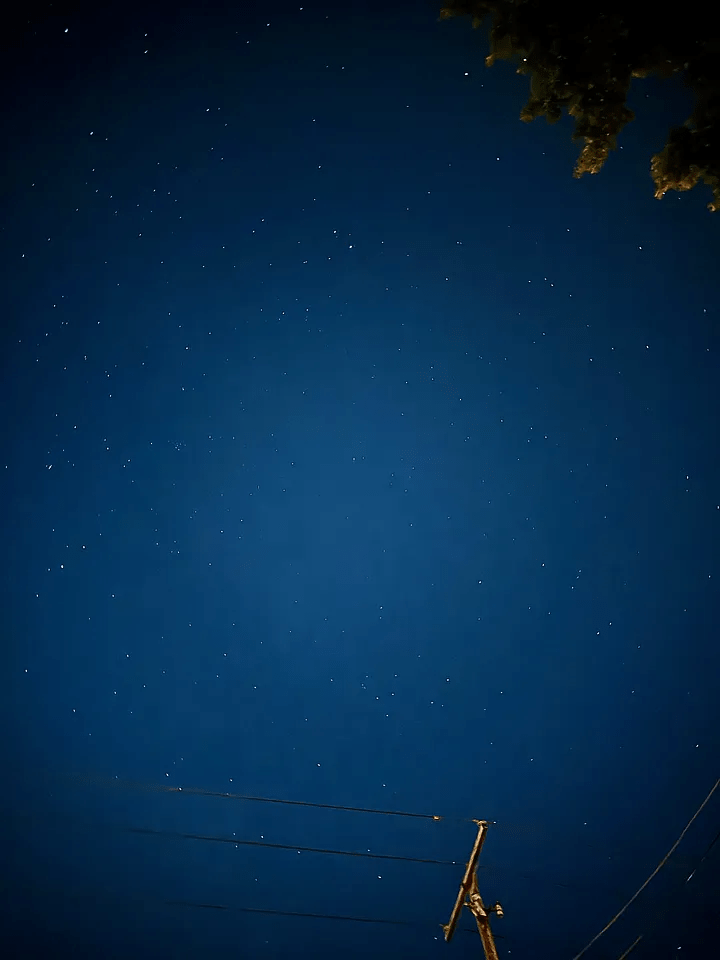
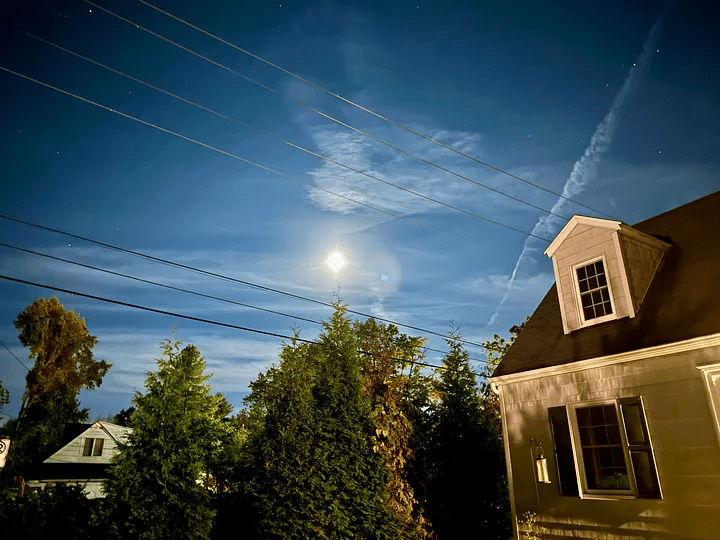
What do you see? (Image by author)

Early morning or late at night? My brain was confused as I took in the photo my son texted.

Factually, he’d told me the picture was taken on a Saturday evening. And the smattering of stars to the left made my cerebrum eager to confirm this.

And yet. The bright light in the center of the wispy-clouded sky told me it was early morning, in the wee hours of dawn.

“But that’s the sun.”

“No, that’s the moon.”

Wait…what?

The same sky from a different angle. (Image by author)

The Fact is…What?

Intellectually, I know that the moon will sometimes look bright because it reflects light from the sun, and that the moon itself does not emit any light. And yet, my brain couldn’t compute the bright circular light against the fair blue sky to be anything other than the sun.☀️

Our brains love certainty. They love to predict, compare, and plan. They deserve a gold star for their tenacious effort to keep us safe.

But the fact is, reality isn’t as solid as it seems. And when we allow our well-meaning brains to run the show, we can lose out on wonderful possibility.

When we allow our beautiful brains to assume, we miss out on considering life from another perspective, another angle. The fact is:

💡the sky is violet in color, not blue

💡dark matter makes up most of the Universe (85%) yet remains invisible

💡humans spend about 10% of waking hours with their eyelids closed(blinking)

💡The Earth is not perfectly round (It has a slight bulge around the equator)

Of course there are MANY more mind-blowing facts and that’s the point: when we keep the doorway open between science and perspective, our reality alters — something that tends to make our brilliant brains feel uncomfortable.

But something wonderful happens when we allow ourselves to dwell in the space between fact and perspective: we find opportunity where there once was lack, we find possibility where before we only saw impossibility, we find wonder where before there was status quo.

Each of us arrives with a unique set up fingerprints, formed at 3 months in utero. No two of us are alike as are no two tongues alike (Yup! There are actual tongue prints forensics will use.🕵️‍♂️)

Our well-meaning, extremely beneficial brains will continue to compare and look for similarities and patterns, predicting and planning in an effort to keep us alive. And that’s all good. But we mustn’t allow our brains to hijack our wonder, our curiosity, and the potential for seeing life through a different lens.

Unspoken Menopause: A Look Behind-the-Scenes

Menopause is much more than the cessation of a woman’s period. (Image created using CANVA)

One of my student’s recently got her mouth pierced. She’s thirty-five, so it goes without saying that she looks beautiful — with or without the shiny loop piercing her lip.

“Do you like it?”

I tell her the truth: I like it for her. At over half a century on planet Earth, the last thing I need is another hole to maintain.🤨

But at thirty-five, she isn’t thinking about potential infections or the additional care needed to keep the new piercing clean. She is that five letter word of yesterday: YOUNG.

She laughs at my response and adds with the casual lack-of-perspective youth carries: 

“Oh, I get it. I’m only going to wear this for another five years. When I’m forty, I will be too old to get away with something like this.”

Math has never been my strong suit, but in five years she will still be miles younger than me. And I’m happy for the ample chronological chapters before her, but the zinger from her words still stings: “too old” at forty😣.

The Unspoken Menopause

Scientifically, biologically:

“Menopause is a point in time when a person has gone 12 consecutive months without a menstrual period. Menopause is a natural part of aging and marks the end of your reproductive years.”-Cleveland Clinic

But menopause is so much more than the cessation of a menstrual cycle. Yes, it’s the end of a woman’s reproductive years, but this is no small thing. And there are physical and emotional changes that occur as a result of these clinically-sterile sounding biological facts.

Menopause can be a celebration of freedom (white sheets ahead!) and empowerment when a woman gets through the often rollercoaster experience of perimenopause.

But menopause also requires us mourning who we once were and will no longer be.

Mourning in menopause, we can realize that we:

😔no longer have a glass of water without our bellies waxing five months pregnant.

😔 notice the scale start to go up faster than we like

😔 see a dark mustache forming ever more frequently (who has time for an extra piercing now?)

😔 finally understand the menopausal phenomenon of needing to watch everything from your A1C to your readers’ prescription

So, what do we want?🤨

“We want what men want. Everybody wants to look younger. And gravity is making that impossible.”-Cathy Ladman

We want what women have always wanted: humor, love, and to feel good.

Humor is menopause’s best magic pill. Through the aperture of humor, I can laugh at my student’s comment from the generous perspective time has granted me. At 35, 40 sounded “old” to me too. 

In the middle, with the figurative sands of time in the hourglass between birth and death, we can choose to both mourn what has passed and embrace what we have.

The crazy thing is, I appreciate more now that Time’s hourglass has dispensed plenty of sand in the past.

I appreciate my chiropractor keeping my back in alignment and the sound of birds that greet me each morning. 

Menopause is Mother Nature’s reminder that this ride called life will end at some point. So, we need to take care of and love the “equipment” we have while we have it (even if said equipment is a little worn out and in need of a low-carb diet and tweezers for stubborn chin hairs😉).

Mourn+Find Humor+Appreciate+Embrace=Enjoy the Ride

(Rinse and Repeat)

And just like the sign that reads on the ceiling of my gyno’s office:

“This too shall pass.”

The Profits and Ethics of Ghostwriting


Ghostwriting can be quite profitable. Yes, it often requires a great deal of research and time, but if you enjoy writing, this can be both a rewarding and lucrative endeavor.

A man recently asked me to ghostwrite his life story. It would require both the aforementioned generous doses of research and time. He offered me a generous amount to write it as well. And his life story sounded like the stuff of a Lifetime TV drama. The juicy fodder was there.

And yet, I turned his offer down.

The reason? 

A big part of his life story involved his passion for hunting.

“It’s about winning.” His eyes gleamed. “It is pure sport.”

He made it clear that hunting had everything to do with his love of guns and taking the life of another animal. 

To write someone’s memoir is to spend hours with someone, to study countless photographs and letters, documents and newspaper clippings, until you can hold the essence of a person in the space between your mind and heart.

I had no desire to hold a hunter’s essence in my mind and heart.

Oh, I tried. For the generous amount of money he offered, I tried. But my gut kept got tighter the more he spoke about his love of guns and killing defenseless animals in the wild.

He will no doubt find the right writer for his memoir. It will be a tale of conquest and winning at all costs. 

The heart of a writer bleeds onto the page. It can be tasted between the words. I couldn’t create a likable protagonist for this life story without my heart feeling torn and without a certain element of passive-aggressive sarcasm oozing between its pages.

Someone else might feel differently. And that’s okay. We each have to do what speaks to our inner compass. 

Years ago, I would have pushed down the discomfort that arrives when you feel something you don’t like. I would have resided in the Land of Denial.

Age (and a steady meditation practice) has taught me to heed that — even subtle — tug of discomfort. Much better to address it early on, then spend years addressing an ever-growing issue with psychological Band-aids.


The Truth About Pipe Dreams

There’s a manuscript I’m working on. It’s in its 3rd round of drafts. The seed of inspiration for the plot arrived, like many creative ideas, via the idea of another (in this case, a brilliant story by Marian Keyes, The Brightest Star in the Sky.

We have the power to choose where our attention goes. And wherever that energy goes, so too does its expansion.

I could have chosen to read Marian Keyes’ brilliant book, experiencing the creative zing of thought that happened, and subsequently brushed it away like crumbs on a table after a meal.

Instead, I gave my attention to the idea that whispered in my psyche over the course of days and weeks. 

When we give ourselves permission to pursue our imagination, our imagination only grows.

Stuck in Pipe Dream Mode

When we care more about what is going on externally, our dream morphs into a pipe dream

Ironically, the term pipe dream derives from the fantasies envisioned from smoking opium at the end of the 19th century. 

Ironic that the pipe known to deliver imaginative thinking is now associated with keeping one’s dreams stuck or unattainable. 

We are born creative. Imagination is one of our greatest birth gifts. 

Releasing the Pipe Dream

So how does our imagination get stuck in pipe dream mode?

When we focus on the myopic, we receive more of that mindset, closing the figurative door to creativity.

Creativity is messy. It isn’t linear. It doesn’t arrive with neat stop and start points. Creativity doesn’t offer guarantees. 

Fear is the cage holding our dreams.

To free our dreams from our self-created pipes means:

  • discounting the naysayers (this can include your mind’s negative chatter)
  • honoring the still voice deep inside you
  • taking steps each day in the direction of your dream (however small)
  • surrendering to its unfolding (whatever that looks like)

I’ve been playing with the manuscript for years — playing, not working (mindset is everything). I don’t know:

  • if it will ever be published
  • how an audience will receive it

But I keep the dream alive, out of the figurative pipe because:

  • my inner voice is telling me this story needs to be written
  • playing with the manuscript is a form of great joy

There are plenty of days where I find my mind churning out comments and questions like:

“Those are hours of your life you’ll never get back.”

“Do you really believe what you’re writing will make any difference in someone’s life?”

“You need to be practical and responsible. Stop wasting your time with this bullshit.”

The Pipe is Your Ego

I believe that the figurative pipe trapping our dreams is nothing more than our ego, Edging God Out. (Full credit to the late and great Wayne Dyer:-)

The ego tells us fear-based words. It speaks from a place of lack.

When we acknowledge the fear and continue to walk in the direction of our dreams, the voice of fear will (over time) grow fainter.

Remember: the mind’s chatter is like that of a toddler. When you first refuse to give into its demands, it might very well stomp and throw a generous temper tantrum.

But what happens when you allow that upset toddler to cry without running to it? It eventually, grows quiet and falls asleep.

Thriving dreams require our attention.

So, tune into those ideas percolating in your imagination and let the mind’s worrying chatter grow sleepy and quiet.

Abundant Living

Calling Writers and Teachers

An insightful (and fun:-) writing prompt

Calling all ELA teachers, parents, poets, and writers! Do you want to:

  • explore the inner terrain of you
  • connect with your students/child/children
  • inspire self-exploration and self-awareness

If the answer is a resounding YES to any or all of the above, you’ll want to keep reading:-)

For the Educator

Whether you are an ESL secondary teacher or Language Arts teacher to 1st graders, the activity I’m shortly going to suggest will boost:

  • insight
  • emotional intelligence
  • creativity
  • language development
  • self-esteem

So, what’s the activity? Hold onto your academic seats…

I Am From

Students of all ages love a creative activity that offers a rare combination of form and freedom. Enter the I Am Fromwriting prompt.

Just having a sentence stem soothes yet challenges the novice to the experienced writer.

Bonus points — while your students are waxing creative, two big things are developing:

  • a positive association with writing
  • a connection between teacher and student

When a student is given the verbal water wings of a sentence stem, they can “swim” with an idea.

Sentence stems promote students’ confidence and provide a focused theme for them to explore.

For the Lover of Words

The I Am From is no ordinary I Am prompt. Oh dear lover of words, just look at the beckoning use of the preposition “from” teasing us to respond.

The I Am From writing prompt is an invitation to explore our soul’s journey.

This is your chance to weave those unspoken thoughts into a tapestry of verbal color as intricate and mesmerizing as wonderful you.

I’ll be running a writing camp for the next couple of weeks. Their ages range from 5–14. So, I’ve created an I Am Frompoem as a model for them.

Poetry is to writing what a trailer is to a movie.

Poetry gets to the heart of a matter, literally pulling on the gamut of emotional strings just long enough to let us know there’s more lying many leagues below the sea of our psyche.

Poetry is the sampler; prose is the buffet.

My Poetry Sampler

I am from
metal swings,
plastic-covered couches,
and station
wagons

I am from
dogs barking
at mailmen,
8 millimeter films,
and fireflies
on summer nights

I am from 
45 records,
playing hopscotch,
and Mr. Softy’s 
ice cream truck

I am from 
building forts
cartwheels,
and the end 
of the Vietnam War

Whether you are a teacher or lover of words (or both:-), I hope you find the I Am From prompt inspiring.

Abundant Living

Soothing News for Worriers

It’s a sunny day as I write, the sky a seamless swath of pale blue. The warmth of the sun’s rays kiss the floorboards and my feet.

Man, it feels good.

But only yesterday, rain pummeled down from a sky reminiscent of horror flicks. Driving through the puddled streets was an exercise in caution.

And yet, both today and yesterday, I have the power to choose my reaction to the weather.

Sounds easy enough; but what happens when the changed environment isn’t as benign as the weather?

What happens when a life change involves something someone said or did?

The Sky Isn’t Mad at You

We all know that a blue or cloudy sky isn’t about us. Mother Nature will continue to do her thing. Whether it’s a stunning 75 degrees or a chilly 45, we know the weather isn’t personal.

And yet, we tend to personalize our emotions and take them as static.

Unhappiness manifests when we take a negative emotion and either deny its existence or take it personally.

Life happens through us; we don’t own the experience. We are no less ephemeral than Nature itself. In her groundbreaking book, Just a Thought, Dr. Amy Johnson shares the subtle yet profound cognitive error plaguing most of us:

“Ever since you’ve been old enough to think about yourself and your thinking. Ever since you’ve been old enough to cling to and personalize your moving, changing experience, it’s looked as if what you experience is you. It’s looked like your psychological experience means something stable about who-you-are at your essence….It is not, and it does not.”

Our emotions feel personal. But they aren’t. As the Taoist philosopher, Wei Wu Wei said:

“Why are you unhappy? Because 99.9 percent of everything you think, and everything you do, is for yourself — and there isn’t one.”

What Brains Do

Our brains are wired to protect us. They are constantly chattering to us, offering us zillions of ways to look out for our safety. Our cerebrums are hardwired for our survival. So it’s no wonder that our brains:

  • compare
  • judge
  • predict
  • create narratives
  • solve
  • dramatize
  • find patterns

But here’s the great news:

We have the power to choose awareness at any moment. We can choose to acknowledge our miraculous brains without heeding its every suggestion (or what it often feels like, command).

Embracing Discomfort

When we feel anxious or depressed, our brains kick into overdrive, offering anything and everything to keep us “safe”.

For example, let’s say you are anxious about an important test coming up. Your mind might chatter on in the following manner:

“If you don’t study more, you will FAIL! You remember, you failed that test in 7th grade because you didn’t study enough. You aren’t as smart as other people, so you need to work twice as hard. What is wrong with you, thinking you can relax now when the test is tomorrow?! You should be ashamed of yourself. If you fail this test, you will be such a disappointment to your parents and friends. Is that what you want??”

Notice the word “should” and the brain’s razor-sharp ability to compare a past failure to the present situation — even labeling the failed test as a failure in itself instead of reframing it as a learning experience. Notice the brain’s derogatory language, questioning the person’s ability to make sound decisions, serving up potential embarrassment and shame on a guilty platter.

The brain’s chatter feels so personal. It can feel downright painful.

But when we remember that it’s not personal, that mental gymnastics is just what brains do, we can take a deep breath and observe.

We can lean into the discomfort we experience and know that, just like the clouds that cover the sun, the sensations of dread and angst WILL pass.

Fear only festers when we deny its existence.

When we acknowledge, with self-compassion, as the objective observer that we are experiencing negative emotions, they can more easily pass through us.

We experience emotions; we aren’t the emotions.

Soothing Our Brains

My son called me the other day from college, very stressed. I shared a 10-minute Calm meditation with him via text. Ten minutes. He called me the next day to say it “really helped.”

Meditation allows us the space to observe rather than react.

Meditation is an act of self-compassion. It is an unspoken invitation to the Universe and our soul to connect.

Often, our brains’ (initial) response to meditation is protest. The monkey mind tends to throw in all kinds of machinations. I liken the mind to an overtired toddler, fighting her afternoon nap:

“This is stupid! You have so much to do and all you’re doing is focusing on your breathing — what the hell point is that? Did you turn the oven off? You never returned that important phone call. You are so irresponsible. Do you even know what you are going to wear to that party tomorrow??”

And on and on it will go…and just like the overtired toddler, if you observe long enough, the chattering, overly vocal brain will eventually quiet and realize the Silent Observer (YOU) are in charge.

Meditation reminds us that whatever we are feeling or experiencing is temporary.

Meditation strengthens our spiritual muscle to better handle life’s ever-changing journey.

May the following meditation bring you peace and comfort:

The Daily Calm 10 Minute Meditation


The Snapshots We Carry

There’s a photo of me in 5th grade sporting braces and a perm reminiscent of a poodle fresh from a blow dry. It’s 1980-something, a time when bigger meant better and this included the Linda Richmond-esque bifocal glasses with gold-hued stickers of my initials in one of the lenses’ corners.

For decades, I hated that skinny girl at the start of puberty. The one who begged her mom for a training brawe both know wasn’t necessary.

Yet over time, I started to look back at that photo and saw a completely different image staring back at me.

Snapshots Can Change

Hindsight offers the ability to see through the past with a different lens.

Think of any experience in your life — good or bad or somewhere in between. 

How we remember an experience affects our perception.

For years, I looked at the photos of me in 5th grade and saw a mess of big hair, huge glasses, and boobs that made Houston look mountainous. 

Now, on the cusp of fifty, I am able to see the tween I was less myopically. I’m able to zoom the mental camera out see the terrain of that time and place:

There I am, holding a baby in my 11 year-old arms. How cool is that? The neighbor, a mom of a 5 year old little girl and now a mom again, is trusting me with her kids. I get to babysit both of them regularly after school, and I’m so good at taking care of them. 

I move closer to my 5th grade self and speak directly to her:

You’re not skinny — you are thin. And it’s the 80’s — of course your hair is big!

Be kinder to yourself; no one has this thing called Life figured out. Don’t be in such a rush to grow up and get those boobs. Everything has its season and there’ll be plenty of time for boobs. Just revel in the stories you make up with your neighbor’s daughter each day after school. Trust me, all of these creative games you are playing with her will be something you’ll miss in adulthood.

The Illusion of Snapshots

Author and therapist, Lori Gottlieb (Maybe You Should Talk to Someone) writes about remains of our snapshots:

“People don’t always remember events or conversations clearly, but they do remember with great accuracy how an experience made them feel.”

We’ve all had that moment when we speak with someone from our past and they recall an event one way and we another. Since our perception dictates our reality, this makes sense — both people are correct.

We can look at the same snapshot — the same moment in time and see it differently because of the lens we respectively look through.

Perhaps the real illusion is believing there’s only one snapshot, one angle to view a memory.

Future Snapshots

We not only have the power to alter the filter of our past snapshots; we possess the ability to transform the mental photos on their way.

Instinctively, we do this with young children: seeing the wonder of who they will grow up to be while still wearing diapers.

One of the reasons parents possess so much power in those formative years is their ability — whether realized or not — to affect a child’s inner snapshots.

The great news: we can transform our inner snapshots at anytime to what we want to see.

I’m not talking denial or sweeping things under the figurative carpet. I’m referring to our ability to look at ourselves with compassion and unconditional love, embracing the fractured parts of ourselves to let in the light.

Imagine how the snapshots of your future will develop if looked at through the mental lens of self-compassion and willing vulnerability?

Talk about a Kodak moment!

The Most Dangerous Word

And why we need to catch ourselves saying it.

Friends invited me out for dinner. Weeks before, we’d originally had plans for them to head over for brunch.

“I’m making homemade waffles and smoothies,” I’d said.

Only the day of the brunch found me flying to Florida to see my father in the ICU.

Last night, at our dinner, I found the following words percolating in my head:

“I should be able to have them over by now. Why am I so tired? So overwhelmed?”

I didn’t say these words aloud. Keeping them silent only made a looming sense of failure inside of me fester. With my unspoken self-recriminations yakking away, I vocalized the following to my friends:

“You can come over for brunch next weekend. Let’s do that!

The Most Dangerous Word

Did you catch the word yet? Whether merely thought (as I had) or spoken, the word we need to be vigilant of is SHOULD.

Should arrives with verbal tentacles that carry guilt and shame.

Should is an emotional lever that heaps blame and obligation onto our psychological shoulders.

When we think from a place of should, we are subconsciously telling our psyches we aren’t enough. 

Should is the barbed wire of self-compassion, thwarting our ability to listen to our intuition.

Planting New Seeds

Should is a weed of a word, surreptitiously preventing our emotional garden from flourishing.

We can remove the “shoulds” in our garden and replace them with words that nourish like need and want:

Of course I’m overwhelmed and exhausted. It’s not even a month since my father left this Earth. I want to make a brunch for my dear friends but now is not the right time for me. I need time: time to linger in my pajamas longer, time to curl up with a good book, time for long walks that go nowhere, time to devour a sleeve of Oreos.

By yanking out the albatross of SHOULD and replacing it with the seeds of WANT and NEED, I feel lighter and flooded with self-compassion.

Where Does Should Emerge in Your Life?

Where does the lurking word of obligation sneak up in your life? It may be something seemingly innocuous as:

“I should floss my teeth every day.”

But the statement, however genuine, lingers with the fresh scent of guilt. Instead, we can say:

“I want to floss my teeth every day.”

or

“I need to floss my teeth every day.”

I challenge you to observe the words you use, catching yourself when you use or think the word should. The word might seem innocuous, but it has the potential to subtly cause a sense of obligation, shame, guilt, or blame.

When we say:

“I need to…”

there’s a sense of responsibility.

Should takes that responsibility and serves up an unsolicited side of guilt.

What do you want to do? What do you need to do?

Empowering questions for an empowered soul.

Relationship Choosing is HARD

Jordan always opened the car door for me. He said all the right things: asking how my day was, complimenting how I looked, asking me on another date.

But he also refused to kiss me after I’d eaten shrimp.

“You want to kiss me? You’ll have to brush your teeth first. Shrimp isn’t kosher.”

His words made sense from a logical standpoint: shrimp is shellfish and Jordan eats kosher.

Yet from an intuitive, gut-level, Jordan’s words felt judgmental and controlling.

Intuition Whispers

Intuition (typically) doesn’t scream. No, intuition is that sweet friend at a party that whispers you have a poppy seed stuck between your two front teeth. 

Our intuition speaks to us through feelings.

At first, those feelings are subtle. And that’s when it’s the most important time to pay attention.

The actions of another matter more than words.

Jordan said all of the “right things, but his actions told me everything.

What is Intuition Anyway?

The root word tuit is from the latin word tueri which translates to tutor and means “to look at or watch over.”

Our intuition is us going within for counseling our guidance.

My intuition told me to heed the feeling of constraint and judgment I felt based on Jordan’s actions.

And yet, I ignored my intuition. I pushed it away and focused on the external. I choose to see only Jordan’s:

  • full head of blond hair that I loved running my fingers through
  • green eyes light up when I entered a room
  • kisses that left me swooning

Youth is no excuse, but I was very young at the time. 

There is a tendency in youth to possess an affinity for the external of things.

I brushed my teeth, shoving down the bitter taste I felt despite my minty fresh breath.

When We Ignore Intuition

Jordan started saying things that made me feel like I was in a snow globe: his words both haunting and hypnotic.

“I want to take care of you. I want to put you up on a shelf.”

When were about to meet his parents, Jordan insisted we go clothes shopping for me.

Me:“Why? I have plenty of clothing.”

Jordan: “I didn’t want to say anything, but it’s the way you dress. My parents are conservative. I don’t want them to get the wrong impression about you.”

Again, my intuition spoke to me; only this time it was more of a poking, sickening feeling. It said:

You can dress however you want to. This man does not get to decide what you wear. 

Still, I ignored my intuition’s pokes and jabs for me to “wake up” and wore “Jordan Approved Clothing” to meet his parents.

The bitter taste of shame from when I brushed my teeth to please Jordan tainted everything I ate that night.

Intuition Never Gives Up

I am not ready to share the final straw that broke me open, but I will note:

Our intuition never leaves us; it only grows louder with time.

It would be almost two decades before I finally listened to my intuition. Two decades of:

  • the waves of shame and judgement 
  • living under Jordan’s figurative thumb
  • physical ailments
  • low self-esteem

Our body develops an affinity for sickness when we depend on another for our self-worth.

Intuition speaks to us by highlighting those negative feelings and outward symptoms. It offers more and more unpleasant sensations, unrelenting until we are ready to pay attention and change course.

The Danger of Running from Loneliness

I met Jordan after losing someone very close to me.

Mourning is not a good time to start dating.

I was in terrible emotional pain over the loss of someone dear to me. I wanted something to stop the palpable sense of “aloneness” I’d felt.

When we feel lonely, it is important to acknowledge the feeling, lean into it, embrace it.

There’s a lesson in every emotion. It’s there to teach us something about ourselves.

Our intuition wants us to acknowledge the good and bad feelings that come up in life.

But I didn’t want to feel the pain. I wanted anything and everything to take me in and never let go.

Not the best time to date. It’s no wonder I attracted someone who wanted to put me on a shelf.

When we run from a negative emotion, we ironically, invite it to stay longer.

It wasn’t until I went through the pain that I began to discover peace.

Relationship Choosing is Hard

Relationship choosing is HARD! 

The prefix RE means back or again.

When we enter into a relationship, we are literally seeing a reflection about who and where we are in our life’s journey.

  • Someone is rubbing you the wrong way? There’s a lesson there.
  • Find yourself attracting controlling people? There’s a lesson there.
  • Feeling misunderstood by your partner? There’s a lesson there.

And if you are feeling lonely, there is a lesson there as well because:

The most important relationship you will ever have is the one with yourself.

When we fall in love with ourselves, discovering and embracing all of our facets, our intuition thanks us with those good-feeling vibes we are craving.

When self-love is at the helm of our spiritual ship, our internal compass steers us right where we need to be, again and again.

So, the next time you find yourself feeling something less-than-pleasant from a loved one, ask yourself:

What is this feeling showing me?

Self-compassion is the cornerstone for hearing our intuition. It offers us the sacred space to honor what we are experiencing, without judgement.

*Name has been altered for privacy.