Confronting Inner Wounds: Steps to Emotional Freedom

He was poking me. Not physically. Emotionally. His words landing like shards of glass in my throat and chest.

The pain was unbearable. It was a suffocating thing. All consuming and deep.

So, I did what typically happens when we are in this level of suffering: I lashed out with biting words of sarcasm. I knew my words were wrong and irrational, but rationality takes a back seat when pain is in the driver’s seat.

And then came the tears. My tears. Deep, guttural tears that had nothing to do with his poking words and everything to do with the unaddressed wounds within me.


The pain in my heart lasted long after he hung up on me. It ached between my bones and clung to the pores of my skin, stinging my eyes with unshed tears.

There is no greater pain than living with unaddressed wounds. 

Emotional pain holds on greater than a rabid Rottweiler biting down on a pant leg. It’s unwavering, unrelenting and feels like your soul is coming apart.

Break Out to Break Through

The pain I felt was so intense that I knew there was only one thing left to do: explore it.

“When you squeeze an orange, orange juice comes out, because that’s what’s inside. When you are squeezed, what comes out is what is inside.”-Wayne Dyer

I looked at the wound within me. And there I found a history of wounds. I unravelled each wound until a pattern began to form. 

The wounds were from a lifetime of false narratives, all of them being told by unhealthy, narcissistic, insecure men.

The pain I felt was a lifetime of me contorting myself to fit their narrative. 

We each have the power to transform our pain to empowerment.

The man goading me was just another manifestation of that false narrative. He was able to “get a rise out of me” because of the unaddressed wounds that I’d bandaged up, with psychological pus oozing out of them. 

A peace arrived within me when I addressed the root of the wound:

I was a victim of abuse. I am not the abuse. The power is always within me. I can choose to love and be love, regardless of what others do.

This doesn’t mean that I don’t experience moments of sadness or grief, pain or disappointment. It means that I allow those emotions to rise and fall within me, no different than waves in an ocean.

“Don’t think you’d be free if you just didn’t have these kinds of feelings. It’s not true. If you can be free even though you’re having these kinds of feelings, then you’re really free — because there will always be something.”-Michael Singer

When I allow the pain, it passes through and doesn’t stick around to form a new wound.

Emotional pain arises because of the unaddressed wounds we carry. It’s ripping off the figurative Band-aid that allows us to heal. It’s allowing ourselves to feel the pain and breathe through it that brings us true peace.

The need to poke another emotionally is sourced from an unaddressed wound. Those who manipulate, lie, and deflect responsibility are walking around this planet with significant unaddressed wounds.

True peace arrives when we realize we can only be responsible for our own inner healing. 

I cannot get sick enough to make that man healthy. You cannot get poor enough to make someone else feel wealthy.

Freedom means allowing another to choose their own path, however destructive that may be. 

A peaceful life begins when we embrace the four C’s: I will not control, change, cause, or contribute. 

But we can choose to be light and love to others. We do this when we prioritize our own healing.

XI Code to Peak Performance

To the Loved One You Can’t Reach

When the Shit Hits the Fan (Literally)

This past week, the shit (literally) hit the fan. 

You know those moments when you are holding life together by a flimsy strand? You think: “This is tough, but I got this.”💪

The self-pep talk renders you akin to a duck on the water. Sure, you look smooth on the surface, but you are paddling furiously just below the shallow current.🦆

Still, if you could hold it together for a tad longer, you think you can make it through the day/week/month without imploding.🤯

And then, the shit hits the fan…

While the aphorism is apropos of anything negative happening on a grand scale (where no amount of duck paddling will work) in my case, 💩 floated through the first floor of my home, a river of it swimming through like a feces canal.🤢

The short version of this smelly (true) story: a broken sewer line pipe caused the issue, and it’s going to cost a year of college tuition to repair (Let’s not even speak about insurance…).

What’s In YOUR Plumbing?🤔

Remember that duck analogy? Yeah, my waddle was already quacking upstream when the R.O.P. (River of Stool) hit. 

A home’s pipes are like the arteries in a body: everything’s connected.

I thought about this idea of connection a lot. Each of us is connected to each other in this world, on a micro and macro level. And those arteries, while not always physical, either close or open and sometimes need to be replaced altogether.

It was when the R.O.P. hit that I started to become aware of the R.O.P in a close relationship. My heart would always ache when I spoke to this person. Invisible cracks would start to form. I’d Band-aid the pain up with rationalization and distraction.

I was regularly this person’s quasi-therapist — a sounding board for her to throw her deluge of negativity my way. I’d sop up her violin music with emotional pompoms that I’d shake until she felt better.

But there’s a price paid for being someone’s emotional tsunami and it’s much higher than any insurance deductible.

It took my literal (sewer) pipes breaking to realize the shitstorm I was accepting in my personal relationship.

Waddling upstream, I could remain in the comfort zone of rationalization for this person’s toxic behavior.

But when I was at ground zero, emotionally, physically, financially and could no longer waddle upstream, I needed a lifeline. I was drowning.

And what did she do? She continued to do what she always does: she took out her violins and made the moment all about herself. She pulled out the “one up” card: “You think you have it bad. Let me tell you what I’m going through.”🙈

I wasn’t looking for anything more than a lifeline. A simple handful of words like “I’m so sorry.” or “That must be tough.”

Nope. Instead, she regaled me with violin music about how tough she had it today, yesterday, and always. It was all about her. I couldn’t reach her over her whiny notes. I realized then that the crap in my home was nothing compared to the emotional crap she’d been dishing me for years.

I’m in pain — much more about this relationship than my home. A pipe can be replaced. A house can be rebuilt. Money can be replenished. 

But our personal relationships…those are spiritual fingerprints. They touch our soul.

The emotional pipes cannot always be replaced. But they can be examined and if needed, reshaped and recycled so that the heart doesn’t continue to get broken. We can shift our perspective, through the aperture of compassion — for ourselves and those we love — recognizing that some emotional pipes cannot provide the oxygen our heart needs to thrive.

MENTAL HEALTH

The Doctor Will See You Now

Finding insight and healing in writing

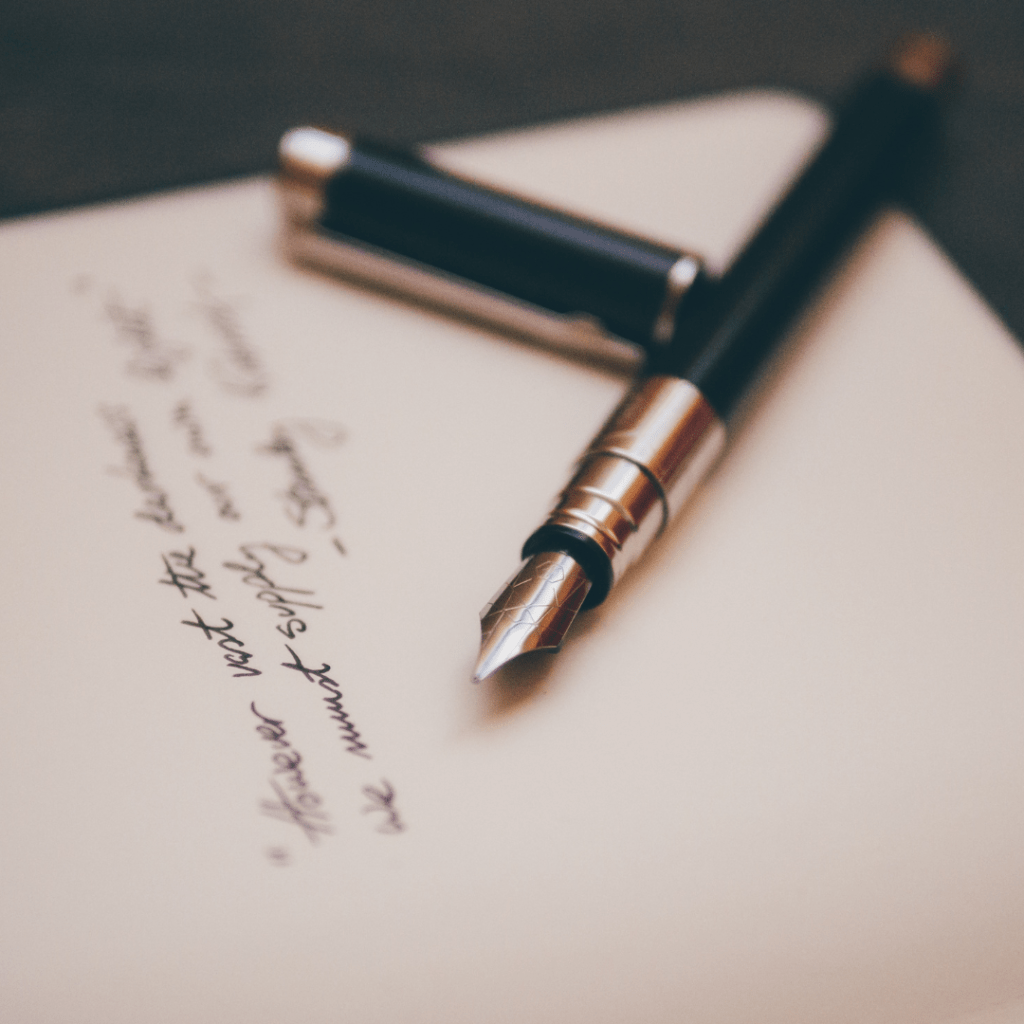
We can attend to our inner wounds through self-reflective writing.

The boy sat staring at the blank page in front him, while his fourth grade peers wrote with gusto.

One word came to mind as I took in the 9-year-old with gripped pencil in hand:

fear

Writing as a Vehicle

The students were filling in their journals, writing about their family members. Kids were smiling as they wrote about their parents, siblings, and cousins. The giddiness in the room was palpable.

Writing about ourselves is a powerful vehicle for self-discovery.

Still, the 9-year-old-boy with the gripped pencil remained staring at the untouched page.

Me: You okay?

Student: I don’t know if my dad is a family member. My mom said, I can’t see my dad anymore and that he’s no longer my dad. So, do I include my dad?

Ouch. 

Sometimes, the vehicle of writing brings some rough terrain.

Fostering Self-Discovery

Education is all about offering tools to empower. Writing is one of those foundational tools. Our world is literally built on words; it is the machinery that drives innovation and self-awareness.

The young student’s question offered an opportunity for him to self-reflect and find the answer within.

Me: That depends. What do you think? Do you think your father is still your father?

Student: Yes.

Me: Then that’s your answer.

Writing LightBulb Moments

Immediately I saw the boy’s eyes light up, his pencil no longer gripped with fear, but instead, moving with great energy in the no-longer empty journal.

When we lean into the painful questions through writing, sans judgement, aha moments abound.

Writing puts us in the driver’s seat of our life. It offers an opportunity for us to slow down and consider what we think, not what the cacophonous world at large says to think.

When we go within to write, we literally slow down our brain waves and decrease anxiety. Slowed down, we find space to explore problems from a greater creative perspective.

Writing as Therapy

The 9-year-old student was eager to share his family tree and some of their personality traits with the rest of the group. The once anxious face he carried was now emanating pure joy.

Writing offers us the opportunity to go within for counsel.

I never told the young student what to think of his father. The power to perceive his father as his father is his choice. 

Writing allows us to take the reins of our perception.

It doesn’t matter whether we are 9 or 99 years old — our perceptions are ours alone. 

Metacognition, the act of understanding one’s own thoughts and perceptions, only grows stronger with self-reflective writing.

 When we write, we are no different than a radio dial, tuning into what we think about the world around us.

Writing as a Doctor

When we write reflectively, we are taking care of ourselves. We are nurturing our brain waves and self-esteem.

When we take the time to write reflectively, we are subconsciously sending a message to our psyche: what I think and how I feel matters.

Writing reflectively opens the door to the best doctor for you to visit with: your Highest Self. Stress hormones lower, sadness is articulated and addressed. Emotions — in all of their colors — are addressed. Self-compassion and self-awareness are cultivated.

Parallel Lives:

Writing the Story Behind the Surface

Discover a powerful writing technique for understanding ourselves and our experiences.

Teaching English to middle school students during the peak of Covid last year often rendered me daydreaming for a lobotomy. It wasn’t the students. It was the eggshell-like-fear the teachers and students felt each day, not knowing how close to sit or converse, not knowing when to remove our masks to eat.

The inconsistent hybrid learning didn’t make teaching or learning any easier. Students’ WIFI would cause them to freeze mid-sentence, someone’s volume in the classroom would cause a deafening high pitch, or a student would choose not to show their face in our Microsoft Team’s meeting.

Staff was still expected to meet progress report and report card deadlines, attend 504 accommodation meetings, create curriculum, monitor students’ progress, discipline, nurture—you name it, teachers were meant to do it. 

English teachers are the ones who receive poetry and stories and personal essays bleeding with pain. We are most commonly the ones who notify the guidance counselor and make that call to CPS. 

Even though I’m no longer in the classroom, I am still a teacher. I’m still the person students share their creative stories with, fiction and nonfiction. It is a gift to be on the receiving end of their writing.

The teenagers I work with instinctively know that writing is a process. It helps them connect the dots in their lives, helps them to understand the world around them and their place in it.

Here’s the truth: we are all students. We are all trying to make sense of this topsy-turvy world on a macro and micro level. 

The gifted writer, Anna Quindlen, addresses this need for writing as a means of processing our very lives. We write to know ourselves, and in many ways, to heal ourselves. Writing as self-reflection is therapeutic.

Dr. Charon and Parallel Charts

Dr. Rita Charon founded a writing technique at Columbia University’s medical school called Parallel Charts. In Quindlen’s book, Write for Your Life, Quindlen quotes a summary of Dr. Charon’s Parallel Chart technique assigned to 3rd year medical students:

“If your patient dying of prostate cancer reminds you of your grandfather, who died of that disease last summer, and each time you go into the patient’s room, you weep for your grandfather, you cannot write that in the hospital chart. We will not let you. And yet it has to be written somewhere.  You write it in the Parallel Chart.”

Students and Adults Alike: The Need for Parallel Charts

Whether we are a student grappling with a tough home life, or an adult challenged by a difficult boss, we all experience stressors that can’t always be handled head on. Parallel Charts allows us to process and work through difficult emotions and situations.

Quindlen offers us an opportunity to do Parallel Charts in any circumstance:

“Take a look at your calendar, or your class schedule. Dates, numbers, times, and yet, for each, there is an observation, or a sentiment, behind it, whether of that specific event or course or of how you were feeling that day. There is a story behind our to-do lists.”

The Magic of Parallel Charts:

There’s an alchemy that occurs when we write the underbelly of our thoughts, when we connect with the surface of the day’s experiences and take time to digest them. When we write that we have a doctor’s appointment at noon, there’s the feel of the plastic chairs in your mind, the kind man behind the desk who has a picture of his daughter and wife next to a block calendar. When we write what we are experiencing behind the scenes, we boost our connection to the world around us and our place in it.

They Myth of Empathy: What It Is and Isn’t

The notion that empathy can deplete our mental resources or hurt us is an unarticulated myth.We can appreciate someone else’s suffering without the need to experience it.

A good friend has a car accident. Your uncle has dementia. A sibling has breast cancer. In each of these situations, as in any challenging time in the lives of loved ones, our heart has the opportunity to open and experience compassion.

But sometimes, we humans confuse Compassion’s powerful sibling, Empathy, for a virus that’s potentially contagious. 

So, we close up, emotionally distancing ourselves from whatever turmoil a loved one is experiencing, not because we don’t care, but because we are afraid to care too much.

Empathy Fear in Action

Years ago, a friend of mine saw I was struggling with a family issue. When I articulated what was going on, she told me the following:

“You know I love you, but I can’t be around you while you are going through this. It’s too hard for me. Once it’s over, let’s get together.”

Despite knowing me for years, my friend equated “being there for me” with somehow catching the challenges I was facing.

What Empathy is Not

Empathy is not something that requires physical, emotional, or spiritual stamina. It doesn’t ask us to drain our health, bank account, or time. Empathy doesn’t infringe or demand. It isn’t a cosmic paramecium, feeding off of us to help another.

What Empathy Is

The prefix EM means to put into or bring to a certain state. The root word PATHY means feeling or suffering. To have empathy to imagine what another feels in a given situation. We are imagining the Other’s experience, but we are not in the situation itself. Empathy is the emotional lubricant that allows humanity to connect. By putting ourselves in another’s shoes, we stimulate Compassion.

Empathy in Action

My friend’s fear of empathy ironically prevented her from experiencing it. When someone loses a loved one, when there’s a difficult divorce, when a family member is robbed — the greatest thing we can do for that person is be present. The sufferer does not expect their friend to BE in pain, only to acknowledge that it’s there.

Empathy is a silent or verbal acknowledgement to let the sufferer know they are not alone. It can manifest in anything from a homemade pie to a text, letting them know you’re thinking of them.

The Myth of Empathy

There’s this unspoken fear that demonstrating empathy, allowing ourselves to “go there” for someone in pain, is going to break us. 

But the opposite is true: when we open our hearts to someone else’s pain, our heart gets stronger, not weaker. Our ability to put ourselves in another’s figurative shoes makes us more powerful, not less.

A Surprising Benefit to Empathy

When we lean into empathy for another’s suffering, we strengthen self-compassion for ourselves. By welcoming the unwelcome in others, we grow more understanding and forgiving of our own imperfections and challenges.

Coronavirus Scents

Fragrant Jasmine in Our Neighborhood

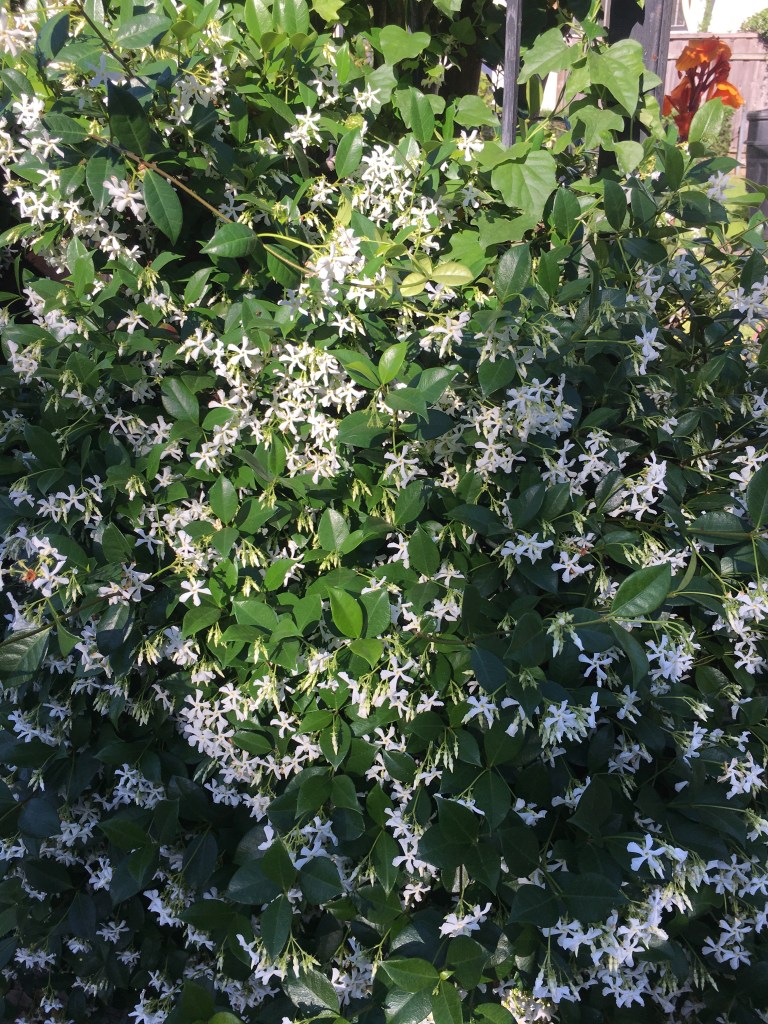
I snapped a picture of these blooming jasmines on my mental health walk this week. The strong scent captured my attention before the sight of them. I reside in Texas where spring means waves upon waves of perfumed air provided by this tropical plant associated with love.

I’m a big believer in signs; the Universe is always speaking to us—it’s up to us to listen (or in this case, smell;-)

There are some sidewalks in my neighborhood festooned with fences of this heady-scented flower. And when I walk by them, I can’t help but feel connected to some benevolent force. It’s no wonder that jasmine in Persian is “yasmin”which literally means, gift from God.

Some of the many potential gifts of jasmine include its ability to:

  • promote relaxation (garnered from its buds for everything from tea to aromatherapy)
  • treat skin disease
  • reduce the risk of breast cancer
  • be used as an aphrodisiac (according to legend, a Tuscan gardener proposed to his bride-to-be with a branch of jasmine and she said yes—so taken was she with the heady scent:-)

A worldwide pandemic in the midst of an abundant spring flower that is known for its restorative powers…something to consider in your own neighborhood. I encourage you to take time to smell the literal or metaphorical flowers waiting for you to stop and “sense” them;-)

Sources: http://www.diethics.com, http://www.home-remedies-for-you.com, http://www.livealittlelonger.com, http://www.medicinenet.com, http://www.sciencedaily.com, http://www.healthline.com, http://www.organicfacts.net, http://www.drhealthbenefits.com, http://www.globalfoodbook.com, http://www.healthbenefitstimes.com