Reality isn’t as solid as it seems
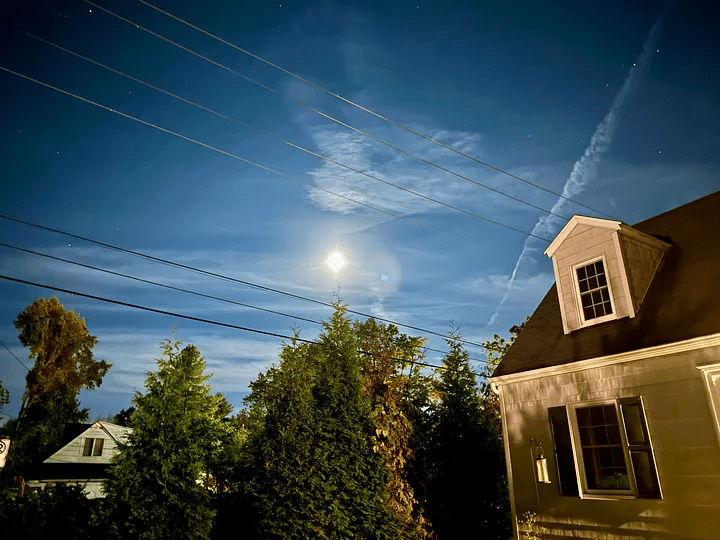
Early morning or late at night? My brain was confused as I took in the photo my son texted.
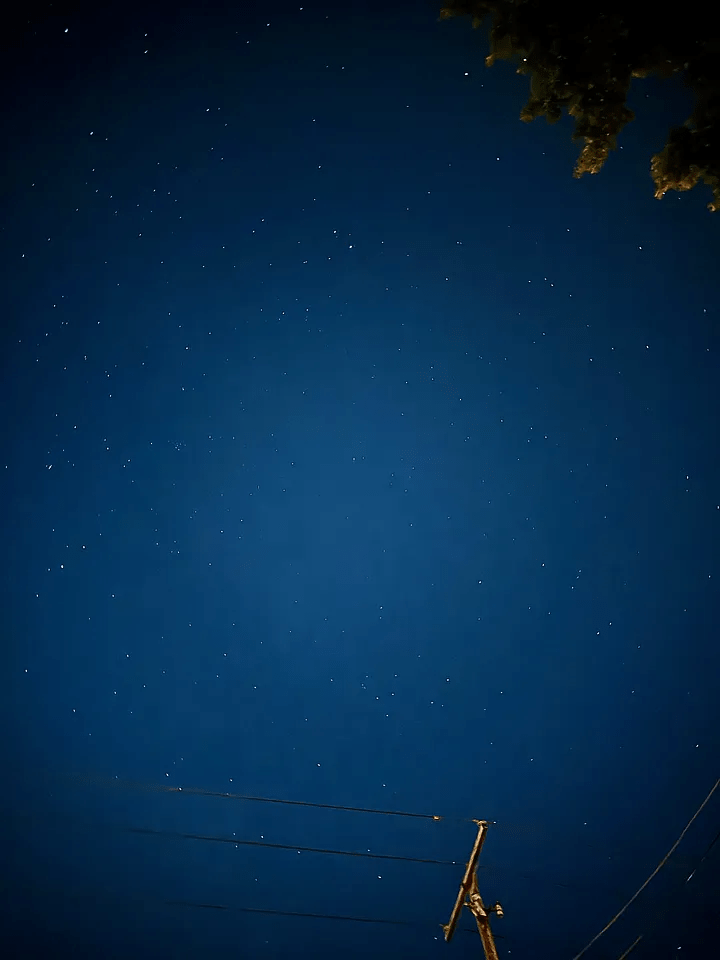
Factually, he’d told me the picture was taken on a Saturday evening. And the smattering of stars to the left made my cerebrum eager to confirm this.
And yet. The bright light in the center of the wispy-clouded sky told me it was early morning, in the wee hours of dawn.
“But that’s the sun.”
“No, that’s the moon.”
Wait…what?
The Fact is…What?
Intellectually, I know that the moon will sometimes look bright because it reflects light from the sun, and that the moon itself does not emit any light. And yet, my brain couldn’t compute the bright circular light against the fair blue sky to be anything other than the sun.☀️
Our brains love certainty. They love to predict, compare, and plan. They deserve a gold star for their tenacious effort to keep us safe.
But the fact is, reality isn’t as solid as it seems. And when we allow our well-meaning brains to run the show, we can lose out on wonderful possibility.
When we allow our beautiful brains to assume, we miss out on considering life from another perspective, another angle. The fact is:
💡the sky is violet in color, not blue
💡dark matter makes up most of the Universe (85%) yet remains invisible
💡humans spend about 10% of waking hours with their eyelids closed(blinking)
💡The Earth is not perfectly round (It has a slight bulge around the equator)
Of course there are MANY more mind-blowing facts and that’s the point: when we keep the doorway open between science and perspective, our reality alters — something that tends to make our brilliant brains feel uncomfortable.
But something wonderful happens when we allow ourselves to dwell in the space between fact and perspective: we find opportunity where there once was lack, we find possibility where before we only saw impossibility, we find wonder where before there was status quo.
Each of us arrives with a unique set up fingerprints, formed at 3 months in utero. No two of us are alike as are no two tongues alike (Yup! There are actual tongue prints forensics will use.🕵️♂️)
Our well-meaning, extremely beneficial brains will continue to compare and look for similarities and patterns, predicting and planning in an effort to keep us alive. And that’s all good. But we mustn’t allow our brains to hijack our wonder, our curiosity, and the potential for seeing life through a different lens.
 Sheri Jacobs