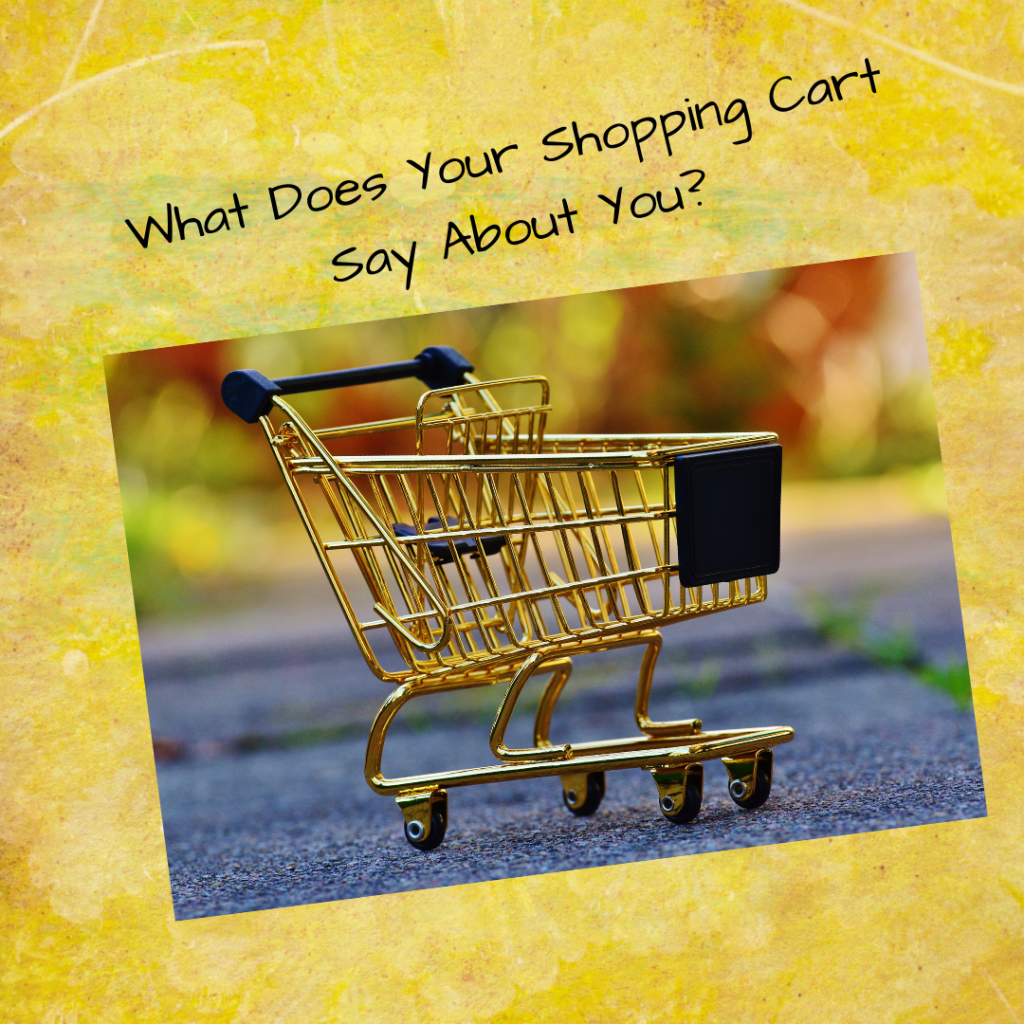
Supermarket Sweep Life

There’s an unspoken “Supermarket Sweep” mentality pervading our lives.

            There’s a popular American game show, now in its 10th season, called Supermarket Sweep. The premise involves contestants racing against a timer to acquire “high-dollar goods within their allotted time. The team with the most…[number] of valuable items in their cart wins the $100,000 prize.” (source The Today Show). The appeal of the show is understandable: the rush of adrenaline to get as many items—hopefully more highly-valued than others—into one’s cart in a finite and small window of time (typically 1 minute and 30 seconds).

            The fast-paced game show hosted by the talented and humorous Leslie Jones is, no doubt, entertaining. We may watch, experiencing a hit of dopamine as the contestants race against the clock; we may experience pleasure, living vicariously through the frenzied contestants as they practically leave skid marks, stomping haphazardly through the many grocery aisles.

            Yet somehow, our lives tend to feel like we are no different than those Supermarket Sweep contestants. As a secondary English teacher, I see it with my students: the race to get an assignment in, the rush to read through an essay prompt without taking the time to consider the prompt itself. As a mother, I’ve witnessed the Supermarket Sweep mind spinning—no different than the contestants’ carts speeding down aisle after aisle. The mental guessing game of What If thinking, is its own conveyer belt of recycled worry.

            Adults are far from immune to the Supermarket Sweep mindset. Whether it’s the rush to get food on the table or the desperation to install a pool (and everything in between), when we put ourselves on this self-imposed time limit to get things accomplished, we run the risk of a few things:

  1. A lack of self-awareness
  2. Greater physical stress on the body
  3. An affinity for anxiety and/or depression

Without knowing it, I spent a good deal of my young adulthood with the Supermarket Sweep mentality as a steady companion. My cart was regularly filled with items that I didn’t necessarily want but falsely believed I needed to make me feel like a “winner”: the right college, a boyfriend, friends—the key was to have these “things” so that I could feel good. Say yes now was my unexamined mentality. It didn’t matter how I felt about what went into my spiritual cart; all that mattered was that I had put something in there.

I encourage you to consider the items you may be placing in your spiritual cart. Choose them carefully and consider the possibility of removing items that no longer serve you. Your life matters and while we each have an expiration date on this planet, we are not in a race or competition with Time. Care about what goes into your spiritual cart; the only appraiser of value for your cart’s items is you.
The Validation Dish

There’s something I notice lately, something women tend to do more than men. Something girls tend to do more than boys. I’ve seen manifestations of this affliction most of my life: the apology without real cause, the explanation that is typically unnecessary, the quick laughter to mask the hurt. But it wasn’t until recently that I noticed a visual/auditory pattern as well: parenthetical statements.

Huh?

Hear me out. The other night, I was out with a group of women, and I noticed a regular pattern, subtle but distinct, to the banter of us. Statements like:

“I haven’t felt the same since I got COVID, well, I think I haven’t felt the same.”

“I just want a man who is, you know, kind. I don’t need to care about his looks, not really, you know. I just want him to be, I don’t know, nice.”

“I told him I was still reading, so why did he turn off the light. That really pissed me off—that’s bitchy of me, probably it is, right? I don’t think he meant it to be mean, but I was reading in bed, so it’s like I don’t matter, right?”

You see what I mean?? I felt this out-of-body aha moment that night, noticing a specific kind of halting cadence to our statements, like a toddler learning to walk, but not quite ready to let go of the furniture.

I kept thinking, most men would articulate those sentences, sans those parenthesis—they would be the figurative toddler standing, teetering, falling and getting right back up without any need to grab onto a nearby chair!

Those same statements, uttered from the mouths of men might sound more like this:

“I haven’t felt the same since I got COVID.”

“I just want a woman who is kind.”

“I told her I was reading, and she turned off the light. 

#3 would be a clear conclusionary statement or likely would not be articulated in the first place because our imaginary gentleman wouldn’t need the big V: validation.

If you are a man reading this, feel free to disagree. After all, this is an opinion- piece and I am speaking in generalizations. There are women out there who possess the confidence to speak without a barrage of caveats weighing down their sentences; there are men who throw pauses into their words like a trapeze artist on a balance beam!

It’s one thing to be uncertain and articulate that uncertainty. It’s another, more subtle yet dangerous thing to crave validation or worse yet, lack faith in yourself.

Here’s what I know:

My friend’s breathing is more labored post COVID.

My friend wants to meet a kind, nice man who she is attracted to and deserves to be attracted to.

My friend was pissed that her husband turned off the light when she was reading.

When we sit with how we feel, when we accept all of our emotions, we no longer feel the deceiving call for external validation.

Whatever your gender, I challenge you to pay attention today and notice how you speak, how the sentences form on your tongue and in your mind. Embrace your inner compass, without the need to justify, apologize or gain the approval of others.

 External validation is a hunger that never satisfies. Go within for approval and you’ll never starve.

The Gift of Discomfort

            When we allow ourselves to experience pain, true healing and growth begins.

My friend *Camile cried to me over the phone this past weekend. She suspects that her new husband is cheating on her. If her fears are correct, this would be her second marriage strained, if not destroyed, by infidelity.

Fact: Camile husband keeps an extra cell phone for his work as a doctor. 

Fact: Camile is not allowed to know the number or have access to this additional phone.

Fact: The two haven’t been intimate since COVID began…

Flash back to three years ago when Camile discovered her first husband (now an ex) sexting with his nurse. Once Camile caught him red-handed, her ex said he “wanted out anyway.” 

It’s worth noting that for month’s prior to Camile’s sexting find, she’d wanted to confront her then husband. But each time, the mere idea of broaching the topic made her queasy with discomfort.

Within months of Camile’s split from her ex, before the divorce was even finalized, she started dating the man who is now her current husband.

Tonight, as Camile broke down to me, I could hear the familiar tinkle of a glass that had accompanied our talks back in 2017.

“What are you drinking?”

It was a rhetorical question. My dear friend’s imbibing companion was always the same: Riesling.  While she isn’t much of a drinker, she does become a fan of the white grape wine whenever heartache arises.

Camile chooses wine in lieu of facing her pain. I tend to go for the chips and ice cream. Some of us choose inedible comfort food when a challenge of the heart grows imminent: gambling, smoking pot, retail therapy.

The last time I heard Camile drinking her beloved Riesling was during her divorce proceedings. Once her current husband entered the picture, I can’t recall her enjoying the beverage.

To avoid pain and suffering is human nature, but sometimes, the very thing we are trying not to experience actually prolongs if not worsens it. Camile never truly mourned the end of her marriage, never honored her feelings of anger and betrayal. Tonight, those lessons are knocking on her door again. 

What lessons are knocking on your door? What pain and heartache do you run from and subsequently continue to experience?

There is a gift in acknowledging everything from discomfort to heartache. If we don’t pause long enough to accept the gift, we run the risk of repeating pain in merely a new guise.

 While it sounds counter-intuitive, when we allow ourselves to experience pain, true healing and growth begins.