Understanding Reality: Beyond What Meets the Eye

Reality isn’t as solid as it seems
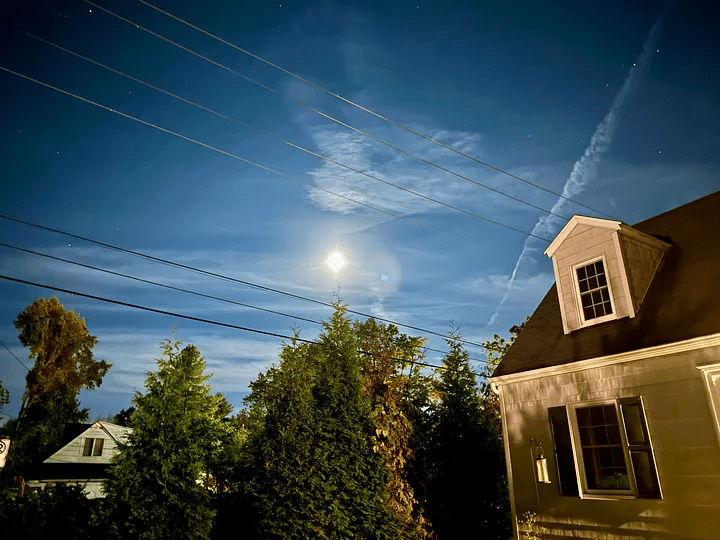
What do you see? (Image by author)

Early morning or late at night? My brain was confused as I took in the photo my son texted.

Factually, he’d told me the picture was taken on a Saturday evening. And the smattering of stars to the left made my cerebrum eager to confirm this.

And yet. The bright light in the center of the wispy-clouded sky told me it was early morning, in the wee hours of dawn.

“But that’s the sun.”

“No, that’s the moon.”

Wait…what?
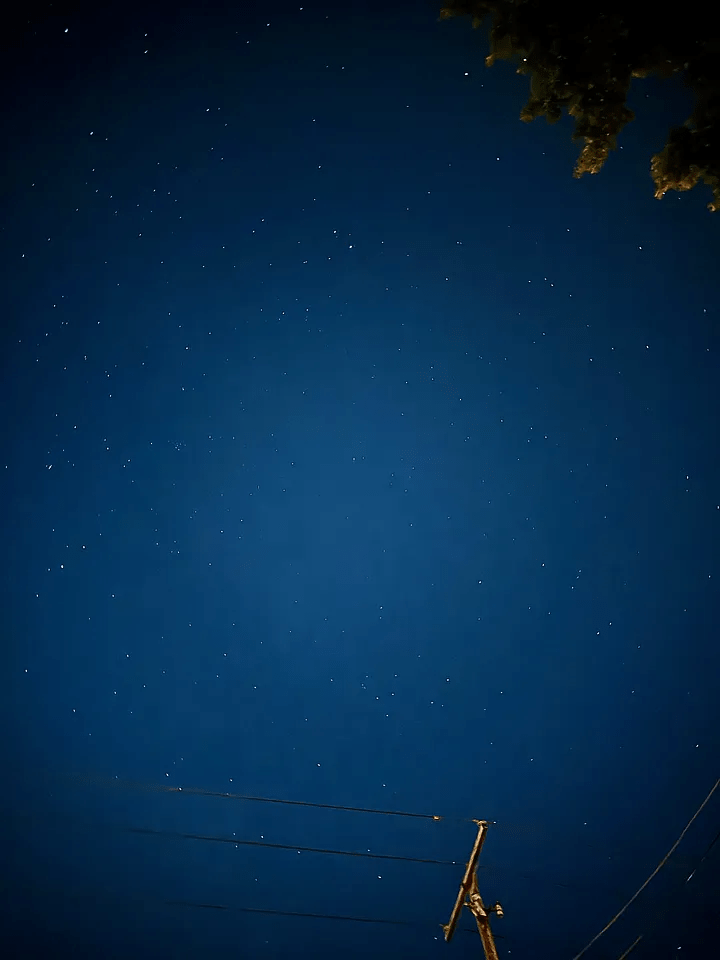
The same sky from a different angle. (Image by author)

The Fact is…What?

Intellectually, I know that the moon will sometimes look bright because it reflects light from the sun, and that the moon itself does not emit any light. And yet, my brain couldn’t compute the bright circular light against the fair blue sky to be anything other than the sun.☀️

Our brains love certainty. They love to predict, compare, and plan. They deserve a gold star for their tenacious effort to keep us safe.

But the fact is, reality isn’t as solid as it seems. And when we allow our well-meaning brains to run the show, we can lose out on wonderful possibility.

When we allow our beautiful brains to assume, we miss out on considering life from another perspective, another angle. The fact is:

💡the sky is violet in color, not blue

💡dark matter makes up most of the Universe (85%) yet remains invisible

💡humans spend about 10% of waking hours with their eyelids closed(blinking)

💡The Earth is not perfectly round (It has a slight bulge around the equator)

Of course there are MANY more mind-blowing facts and that’s the point: when we keep the doorway open between science and perspective, our reality alters — something that tends to make our brilliant brains feel uncomfortable.

But something wonderful happens when we allow ourselves to dwell in the space between fact and perspective: we find opportunity where there once was lack, we find possibility where before we only saw impossibility, we find wonder where before there was status quo.

Each of us arrives with a unique set up fingerprints, formed at 3 months in utero. No two of us are alike as are no two tongues alike (Yup! There are actual tongue prints forensics will use.🕵️‍♂️)

Our well-meaning, extremely beneficial brains will continue to compare and look for similarities and patterns, predicting and planning in an effort to keep us alive. And that’s all good. But we mustn’t allow our brains to hijack our wonder, our curiosity, and the potential for seeing life through a different lens.
Healing from Childhood Wounds: A Journey of Self-Discovery

It’s human nature to avoid pain. Yet distraction only takes us so far — especially when it comes to emotional pain. At after half a century of life on this beautiful Earth, I am starting to embrace Rumi’s timeless quote on a much deeper level:

“The wound is the place where the light enters you.” Rumi

In my 20’s, I didn’t want to look at the wounds. Half the time I didn’t know they were there because I was so busy. 

Distraction is a powerful tool to keep pain at bay.

But the wounds remained, festering within my psyche as I continued to look outward for purpose, validation, and worth.

Looking back, I see that my youth was spent in a quasi-cocoon state: inside I was a gooey mess but outside it looked like nothing special was going on. I worked, I dated, I married.

The gooey mess within would get triggered by something someone would say or do. But instead of addressing the source of the pain, instead of going within to look at that dark goo, I got busier.

Life continued and with it, psychological blisters that hurt a little more each time. I looked for love in all the wrong places. I was a widow at 25, engaged at 27, married again at 28, pregnant at 29.

Go. Go. As fast as you can. You can’t catch me. — The internal battle between the cocoon of armor I’d held onto with dear might and the brimming-to-come-out wounds within.

The fifties have been a time of addressing the wounds, allowing the cocoon to fall away and finally allow the light to enter.

This second act of life offers an opportunity for radical acceptance of others and ourselves. It’s a chance to pull up a chair and put a compassionate stethoscope to the fractures in your heart.

The Russian Doll of Aging

I used to ( and still do) love those stacking Russian dolls. Every time you think you’ve freed the last Russian doll, you discover there’s another and yet another still.

That’s what aging feels like: the allowing of ourselves to — with compassion — explore the layers of our life story. 

It’s not until we are willing to explore the landscape of our heart and mind that we can begin to heal. We need to become like emotional excavators if we want to unearth the effects of those early seeds planted.

The Five Childhood Wounds

A popular psychological concept is that there are five potential core psychological wounds from our childhood. Many times, we are unaware of the wounds and walk around this life feeling triggered without knowing its origin.

Our thoughts, behaviors, and relationships in adulthood are often deeply influenced by our wound in childhood.

It is when we don’t address those core wounds that they have a greater chance of manifesting in our adult relationships.

Here are the five core inner child wounds:

🤕 Abandonment

🤕 Rejection

🤕 Shame

🤕 Betrayal

🤕 Injustice

Each fear arrives with certain behaviors. For example, if you were sent to your room without dinner for a bad grade, a seed of rejection may have been planted.

Fear: being rejected for who you are

Behavior: people-pleasing or perfectionism

The power to heal from our wounds begins by recognizing where and how the wound began.

And that healing continues when we carve out a safe space for ourselves to alter the narrative and know that we are not our wounds. 

I often think of that Frosted Shredded Wheat commercial in the 1980’s. 

We can tune into the gooey cocoon of our psyche at any time. It may hurt to listen, but that shell we carry is falling apart anyway. And when we allow to see our wounds with compassion, we are creating a sacred space for our wings to unfurl.

You were meant to soar. You were meant to transform your wounds into something beautiful. 🦋

Healing Mastery XI Code

Confronting Inner Wounds: Steps to Emotional Freedom

He was poking me. Not physically. Emotionally. His words landing like shards of glass in my throat and chest.

The pain was unbearable. It was a suffocating thing. All consuming and deep.

So, I did what typically happens when we are in this level of suffering: I lashed out with biting words of sarcasm. I knew my words were wrong and irrational, but rationality takes a back seat when pain is in the driver’s seat.

And then came the tears. My tears. Deep, guttural tears that had nothing to do with his poking words and everything to do with the unaddressed wounds within me.


The pain in my heart lasted long after he hung up on me. It ached between my bones and clung to the pores of my skin, stinging my eyes with unshed tears.

There is no greater pain than living with unaddressed wounds. 

Emotional pain holds on greater than a rabid Rottweiler biting down on a pant leg. It’s unwavering, unrelenting and feels like your soul is coming apart.

Break Out to Break Through

The pain I felt was so intense that I knew there was only one thing left to do: explore it.

“When you squeeze an orange, orange juice comes out, because that’s what’s inside. When you are squeezed, what comes out is what is inside.”-Wayne Dyer

I looked at the wound within me. And there I found a history of wounds. I unravelled each wound until a pattern began to form. 

The wounds were from a lifetime of false narratives, all of them being told by unhealthy, narcissistic, insecure men.

The pain I felt was a lifetime of me contorting myself to fit their narrative. 

We each have the power to transform our pain to empowerment.

The man goading me was just another manifestation of that false narrative. He was able to “get a rise out of me” because of the unaddressed wounds that I’d bandaged up, with psychological pus oozing out of them. 

A peace arrived within me when I addressed the root of the wound:

I was a victim of abuse. I am not the abuse. The power is always within me. I can choose to love and be love, regardless of what others do.

This doesn’t mean that I don’t experience moments of sadness or grief, pain or disappointment. It means that I allow those emotions to rise and fall within me, no different than waves in an ocean.

“Don’t think you’d be free if you just didn’t have these kinds of feelings. It’s not true. If you can be free even though you’re having these kinds of feelings, then you’re really free — because there will always be something.”-Michael Singer

When I allow the pain, it passes through and doesn’t stick around to form a new wound.

Emotional pain arises because of the unaddressed wounds we carry. It’s ripping off the figurative Band-aid that allows us to heal. It’s allowing ourselves to feel the pain and breathe through it that brings us true peace.

The need to poke another emotionally is sourced from an unaddressed wound. Those who manipulate, lie, and deflect responsibility are walking around this planet with significant unaddressed wounds.

True peace arrives when we realize we can only be responsible for our own inner healing. 

I cannot get sick enough to make that man healthy. You cannot get poor enough to make someone else feel wealthy.

Freedom means allowing another to choose their own path, however destructive that may be. 

A peaceful life begins when we embrace the four C’s: I will not control, change, cause, or contribute. 

But we can choose to be light and love to others. We do this when we prioritize our own healing.


XI Code to Peak Performance

Embracing Change: Transforming Toxic Relationships

Knowing the keys to the kingdom are a “level up” sign. (Image created using AI on CANVA)

I recently returned from visiting with a close family member who suffers from frequent physical ailments. The pains themselves alter throughout her body but one constant remains: the shroud of negativity she carries. 

For years, we shared a co-dependent dance. She would complain, and I would morph myself to please her. It was a manifested tango of low self-esteem, each of us playing our roles beautifully: her the perpetual victim and me, the quasi-therapist who could “save” her.

It took many rounds in this particular Earth School classroom to understand I was a participant in the toxic tango.

But on this visit, I watched without reacting. I listened to her cries that she didn’t want to live anymore, her verbal attacks on everything from the weather to drivers on the road. I allowed myself to feel all the emotions that arrive when dwelling with someone who is negativity personified and manipulates to get what they want. 

My body reacted to what I observed with an upset stomach. Our vagus nerve — the longest cranial nerve — runs from our brain to our large intestine. This nerve literally means “wandering” in Latin and plays an important role in involuntary sensory and motor functions — including our digestion. I couldn’t “stomach” the negativity of this loved one.

And yet, I was able to observe it all:

🧘‍♂️ the negativity

🧘‍♂️the upset stomach

I chose to take deep breaths and go for long walks when possible. I chose to find the humor. I chose to look at this spirit having a physical experience. And here’s what I saw:

A woman who is in pain with her knee because she literally can’t move forward in life. She is too steeped in the illusion of darkness to find the light that is her and always there. I saw the child inside the woman, no different than a toddler trying to sneak in an extra cookie, playing a game to get love. I watched her manipulate behavior and words to garner attention.

I realized that I can choose to love her without the need for her to change.🤯

I Love You, You’re Perfect, Now Change

Part of the reason there is often great family tension during the holidays is the old, familiar patterns that resurface. Unaddressed — sometimes unknown — triggers surface across dinner tables.

That which hurts is the wound that is unhealed. Leveling up is about growing aware of our wounds, understanding its origins, and choosing to love anyway.

“When you can find joy in the midst of the scariest times, you know you’ve leveled up.” Brenda Grate

Loving this person who identified with a false sense of self, I leveled up. Loving myself and finding joy in the midst of her pain, I leveled up. Loving her essence, the little girl with unaddressed wounds, I leveled up.

We think of leveling up in terms of gaming or a career move. It’s a term we associate with improving or growing. This world is a matrix, a classroom for our souls to experience life as a human.

Each time we choose to see light in the midst of darkness, we are leveling up.

“No romance, amount of money, credential, or achievement can give you the sense of certainty your own joy can provide. When you practice having fun along the way, the Universe supports you.”-Gabrielle Bernstein

The keys to the joy we seek is inside of each of us. We can’t make someone else happy by making ourselves miserable. When we can find inner peace and joy from within, we are free from emotional vampires. And we can also choose to love those Downer Debbies.

Even letting the Universe know that you are willing to see a negative person or situation in a new way and surrendering this desire to the Universe is a leveling up step.

Heaven or hell is a state of mind. It is not dependent on people or places, financial or health circumstances.

Find your Heaven on Earth now by being the change you want to see in others.

XI Peak Meditation

The Space Between Life and Death

Underneath the Busy-ness of Life is the silent awareness that we are only visiting planet Earth.

This past week, my mother went into the hospital for a minor procedure. Small. Common. Something that caused nothing more than a mental note to check up on her that afternoon to hear, what I had naively assumed, would be filled with verbal green lights and thumbs up.

There’s a famous quote from one of my favorite books, The Art of Racing in the Rain (author Garth Stein):

“People and their rituals. They cling to things so hard sometimes.”

Mom is 78. Deep down, I know any procedure—young or old—is risky. Deep down, are feelings too painful to ponder. So, when I wished her good luck on her procedure and assumed all was well, I clung to my work and the business of life. Work, chores, responsibilities—the Building Blocks of Busy-ness that help stave off thoughts often too daunting to face.

Seconds before her procedure began, my mother went into AFib: an abnormal heart rhythm which can cause a stroke or death.

While we waited for my mother to be stabilized, I spoke with my father. Normally, he is the King of Busy-ness—always in a great hurry to do something and get somewhere. He is also the King of Rituals. Whether it is how he likes to keep track of bills or how he plans his day, there is a long unwritten list of routines he “must” (a word he will often use) do. The rituals and busy-ness have altered through the decades, but the theme remains.

All that changed when his wife, my mother, went into atrial fibrillation.

Several years back, my parents were in a terrible car accident. My father walked away with nothing more than a few scratches. My mom was severely injured and is still in pain as a result of that car wreck, years later. 

My father was driving when the other car slammed into them.

Yet, it wasn’t until my mom’s life was in immediate danger that he shared sentiments with me never before expressed:

“Your mom’s in pain because of me. She saw that man coming at 90 miles an hour at us. I didn’t react in time. I see pictures of her from before the accident. She used to smile. I loved seeing her smile. But since the accident, she doesn’t smile anymore. It’s all my fault.”

If life were like a Pac-man video game, where three lives were guaranteed, would my father have expressed such raw emotions? My father’s voice overflowed with yearning to see his wife’s smile. Would such yearning be felt if he knew she would return from the hospital like she looked and felt before the car accident?

This fleeting time between life and death is a gift. It’s life’s brevity that makes each moment matter. Mortality is like caffeine for the soul—a wakeup call to make moments matter.

My father shared more while we waited to hear news from the doctor. 

“I keep looking at that picture of us outside all those years ago. Remember that one? You were about 6, your sisters 10 and 3. Oh, and your mom looked so happy. Those were the best days.”

I didn’t tell him what I was thinking. Yes, that snapshot captured a precious memory of our nuclear family in the backyard of our Long Island home. But it didn’t show my father filled with Busy-ness before and after the Kodak camera’s click.

Mom is back home and stable, a prescription of Beta blockers, the latest change in her life. I spoke with her today, and she sounded the happiest I’ve heard in a long time. And my father’s voice beamed through the phone and made me think of George Bailey at the end of It’s a Wonderful Life.

“I have my wife back,” he said.

   There’s a powerful line in Matt Haig’s The Midnight Library:

     “In the face of death, life seemed more attractive.”

      Here’s the truth: We are in the face of death (we just forget this or choose to forget this—thank you Busy-ness and Denial). Moments in this Earth School are precious because they are just that—moments. Each of us has a finite number of days on this planet to live!  Some of us know or can sense this (Just look at our American Founding Father, Alexander Hamilton and the late and great American Composer, Jonathan Larson). There’s an inner fire ignited when one is cognizant of their mortality.

     Consider the ecstasy felt upon eating food after fasting or sitting beside a fire after hours spent in the kind of cold that numbs your extremities. Or how about a petite mort—the French expression for an orgasm (translation: a little death). It’s living on the edge of things that make us feel so alive, that allows us to taste the juice of life with all of our senses.

https://www.medicinenet.com/atrial_fibrillation/article.htm

Did You Just Cancel Yourself?

When we lack compassion for ourselves, we are dismissing and cancelling our very experience.

The 21st century has brought us a world of “cancel culture” where one wrong phrase or action could land you on a figurative island of ostracism. Cancel culture is “political correctness on steroids.” American culture has morphed from a gentle parent to mind one’s manners to a shame-inducing zealot of morality. And no one is immune from getting “cancelled.” Heck, as I’m writing this now, there’s a good chance that someone is silently seething in their seat from these words on their screen.

When did we get so sensitive? When did we go from speaking up to shaming? When did we go from making a mistake to paying for it for the rest of our lives?

There’s an old Twilight Zone episode that comes to mind: Rod Serling’s The Monsters Are Due on Maple Street. We often hear, “history repeats itself,” and the 1960’s sci-fi episode is proof of this aphorism. Without giving the episode away, the story involves neighbors in a “quiet, suburban town” who suddenly lose electricity, sans explanation. When one neighbor’s car starts on its own, the other neighbors begin “canceling” him. Before long, with other lights in the neighborhood going on and off sporadically, neighbors begin to turn on neighbors. The late and great Serling was using sci-fi as a vehicle to highlight the onslaught of fear of communism.

Fear itself is the all terrain great vehicle for cancel culture: the unspoken “what if” that is temporarily flattened when attacking another. It’s temporary because, again, the next person to be canceled could be you.

However, there’s another side of cancel culture that goes unaddressed: canceling ourselves. Rejecting what we think and how we feel. The other day, I spoke with a friend who was upset with something her fiancé did. 

“Do you think I have a right to be upset?”

Wow. It doesn’t matter what her fiancé did or didn’t do; what stood out to me was her unconscious decision to question her very emotion. She went on:

“I think I’m just going to stay quiet. Things are good between us. I don’t want to upset that.”

Double wow. Instead of allowing herself to feel the negative emotion—not bathe in it, mind you—just feel it, she shoved it down, away—no different than the way we cancel culture each other. There’s a famous quote by Rumi that comes to mind:

“Out beyond ideas of wrongdoing and right doing, there is a field. I will meet you there.”

The field, I believe Rumi was referring to, is Compassion. When we have compassion for ourselves and others, we are able to make mistakes and learn from them. We are able to grow and forgive ourselves and others. We are able to see that we are all in this life together and canceling one of us is canceling all of us.

Source: Author D. Eric Schansberg https://www.courier-journal.com/story/opinion/2021/03/29/cancel-culture-america-political-correctness/6991235002/

The Bar Date or the Coffee Date?

First date coffee or first date drinks? One of them is better than the other. The answer depends on where you are right now.

*Samantha and *Matthew are good friends. Both are divorced, though Samantha is 10 years post the end of a marriage and Matthew is in the embryo stages of life after divorce—a few months shy of a year. Friends since college, there is an ease between them that can only come from a combination of time and knowing each other in their formative years.

Since Matthew’s divorce, their friendship has morphed into an unspoken mini therapy group of two: sharing each other’s trials and tribulations in the dating world. Matthew wants to get laid; Samantha wants to experience a romantic relationship. Their different goals cause the other to shake their head.

“Why are you wasting your time on a coffee date?” Matthew asked.

“I want to get to know the person.” Samantha said.

“But you can’t make out with a person in a Starbucks.”

“I don’t want to make out with a total stranger. You do?”

“Uh, yes! That’s the whole point of meeting at a bar.”

Both have approached me separately, telling me how foolish they think the other person is. They are both right…and wrong.

Matthew is newly divorced and still licking his wounds from his ex’s desire to end the marriage. “I was happy,” he tells Samantha. Married for almost 19 years, the only roles that remain constant in his life are father and business consultant. Overnight, he’s gone from living in their family home to residing in a one-bedroom bachelor pad. 

“What are you looking for on all those dating sites?” Samantha’s asked.

“I don’t know. Nothing serious. I’m all messed up now. But I’m still a guy.”

So, Matthew meets women at bars. For now, this works—for him. He doesn’t want a relationship now; he wants to “make out” and wake up the next morning and drive his daughters to school. He wants physical intimacy without emotional intimacy; he wants easy sans—for now—self-reflection.

Samantha wants to get to know someone without alcohol coursing through her veins. She doesn’t want the commitment of a meal with a total stranger. She wants to pay attention to the person she meets without the distraction of loud music or the subterfuge that comes with a smoky, dark bar.

“Meeting at a bar just sets up a different set of expectations,” Samantha says.

“Exactly,” Matthew says.

                        Again, they are both right…and wrong.

                        Both Matthew and Samantha are dating the way that works best for each of them. They’re both honoring what they need. The issue between them is wanting the other to live through their lens; the dating diet that works for each of them is a prescription that works for them and them alone.

                        Matthew is hungry for physical intimacy; Samantha is hungry for emotional intimacy. Both have different ways of acquiring what they want. Both are good people figuring out what works best for each of them.

                        When it comes to dating, honor the journey you are on. Decide what kind of dating style works for you. There is no right or wrong when you heed your intuition. 

*Names have been altered to retain the privacy of individuals.

Click here for more dating advice.


Discover a new kind of tea here.

Adolescent Depression and the One-Inch Picture Frame

Like adults, sometimes tweens and teens need to reframe their perceptions..

            *Kira is a twelve-year-old with a penchant for animae and Greek mythology. She is articulate and kind, responsible and perceptive. Unfortunately, she also considers herself a disappointment to her parents and feels like she is failing her friends and family.

            *Mandy is just shy of thirteen. He attends school virtually, participating in class daily, turning in assignments on time, and deftly plays chess. Yet he has attempted suicide twice this past year. “My parents were pretty angry when they found out—my Dad especially. I think he’s upset that he didn’t know how bad it was.”

            As a middle school English teacher, I have the pleasure and responsibility of working with Kira and Mandy. After over a decade in the classroom, I’ve witnessed an unprecedented and palpable uptick in depression in tweens and teens this past academic year. No doubt, the psychological toll of pandemic life has left its mark on humankind’s psyche. The economic duress alone created waves of stress in families. Regardless of the reasons for the increased depression, unlike adults, our adolescent population may not have the tools to seek or get the help needed. 

            I teach six separate classes, and there are 1-2 students in each class struggling with depression or anxiety tainted with thoughts of hopelessness. A numbness will often emanate from them as well. As one student recently shared with me, “Nothing matters anymore. I just stopped feeling.”

            There’s a writing exercise the talented Anne Lamott shared in her famous book, Bird by Bird that I share with my students who honor me with their honesty, with the raw, underbelly of their emotions:

            “All I have to do is write down as much as I can see through a one-inch picture frame. This is all I have to bite off for the time being.”

            Now, I am not asking my students to start writing their feelings or anything at all for that matter. I am asking them to consider the idea that they are in one picture frame of their life right now—that’s just it, one frame. And while that frame might look overwhelming or render them numb or any other negative emotion for that matter, it is simply one frame. The frame, however unbearable to them, WILL pass.

            Besides, I remind them, there must be other frames that they like in their present life. Here are some recent ones they shared:

            “When my dog licks my face.”

            “Drawing—I’m working on a book!”

            “Soccer—kicking the ball.”

            “The smell of my dad’s pancakes.”

            It need be noted that the above frames were spoken with smiles that could light up a room.

            Whatever we focus on we get more of. We always have the choice to focus on a frame that makes us feel worse or better.

            I am not a doctor or therapist, nor do I play one on TV.  I am a teacher and mother who lost someone dear to suicide when I wasn’t much older than the students who are courageous enough to share their often-concealed pain with me. Perhaps they can sense the experience in me; the unspoken guidance I’m able to give that will nurture us both.

            Regardless, these students’ parents were informed; help is on the way. Help is always on the way. 

*Names have been changed to protect privacy

Small Talk: Benefit or Risk?

Knowing who you are engaging in small talk with can sometimes make all the difference…

            I recently went for my second vaccine shot. The verbal warnings from well-meaning others streamed through my head like a bad TV montage:

            “Take off from work the next day—you’ll need it.”

            “It felt like an invisible weight was pulling me down.”

            “It’ll hit you about 12 hours later. You’ll see.”

            “I wanted to die.”

            So, it’s no surprise that I approached the nurse (*Jenny) a little nervous.

 My anxiety typically manifests in a desperate need for small talk. There is this comfort, however fleeting, found in small talk for me. And according to a 2018 study by psychologist Mathias Mehl, my instinct to schmooze is understandable: 

“Small talk…is associated with more happiness than one usually experiences when one is alone.”

            I certainly didn’t want to be alone with my mental montage of dire physical warnings. I needed to focus on the sunny room of the vaccination site and the warm smile of Nurse Jenny.

            Too late—I already saw the almost comically long syringe. Too late, I asked Jenny how she was, inquiring about her children as well (a small detail I recalled from our earlier dialogue the few weeks prior) as I turned my head away.

            Too late—Jenny let out a big sigh—a hot air balloon puncturing and plummeting fast:

            “My husband is an awful man—just awful. He’s been cheating on me and now he’s suing me in our divorce. I just can’t—”

            Too late—Jenny’s emotional turmoil was let out on my arm.

  I saw stars.

            “Why does that hurt so much?” I asked.

            “Oh, you poor thing—I’m so sorry. You’re bleeding. I hit a vein.”

            Once the blood was cleaned up, Jenny wrote her name and number on a neon Post It.

            “Call me. We need to get together—go for dinner.”

            Somehow, a Small Talk Attempt to ease my anxiety had caused Jenny to think we were…Friends? Therapist (me) and patient (her)?

            Mathias Mehl’s findings regarding our tendency to find happiness through small talk may be true, but if that small talk signals another to lay down on the metaphorical Freudian couch, perhaps we need to refrain from trivial banter with people holding sharp objects…

 Source: https://www.psychologytoday.com/us/blog/out-the-ooze/202001/why-small-talk-is-big-deal

Trigger Happy

Our triggers just might be a hidden gift waiting for us to discover…

We all know the term “triggered” at this point. A good decade ago, the word may have referred to a psychological meaning related to PTSD or some other mental disorder. Yet today, you don’t need letters after your name to be familiar with the slang of someone who gets “triggered.”

According to Urban Dictionary, “triggered” refers to “when someone gets offended or gets their feelings hurt, often used in memes to describe feminist, or people with strong victimization.”

Regardless of whether one is experiencing an emotional reaction based on a genuine trauma or mild offense, the reaction is real: the blood boiling, the heart racing, the urge to scream, cry or express negative sentiment. The individual experiencing the “trigger” is in emotional pain.

But what if we could look at the cause of one’s trigger as an opportunity to grow? What if identifying and acknowledging our triggers could be the first step towards changing? What if we considered our triggers as gifts to open and observe rather than Jack-in-the-boxes to avoid at all costs?

Consider Terry Wright, the sixty-five-year-old woman charged with resisting arrest after refusing to wear a mask at a Bank of America in Texas last month. Wright is certainly entitled to an opinion on the mask issue; she is not, however, legally permitted to go mask-less into a private institution (i.e., Bank of America) that requires a mask for all visitors.

For whatever reason, following Bank of America’s mask policy to wear a mask for a mere visit triggered Wright. It triggered Wright enough that she perceived herself as a victim: 

“Hold up! Hold up! Some old lady [Wright] is getting arrested here!”

Wright’s trigger created more misperceptions:

This is police brutality.” The video cam shows no police brutality and audibly offers several bank witnesses flat out disagreeing with Wright.

Yet there was one form of brutality: Wright’s cruelty to others and herself. Her inability to reflect on her actions and continue to see herself as a victim instead of an agitator is the true crime. 

The irony: Wright stated on a phone interview, post her childish scene at the bank (and Office Depot shortly after):

“My civil rights were violated.”

One of the first definitions of civil is “cultured and polite, as in someone who is civilized.” Wright’s behavior was the antithesis of what it means to be civil, to think about others within the community and our interconnection to each other. Wright was too steeped in pain, lashing out at others instead of reflecting inward.

The next time we feel triggered, consider an alternate choice; consider the opportunity for growth. Ask yourself:

What is the lesson here for me?

What does my potential reaction say about me?

Is there another way to perceive this situation?

Is there another way to react in this moment?

When we consider a potential trigger to be a blessing instead of a curse, our perception changes and so does our reality.

*Sources: KPRC 2, Vocabulary.com, Urban Dictionary