To the Loved One You Can’t Reach

When the Shit Hits the Fan (Literally)

This past week, the shit (literally) hit the fan. 

You know those moments when you are holding life together by a flimsy strand? You think: “This is tough, but I got this.”💪

The self-pep talk renders you akin to a duck on the water. Sure, you look smooth on the surface, but you are paddling furiously just below the shallow current.🦆

Still, if you could hold it together for a tad longer, you think you can make it through the day/week/month without imploding.🤯

And then, the shit hits the fan…

While the aphorism is apropos of anything negative happening on a grand scale (where no amount of duck paddling will work) in my case, 💩 floated through the first floor of my home, a river of it swimming through like a feces canal.🤢

The short version of this smelly (true) story: a broken sewer line pipe caused the issue, and it’s going to cost a year of college tuition to repair (Let’s not even speak about insurance…).

What’s In YOUR Plumbing?🤔

Remember that duck analogy? Yeah, my waddle was already quacking upstream when the R.O.P. (River of Stool) hit. 

A home’s pipes are like the arteries in a body: everything’s connected.

I thought about this idea of connection a lot. Each of us is connected to each other in this world, on a micro and macro level. And those arteries, while not always physical, either close or open and sometimes need to be replaced altogether.

It was when the R.O.P. hit that I started to become aware of the R.O.P in a close relationship. My heart would always ache when I spoke to this person. Invisible cracks would start to form. I’d Band-aid the pain up with rationalization and distraction.

I was regularly this person’s quasi-therapist — a sounding board for her to throw her deluge of negativity my way. I’d sop up her violin music with emotional pompoms that I’d shake until she felt better.

But there’s a price paid for being someone’s emotional tsunami and it’s much higher than any insurance deductible.

It took my literal (sewer) pipes breaking to realize the shitstorm I was accepting in my personal relationship.

Waddling upstream, I could remain in the comfort zone of rationalization for this person’s toxic behavior.

But when I was at ground zero, emotionally, physically, financially and could no longer waddle upstream, I needed a lifeline. I was drowning.

And what did she do? She continued to do what she always does: she took out her violins and made the moment all about herself. She pulled out the “one up” card: “You think you have it bad. Let me tell you what I’m going through.”🙈

I wasn’t looking for anything more than a lifeline. A simple handful of words like “I’m so sorry.” or “That must be tough.”

Nope. Instead, she regaled me with violin music about how tough she had it today, yesterday, and always. It was all about her. I couldn’t reach her over her whiny notes. I realized then that the crap in my home was nothing compared to the emotional crap she’d been dishing me for years.

I’m in pain — much more about this relationship than my home. A pipe can be replaced. A house can be rebuilt. Money can be replenished. 

But our personal relationships…those are spiritual fingerprints. They touch our soul.

The emotional pipes cannot always be replaced. But they can be examined and if needed, reshaped and recycled so that the heart doesn’t continue to get broken. We can shift our perspective, through the aperture of compassion — for ourselves and those we love — recognizing that some emotional pipes cannot provide the oxygen our heart needs to thrive.

Transform Fears with Dream Write for Kids

Dream Write is a children’s book that helps kids of all ages feel empowered to face their fears.

Years ago, I had a recurring nightmare: I was at a college I didn’t know, scheduled to take classes I didn’t recall signing up for, with no money and no means of actually making it to campus.

And while that may sound like a first world problem kind of bad dream, we all know how real a dream feels.

 In fact, how often have we tried to describe a dream to a loved one and have fallen short?😩 Our words don’t quite articulate the feelings experienced in said dream.

experienced in said dream.

The Game Changer

A cognitive psychologist had suggested I write down what I wanted to experience in my dream instead of what woke me up repeatedly filled with angst.

Not wanting to experience another night in waking to a puddle of sweat and a racing heart, I took her advice. I gave myself a brand new Range Rover, put five-hundred bucks in my wallet and chose a school and major that I wanted to study.

That night, I dreamed what I had written down.💡

It Gets Better

The power of our imagination. Dream Write inspires kids (of all ages) to transform their fears. (Photo credit: Bill Megenhardt)

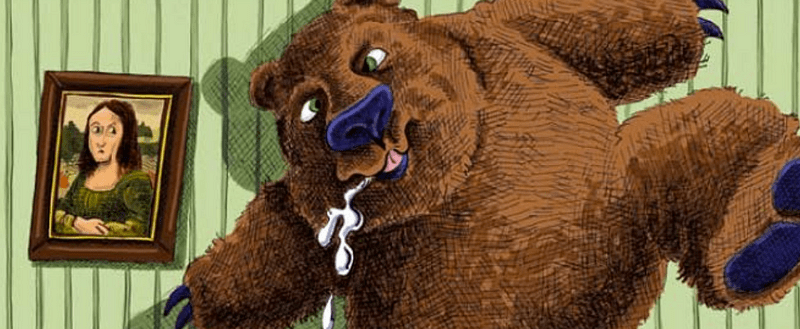
Months later, my son was afraid to go to sleep. As a young child, he was afraid of seeing a grizzly bear attacking him in his dreams.

I’d thought of how my fearful dream had never returned, since the night I changed my dream through words.🤔

“You just need to Dream Write.”

The words were out of my mouth as if from some divine force. Together, we changed his fearful thought of bears into a funny story of a cuddly cub bear who wears a tutu and dangling earrings, replete with red lipstick.💄

To this day, my now grown son uses dream writing to help him transform his imagination to work for, not against him.

Each of us has the power to dream write.✍️

Dream Write Launches

No more scary, grizzly bear. How cute is this cub bear?🧸 (Photo credit: Bill Megenhardt)

My children’s book, Dream Write launched on Amazon late last week. It is a story about the power of our imagination and the power of the magic wand (✏️) we can choose to use each time we feel stuck or fearful.

Dream Write encourages children (of all ages) to discover their own inner power. Through an entertaining story and the cognitive game-changing tool of writing, we are reminded that we always have the agency to choose again. 

Not Just for Kids

The reader can be kids of all ages. This book is a call to action for YOU. (photo credit: Bill Megenhardt)

Dream Write ends with a writing prompt for the reader:

“It’s normal to have scary dreams sometimes. Share a scary dream you’ve had with someone you love. How would you write it differently? If it’s easier, you can write in pictures, too! The key is to change your story to something you want to happen.” Dream Write

Maybe you are considering going for a career change. Dream writing can be used for this as well. Fears — as we well know — are not limited to elementary-aged kids. We all experience them. Dream writing offers an effective tool to transform our fears into wonderful possibility. 

Serious Laughs Podcast

All About Our Crazy Relationships

Relationships. We all have them. From our pets and plants to our siblings and spouses, to be human is to have ‘em.Life on this spinning planet (AKA The Earth School) offers us countless opportunities to explore who we are within and from our relationships. And it’s not just our two and four-legged creatures involved in this exploration. Nope! We have relationships with the foods we eat, the emotions we feel, the places we visit, the literal things in our lives.To be a student of the Earth school is to take a course in the relationship between our inner and outer world.🤯

Serious Laughs

Planet Earth needs some serious TLC right now. And that includes ample doses of humor. There’s nothing like a good wow-I-wish-I-was-wearing-Depends-now laughter to boost our dopamine levels.

Whatever life’s adventures, a sense of purpose arrives when we focus on two things: the what and why.

Serious Laughs is the what. It’s a place you can tune into each week to laugh and reflect.

Why Serious Laughs? Because life is H-A-R-D. It is not easy to be a human on the Earth School. It takes falling and getting back up again. It takes courage. It requires tenacity. And humor helps life’s various forms of medicine go down.

Laughter is universal. It offers the power to disarm and connect us to each other and to ourselves.

There’s a paradox going on in the 21st century: technology has allowed us to be more plugged into each other than ever, but a sense of isolation and disconnection is at an all time high.

“One in three Americans feels lonely every week.”-APA Poll

Serious Laughs is (what) a show about our relationships that’s infused with humor and vulnerability (why)because life is both bitter and sweet and filled with enough contradictions to make belly laughs a fantastic way to stave off a need for the loony bin.🤪

The 411 on Serious Laughs

Our podcast drops new episodes every Thursday:

SeriousLaughsPod-YouTube

SeriousLaughsPod-Spotify

And, of course, we’re on Instagram @seriouslaughspod

The Illusion of Love

And why we fall for it

I discovered boys at a young age. A generous portion of my teen years were spent choosing a different “crush” in each class — an unusually fun form of academic entertainment.

Each boy had a story: the tough guy who was misunderstood, the quiet one who spent his afternoons sketching seagulls at the beach, the funny boy who used humor to deflect pain that I daydreamed about healing.

And yet…

The narratives of each boy were more fictional than a Harry Potter series. 

They were surface tales that made me feel good to weave in my imagination.

Illusory Dating

But then, dating started. 

“He likes you.”

The three coveted words my riddled-with-hormones brain wanted to hear. It didn’t matter who the he was. What mattered: someone liked me.

My teens and 20’s were greatly spent looking externally for a sense of self worth.

The primary focus: what did they think of me?

It was secondary to consider how I felt about them. My value was tied to their perception of me.

When we look for merit or worth in another’s eyes, we give away our power.

When we hand over the invisible yardstick of worth to another, we lose ourselves.

There is often an illusion to dating — particularly in our youth: we believe the person we are attracted to is the cutest, sweetest, funniest or any other “est” qualities we find ourselves thinking. But who “they” are is just an illusion of what we want them to be.

One of the many boys I had a crush on was Zack — a sarcastic know-it-all, a “bad boy” with whom I shared an AP History class. Almost every day, Zack would come up to me, give me a playful smile that reached his blue eyes and say, “Can I have a quarter?”

Sometimes, I’d give him one; sometimes, I didn’t. The quarter was irrelevant in my 15-year-old-hormone-rattled brain. 

What mattered: Zach’s attention toward me — including those playful blue eyes. 

My focus was so consumed on his attention towards me — like a beggar starving for crumbs — that my heart began thumping like mad in my chest every time I saw his long legs make their approach to my desk.

And if he winked at me? Utter elation.

As a grown woman now, hindsight renders me shaking my head, a humorously sad smile on my lips.

Zack was a goofy kid with a lot of chutzpah. Maybe he thought I was cute; maybe he just needed money. He smelled like he hadn’t gotten the memo on deodorant — all sweaty and stinky from a mix of hormones and PE. He had as much experience at flirting as a fish living out of water. 

Dating in youth (crushes included) often includes two potential illusions:

  1. Creating a story of who someone else is.

and

2. Creating a story of who we are (in an attempt to please the other)

It’s no wonder so many of us in our early dalliances found heartache: we were dating an illusion, experiencing relationships based on false or incomplete narratives.

Illusory Love

Real love — that intangible experience humans crave and is written about in everything from songs to scripts, arrives like a crockpot meal: in time.

Intimacy requires trust — something acquired over time. But this is not just intimacy with another; at some point, love means intimacy with ourselves.

Illusory love is the couple that rationalizes they are “good” when the frowns in their faces speak a different story. It is the white picket fence of relationships that looks great on the outside, but you can’t help but notice the paint chipping when you step closer.

When we eclipse who we are to please another, it doesn’t matter how many years we’ve shared with a partner. Resentment and disappointment fill the cracks of the unstable foundation. 

An illusory love is the emotional equivalent of building a house on quicksand — it won’t last.

There’s a powerful quote from author Alice Hoffman that illuminates the why behind our seemingly irrational behavior to chose or remain in an unhealthy romantic relationship:

“Is it the man you want, or the feeling inside you when someone cares?”

When we remember the why behind our behaviors — particularly with love — we can better discern if we are with someone out of love or its illusion.

The late Maya Angelou once said:

“When a child walks in the room…do your eyes light up? That’s what they’re looking for.”

We are children in grown up bodies, hungry to matter, starving for connection. 

But the greatest connection, the most important relationship will ever have is the one with ourselves.

When we nourish ourselves, when we remember that our self worth is sourced from within, we are less likely to fall prey to an illusory love.

 The grounded feeling of knowing you matter prevents starvation and taking emotional crumbs from someone who is not in your best interest.

The Truth About Pipe Dreams

There’s a manuscript I’m working on. It’s in its 3rd round of drafts. The seed of inspiration for the plot arrived, like many creative ideas, via the idea of another (in this case, a brilliant story by Marian Keyes, The Brightest Star in the Sky.

We have the power to choose where our attention goes. And wherever that energy goes, so too does its expansion.

I could have chosen to read Marian Keyes’ brilliant book, experiencing the creative zing of thought that happened, and subsequently brushed it away like crumbs on a table after a meal.

Instead, I gave my attention to the idea that whispered in my psyche over the course of days and weeks. 

When we give ourselves permission to pursue our imagination, our imagination only grows.

Stuck in Pipe Dream Mode

When we care more about what is going on externally, our dream morphs into a pipe dream

Ironically, the term pipe dream derives from the fantasies envisioned from smoking opium at the end of the 19th century. 

Ironic that the pipe known to deliver imaginative thinking is now associated with keeping one’s dreams stuck or unattainable. 

We are born creative. Imagination is one of our greatest birth gifts. 

Releasing the Pipe Dream

So how does our imagination get stuck in pipe dream mode?

When we focus on the myopic, we receive more of that mindset, closing the figurative door to creativity.

Creativity is messy. It isn’t linear. It doesn’t arrive with neat stop and start points. Creativity doesn’t offer guarantees. 

Fear is the cage holding our dreams.

To free our dreams from our self-created pipes means:

  • discounting the naysayers (this can include your mind’s negative chatter)
  • honoring the still voice deep inside you
  • taking steps each day in the direction of your dream (however small)
  • surrendering to its unfolding (whatever that looks like)

I’ve been playing with the manuscript for years — playing, not working (mindset is everything). I don’t know:

  • if it will ever be published
  • how an audience will receive it

But I keep the dream alive, out of the figurative pipe because:

  • my inner voice is telling me this story needs to be written
  • playing with the manuscript is a form of great joy

There are plenty of days where I find my mind churning out comments and questions like:

“Those are hours of your life you’ll never get back.”

“Do you really believe what you’re writing will make any difference in someone’s life?”

“You need to be practical and responsible. Stop wasting your time with this bullshit.”

The Pipe is Your Ego

I believe that the figurative pipe trapping our dreams is nothing more than our ego, Edging God Out. (Full credit to the late and great Wayne Dyer:-)

The ego tells us fear-based words. It speaks from a place of lack.

When we acknowledge the fear and continue to walk in the direction of our dreams, the voice of fear will (over time) grow fainter.

Remember: the mind’s chatter is like that of a toddler. When you first refuse to give into its demands, it might very well stomp and throw a generous temper tantrum.

But what happens when you allow that upset toddler to cry without running to it? It eventually, grows quiet and falls asleep.

Thriving dreams require our attention.

So, tune into those ideas percolating in your imagination and let the mind’s worrying chatter grow sleepy and quiet.

Abundant Living

Calling Writers and Teachers

An insightful (and fun:-) writing prompt

Calling all ELA teachers, parents, poets, and writers! Do you want to:

  • explore the inner terrain of you
  • connect with your students/child/children
  • inspire self-exploration and self-awareness

If the answer is a resounding YES to any or all of the above, you’ll want to keep reading:-)

For the Educator

Whether you are an ESL secondary teacher or Language Arts teacher to 1st graders, the activity I’m shortly going to suggest will boost:

  • insight
  • emotional intelligence
  • creativity
  • language development
  • self-esteem

So, what’s the activity? Hold onto your academic seats…

I Am From

Students of all ages love a creative activity that offers a rare combination of form and freedom. Enter the I Am Fromwriting prompt.

Just having a sentence stem soothes yet challenges the novice to the experienced writer.

Bonus points — while your students are waxing creative, two big things are developing:

  • a positive association with writing
  • a connection between teacher and student

When a student is given the verbal water wings of a sentence stem, they can “swim” with an idea.

Sentence stems promote students’ confidence and provide a focused theme for them to explore.

For the Lover of Words

The I Am From is no ordinary I Am prompt. Oh dear lover of words, just look at the beckoning use of the preposition “from” teasing us to respond.

The I Am From writing prompt is an invitation to explore our soul’s journey.

This is your chance to weave those unspoken thoughts into a tapestry of verbal color as intricate and mesmerizing as wonderful you.

I’ll be running a writing camp for the next couple of weeks. Their ages range from 5–14. So, I’ve created an I Am Frompoem as a model for them.

Poetry is to writing what a trailer is to a movie.

Poetry gets to the heart of a matter, literally pulling on the gamut of emotional strings just long enough to let us know there’s more lying many leagues below the sea of our psyche.

Poetry is the sampler; prose is the buffet.

My Poetry Sampler

I am from
metal swings,
plastic-covered couches,
and station
wagons

I am from
dogs barking
at mailmen,
8 millimeter films,
and fireflies
on summer nights

I am from 
45 records,
playing hopscotch,
and Mr. Softy’s 
ice cream truck

I am from 
building forts
cartwheels,
and the end 
of the Vietnam War

Whether you are a teacher or lover of words (or both:-), I hope you find the I Am From prompt inspiring.

Abundant Living

Soothing News for Worriers

It’s a sunny day as I write, the sky a seamless swath of pale blue. The warmth of the sun’s rays kiss the floorboards and my feet.

Man, it feels good.

But only yesterday, rain pummeled down from a sky reminiscent of horror flicks. Driving through the puddled streets was an exercise in caution.

And yet, both today and yesterday, I have the power to choose my reaction to the weather.

Sounds easy enough; but what happens when the changed environment isn’t as benign as the weather?

What happens when a life change involves something someone said or did?

The Sky Isn’t Mad at You

We all know that a blue or cloudy sky isn’t about us. Mother Nature will continue to do her thing. Whether it’s a stunning 75 degrees or a chilly 45, we know the weather isn’t personal.

And yet, we tend to personalize our emotions and take them as static.

Unhappiness manifests when we take a negative emotion and either deny its existence or take it personally.

Life happens through us; we don’t own the experience. We are no less ephemeral than Nature itself. In her groundbreaking book, Just a Thought, Dr. Amy Johnson shares the subtle yet profound cognitive error plaguing most of us:

“Ever since you’ve been old enough to think about yourself and your thinking. Ever since you’ve been old enough to cling to and personalize your moving, changing experience, it’s looked as if what you experience is you. It’s looked like your psychological experience means something stable about who-you-are at your essence….It is not, and it does not.”

Our emotions feel personal. But they aren’t. As the Taoist philosopher, Wei Wu Wei said:

“Why are you unhappy? Because 99.9 percent of everything you think, and everything you do, is for yourself — and there isn’t one.”

What Brains Do

Our brains are wired to protect us. They are constantly chattering to us, offering us zillions of ways to look out for our safety. Our cerebrums are hardwired for our survival. So it’s no wonder that our brains:

  • compare
  • judge
  • predict
  • create narratives
  • solve
  • dramatize
  • find patterns

But here’s the great news:

We have the power to choose awareness at any moment. We can choose to acknowledge our miraculous brains without heeding its every suggestion (or what it often feels like, command).

Embracing Discomfort

When we feel anxious or depressed, our brains kick into overdrive, offering anything and everything to keep us “safe”.

For example, let’s say you are anxious about an important test coming up. Your mind might chatter on in the following manner:

“If you don’t study more, you will FAIL! You remember, you failed that test in 7th grade because you didn’t study enough. You aren’t as smart as other people, so you need to work twice as hard. What is wrong with you, thinking you can relax now when the test is tomorrow?! You should be ashamed of yourself. If you fail this test, you will be such a disappointment to your parents and friends. Is that what you want??”

Notice the word “should” and the brain’s razor-sharp ability to compare a past failure to the present situation — even labeling the failed test as a failure in itself instead of reframing it as a learning experience. Notice the brain’s derogatory language, questioning the person’s ability to make sound decisions, serving up potential embarrassment and shame on a guilty platter.

The brain’s chatter feels so personal. It can feel downright painful.

But when we remember that it’s not personal, that mental gymnastics is just what brains do, we can take a deep breath and observe.

We can lean into the discomfort we experience and know that, just like the clouds that cover the sun, the sensations of dread and angst WILL pass.

Fear only festers when we deny its existence.

When we acknowledge, with self-compassion, as the objective observer that we are experiencing negative emotions, they can more easily pass through us.

We experience emotions; we aren’t the emotions.

Soothing Our Brains

My son called me the other day from college, very stressed. I shared a 10-minute Calm meditation with him via text. Ten minutes. He called me the next day to say it “really helped.”

Meditation allows us the space to observe rather than react.

Meditation is an act of self-compassion. It is an unspoken invitation to the Universe and our soul to connect.

Often, our brains’ (initial) response to meditation is protest. The monkey mind tends to throw in all kinds of machinations. I liken the mind to an overtired toddler, fighting her afternoon nap:

“This is stupid! You have so much to do and all you’re doing is focusing on your breathing — what the hell point is that? Did you turn the oven off? You never returned that important phone call. You are so irresponsible. Do you even know what you are going to wear to that party tomorrow??”

And on and on it will go…and just like the overtired toddler, if you observe long enough, the chattering, overly vocal brain will eventually quiet and realize the Silent Observer (YOU) are in charge.

Meditation reminds us that whatever we are feeling or experiencing is temporary.

Meditation strengthens our spiritual muscle to better handle life’s ever-changing journey.

May the following meditation bring you peace and comfort:

The Daily Calm 10 Minute Meditation


The Snapshots We Carry

There’s a photo of me in 5th grade sporting braces and a perm reminiscent of a poodle fresh from a blow dry. It’s 1980-something, a time when bigger meant better and this included the Linda Richmond-esque bifocal glasses with gold-hued stickers of my initials in one of the lenses’ corners.

For decades, I hated that skinny girl at the start of puberty. The one who begged her mom for a training brawe both know wasn’t necessary.

Yet over time, I started to look back at that photo and saw a completely different image staring back at me.

Snapshots Can Change

Hindsight offers the ability to see through the past with a different lens.

Think of any experience in your life — good or bad or somewhere in between. 

How we remember an experience affects our perception.

For years, I looked at the photos of me in 5th grade and saw a mess of big hair, huge glasses, and boobs that made Houston look mountainous. 

Now, on the cusp of fifty, I am able to see the tween I was less myopically. I’m able to zoom the mental camera out see the terrain of that time and place:

There I am, holding a baby in my 11 year-old arms. How cool is that? The neighbor, a mom of a 5 year old little girl and now a mom again, is trusting me with her kids. I get to babysit both of them regularly after school, and I’m so good at taking care of them. 

I move closer to my 5th grade self and speak directly to her:

You’re not skinny — you are thin. And it’s the 80’s — of course your hair is big!

Be kinder to yourself; no one has this thing called Life figured out. Don’t be in such a rush to grow up and get those boobs. Everything has its season and there’ll be plenty of time for boobs. Just revel in the stories you make up with your neighbor’s daughter each day after school. Trust me, all of these creative games you are playing with her will be something you’ll miss in adulthood.

The Illusion of Snapshots

Author and therapist, Lori Gottlieb (Maybe You Should Talk to Someone) writes about remains of our snapshots:

“People don’t always remember events or conversations clearly, but they do remember with great accuracy how an experience made them feel.”

We’ve all had that moment when we speak with someone from our past and they recall an event one way and we another. Since our perception dictates our reality, this makes sense — both people are correct.

We can look at the same snapshot — the same moment in time and see it differently because of the lens we respectively look through.

Perhaps the real illusion is believing there’s only one snapshot, one angle to view a memory.

Future Snapshots

We not only have the power to alter the filter of our past snapshots; we possess the ability to transform the mental photos on their way.

Instinctively, we do this with young children: seeing the wonder of who they will grow up to be while still wearing diapers.

One of the reasons parents possess so much power in those formative years is their ability — whether realized or not — to affect a child’s inner snapshots.

The great news: we can transform our inner snapshots at anytime to what we want to see.

I’m not talking denial or sweeping things under the figurative carpet. I’m referring to our ability to look at ourselves with compassion and unconditional love, embracing the fractured parts of ourselves to let in the light.

Imagine how the snapshots of your future will develop if looked at through the mental lens of self-compassion and willing vulnerability?

Talk about a Kodak moment!

The Most Dangerous Word

And why we need to catch ourselves saying it.

Friends invited me out for dinner. Weeks before, we’d originally had plans for them to head over for brunch.

“I’m making homemade waffles and smoothies,” I’d said.

Only the day of the brunch found me flying to Florida to see my father in the ICU.

Last night, at our dinner, I found the following words percolating in my head:

“I should be able to have them over by now. Why am I so tired? So overwhelmed?”

I didn’t say these words aloud. Keeping them silent only made a looming sense of failure inside of me fester. With my unspoken self-recriminations yakking away, I vocalized the following to my friends:

“You can come over for brunch next weekend. Let’s do that!

The Most Dangerous Word

Did you catch the word yet? Whether merely thought (as I had) or spoken, the word we need to be vigilant of is SHOULD.

Should arrives with verbal tentacles that carry guilt and shame.

Should is an emotional lever that heaps blame and obligation onto our psychological shoulders.

When we think from a place of should, we are subconsciously telling our psyches we aren’t enough. 

Should is the barbed wire of self-compassion, thwarting our ability to listen to our intuition.

Planting New Seeds

Should is a weed of a word, surreptitiously preventing our emotional garden from flourishing.

We can remove the “shoulds” in our garden and replace them with words that nourish like need and want:

Of course I’m overwhelmed and exhausted. It’s not even a month since my father left this Earth. I want to make a brunch for my dear friends but now is not the right time for me. I need time: time to linger in my pajamas longer, time to curl up with a good book, time for long walks that go nowhere, time to devour a sleeve of Oreos.

By yanking out the albatross of SHOULD and replacing it with the seeds of WANT and NEED, I feel lighter and flooded with self-compassion.

Where Does Should Emerge in Your Life?

Where does the lurking word of obligation sneak up in your life? It may be something seemingly innocuous as:

“I should floss my teeth every day.”

But the statement, however genuine, lingers with the fresh scent of guilt. Instead, we can say:

“I want to floss my teeth every day.”

or

“I need to floss my teeth every day.”

I challenge you to observe the words you use, catching yourself when you use or think the word should. The word might seem innocuous, but it has the potential to subtly cause a sense of obligation, shame, guilt, or blame.

When we say:

“I need to…”

there’s a sense of responsibility.

Should takes that responsibility and serves up an unsolicited side of guilt.

What do you want to do? What do you need to do?

Empowering questions for an empowered soul.

The Greatest Storyteller (is YOU! And boy, does it matter!)

My father was buried this past Thursday. The day was cloudy. The funeral was in a chapel in the afternoon. There was a Veteran’s Service at the gravesite.

What Stories Are NOT

Stories are not facts. 

Stories are interpretations of facts.

Facts are the building blocks of the stories we tell ourselves and others.

Facts are the vertebrae of our lives, a roadmap of unemotional breadcrumbs.

Stories Are Magic

When we take facts and perceive life through them, magic occurs.

Whether we create a story of light or dark magic all depends on us.

The late and great Albert Einstein once said: 

“There are only two ways to live your life. One is as though nothing is a miracle. The other is as though everything is a miracle.”

It is our perception of life’s experiences that weaves the stories we tell.

The Danger of Forgetting 

When we forget our great power with words, when we forget we are the magicians behind the stories we tell, the door to misunderstandings opens.

A storyteller unaware of her power, can unwittingly craft a tale that hurts both herself and others.

When we forget the power of our words, we are no different than a child playing in a medicine cabinet: the potions of our words casts spells that can hurt others (and ourselves) in their wake.

The Two-Sided Storyteller

Great storytelling starts with the author: YOU. When we experience something, it’s important to:

  • pay attention
  • ask what you think
  • ask what you feel

But too often, we live unconsciously, allowing our inner narrative to go dormant, like the sounds of a city that go unnoticed after living with it for years.

So, we tell a story to others about our experience, the default one; the story we assume is accurate because we didn’t take time to pay attention and honor our inner story.

And to make matters even more complicated, when we live unconsciously, we run the risk of picking up someone else’s story as our own.

It’s when we take a moment to heed our inner voice that we can extricate ourselves from someone else’s narrative.

The Greatest Storyteller

Several family members wanted to give a eulogy for my father. The rabbi suggested we check with each other beforehand to ensure we didn’t repeat our stories.

Each of us had a completely different story honoring my father and his life.

The building blocks were all the same; the verbal vertebrae of facts that formed my dear father.

But it was our perception of those facts that colored and shaped the stories we told.

Multiple People in One Person

Instinctively, we know a person is many people to the world. Just head to your nearest cemetery and read a handful of headstones. After the person’s birth and death date, there’s always a short list of facts about who that person was:

  • wife
  • mother
  • niece
  • granddaughter
  • sister
  • cousin

You get the idea. And those are just the building blocks! 

We are so much more than the titles we carry in this lifetime. 

The Power of Perception

Consider the people in your life — especially the ones who give you pause and potentially push your buttons. Might there be another way to perceive this person?

And what about you? What stories are you regularly telling yourself about yourself and others?

Here’s a snapshot of my perception on the day my father was buried:

The sky is overcast, Mother Nature saddened by this moment when the man who was larger than life is now silent in a contained coffin. It is a winter afternoon. Winter. A time for burying. A time for the end. Afternoon. The time between morning and night. 

The army vets fold the American flag in precise formation as the grave diggers look on from a distance with a respect that ricochets in the loud silence. My mother needs help to stand as the soldiers walk toward her with the perfectly folded flag, handing it to her with unemotional reverence.

Images of my father picking me up as a young child, my stomach soaring as he flipped me playfully in his arms. More images of him arrive: teaching me how to rake leaves in the fall, how to tie my shoelaces — all arriving like the burst feature on a smartphone — as the casket is lowered into the ground.

The sound of the shovel hitting the dirt conflicts with the fresh memory of his child-like smile. I scoop the fresh earth onto his coffin 4 times. Doing so, I’m informed, is a mitzvah, a good deed. 

So why do I feel like I want to throw myself onto his coffin?

I am both child and adult as a thrust the shovel into the dirt for the next family member.

The sky is still above; the earth hasn’t spun off its axis. So why does the Earth below feel unsteady?

Alternate Realities

What we focus on expands. The stories we tell dispense magic to ourselves and others. 

The reality of life is in your hands.

What will you do with the building blocks of your life?

What story will you build from the facts of your life?

What kind of magic will you create?