An Alternate Reality

There’s a greater reality that technology will never surpass or achieve...

Our perception is everything. How we interpret the world around us and our engagement with it greatly determines our lives in both quality and creation. Check out an Amazon review for almost any product and you’ll discover five star and one-star reviews—for the very same item! Listen to couples—happily married, on the brink of divorce and every state in between—and you’ll hear two different tales regarding the same relationship.

Technology is in the midst of creating an ever-evolving AR (Augmented Reality), where you can simulate life in an alternate world (i.e., bungee jumping in Costa Rica, skiing in Aspen, playing tennis at Wimbledon).  The pandemic has caused us to gravitate to this screen-laden world where attendance is taken virtually or noted in the clever acronym, IRL (In Real Life). Our life lessons are growing more comprised of chats, texts, emojis and screenshares, where an icon is considered sufficient (albeit online) presence.

I’m not knocking the myriad of gifts that arrive as a by-product of our tech-savvy world. I’ll be the first to admit that I love knowing my lessons can be found easily on a universal learning platform that our school uses, lessons that I create and decide when to share with a convenient click of a button. Children with underlying health issues are no longer prevented from engaging in learning now that we offer a streamlined learning program; students can learn at their own pace, replaying a lesson for greater understanding, translating into their first language where necessary.

But there’s a greater reality that technology will never surpass or achieve: the ability of humans to alter their perceptions and by extension, create their own reality. As the late Dr. Wayne Dyer said (author of The Shift

“When you change the way you look at things, the things you look at change.”

The other day, one of my 6th graders sounded palpably upset when I announced an assignment to read a few chapters independently that week. His icon glowed as he spoke:

“I feel so much pressure. My head hurts. This book is hard for me to enjoy.”

The boy is a voracious reader and extremely bright. His voice was tight with unshed tears. The stress he was feeling was his reality, his perceived reality.

I reminded him of how much he loved to read. I asked him what was different this time.

“I like to read at night, under a blanket with my favorite stuffed animal beside me.”

“Then that’s what you’ll do,” I said.

Oh, how he let out an audible sigh. Gone was the shaky, holding-back-tears in his voice. Gone was his perception that the world was closing in on him.

We are no different from my sweet 6th grader. We all possess the power to perceive the best and worst at every moment. My student had perceived me as “safe” to articulate his anxiety, which in turn, created an alternate reality for him. 

Consider your own life and how you perceive it. If there’s an area you aren’t happy with, how might you alter your understanding of it? Each moment is a gift for you to interpret and manifest a different reality.
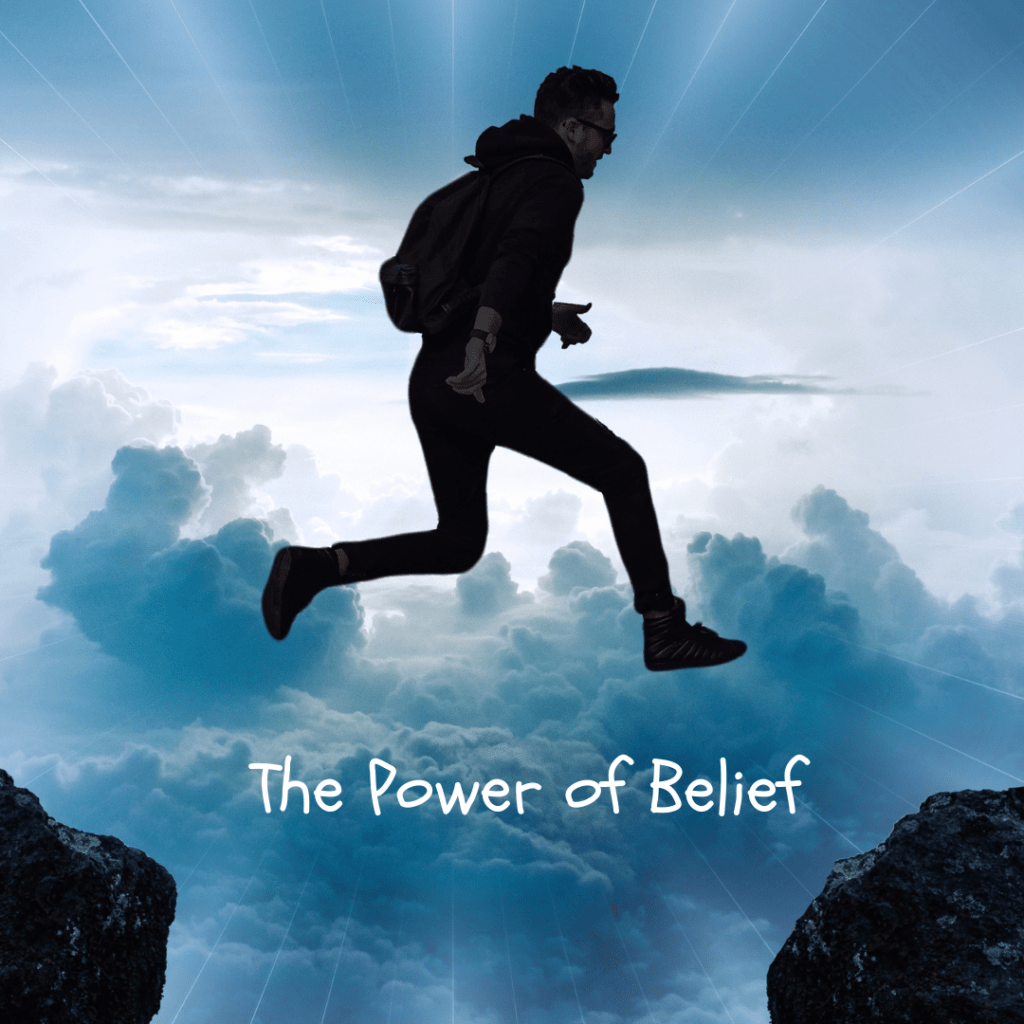
The Power of Belief

We are Powerful Creators. The question is: What Are You Creating?

We all know that our words matter. Whether we compliment or insult someone or anything in between, our words have an effect on the listener. But before words are spoken or written, there’s an alchemy that’s even greater forming: our beliefs.

  The talented author, O’Henry demonstrates this power in his fictional tale, “The Last Leaf.” A young woman is plagued with pneumonia and announces:

 “When the last one [leaf] falls, I must go, too. I’ve known that for three days. Didn’t the doctor tell you?” 

Before the young woman [Johnsy] spoke these words, she had already made a decision between her heart and mind. She is so filled with the belief that she will die once that leaf falls that she even interprets the doctor’s message as a fatal diagnosis. 

Yet the doctor’s words regarding Johnsy’s prognosis were far from tragic:

  “She has a chance, if she wants to live. If people don’t want to live, I can’t do much for them. Your little lady has decided that she is not going to get well.”

   Johnsy’s belief that she isn’t going to get well is determining her prognosis, her future.

   While O’Henry’s example of faith in action is fictional, consider Anita Moorjani (author of Dying to Be Me). At 42, Anita discovered a lump in her shoulder and was subsequently diagnosed with lymphoma. After four years, the cancer had attacked her vital organs, and she was in a coma. 

  Anita writes about her NDE (Near Death Experience) where she became aware of what brought her to the current physical state she was in:

    “I also understood that the cancer wasn’t some punishment for anything I’d done wrong, nor was I experiencing negative karma as a result of any of my actions, as I’d previously believed. It was as though every moment held infinite possibilities, and where I was at that point in time was the culmination of every decision, every choice, and every thought of my entire life. Many fears and my great power had manifested this disease.”

   We all possess the power to believe. Many of us do so unconsciously. We are pharmacists, magicians, creators—our perceptions regularly manifesting our reality.        

     The great news: we don’t need to acquire pneumonia or cancer to alter our beliefs. We can choose to believe that things are always working out for us; we can choose love over fear; we can choose to trust ourselves; we can choose faith.

A Latent Choice

The words and images in our minds render powerful consequences in our lives.

We are all familiar with the word choice and how it applies to our everyday lives. We make choices every day, hundreds of times a day, deciding everything from what foods we will consume to the time we go to bed, and everything else in between.

But there’s an altogether different kind of choice we make just as many times a day that plays perhaps an even greater role in our lives: The choice to heed or change our thoughts. That’s right—our mind seems to want to run the show of our lives, making decisions that are not always in alignment with our heart, our inner knowing. These choices occur, if we aren’t mindful (no pun intended;-) in subtle, often unspoken ways. And if these moments of disregarding our inner knowing are said aloud, they’re often done so out of habit, without reflection or even awareness.

As a secondary English teacher, my ears often hear a barrage of self-proclaimed negative statements from students:

“I hate reading.”

“I’m just not a good reader.”

“I’m not good at writing.”

“I’m a procrastinator.”

“I’m lazy.”

Adults often share their own list of self-ascribed truisms:

“I hate exercise.”

“I have a sweet tooth.”

“I’m a spender.”

“I’m not relationship material.”

“I can’t live without my morning coffee.”

Obviously, the list in both cases could go on ad nauseum. Their minds have created these pejorative statements and, receiving no argument from their inner knowing/heart, believe them. The mind is a neutral repository, offering up whatever information you feed it.

According to Rapid Transformational Therapist and TED talk speaker, Marisa Peer (author of Ultimate Confidence): “Your mind does exactly, specifically what it thinks you want to do….It does what it thinks you want.” If we aren’t experiencing what we, in our heart of hearts wants, we need to consider the words we are saying or thinking.

What if we tell our mind a different story? What if we start priming the cognitive pump, using words we think and say that will garner a pleasurable outcome?

Marisa Peer states that our brain only responds to two things: the pictures we make in our head and the words we say to ourselves.

When we make a choice to collaborate with our brain, we are altering our lives in the direction our hearts want to flow. This is not positive thinking; this is proactive thinking.

There’s a famous quote by Henry Ford: “Whether you think you can, or you think you can’t—you’re right.” Your mind is listening to your thoughts; it’s up to you what you tell it

A Dish for the Soul: Empathy

Dr. Pearcey, a Cognitive Psychologist at the Institute for Spirituality and Health, offers humanity a powerful tool for cultivating empathy.

The world feels more divisive than ever. Whether it’s how to handle COVID-19, the environment, the economy and everything in between, there’s a great deal of polarizing opinions. Yet there’s a fine but distinctive line between having an opinion and holding a grudge against someone for possessing an opposing, alternate viewpoint.

Our newly instated President Biden is palpably aware of the charged air. He asks us to put aside our differences, “uniting to fight the foes we face.” (Source: Vox).

We—a small but powerful pronoun. We are all together; humanity is interconnected in this mysterious life. We affect each other on levels great and small.

The charged air, the divisiveness and polarized opinions with metaphorical haunches raised (and sometimes literal, as we witnessed on January 6th at the Capitol), is fear-based reaction. Underneath the anger and violence is fear and pain. The lashing out is a manifestation of untended to psychological wounds.

Enter Dr. Jeremiah Pearcey, a Cognitive Psychologist at the Institute for Spirituality and Health (www.spiritualityandhealth.org) who offers “education and guidance…helping people reduce stress.” The other week, in honor of Martin Luther King Jr., Dr. Pearcey offered a mindfulness meditation to explore the historical moments leading up to the Civil Rights Movement, cultivating a greater understanding and compassion for others and ourselves. The title of the Zoom event: “A Day of Embrace and Peace.”

The idea of embracing the historical moments leading up to King’s famous “I Have a Dream Speech,” of finding peace in the face of tension seems like an unlikely pairing. Yet the wise Dr. Pearcey’s guided meditation is just what the world needs now.

After several cleansing breaths and a reminder to get comfortable, attendees of the conference, myself included, were guided by Dr. Pearcey’s soothing voice to journey with him. We were asked to imagine ourselves in 1619 as Africans suddenly separated from our families, not understanding the language of our captors, chained together on a boat. Our journey continued to a plantation in 1800, where any courage to leave our “owners” was often extinguished by the site of other African Americans strung up on trees—a visual reminder of the dire risk for our freedom. We were even brought to the recent past, our last breaths labored, as George Floyd’s was, letting our capture know, with the little we had left of life, “I can’t breathe.”

Dr. Pearcey’s meditative guidance offered us a powerful tool for cultivating empathy and one that we can use in our daily lives. The prefix EM literally means in and PATHY means feeling. Under Dr. Pearcey’s steady and compassionate guidance, we were able to experience empathy for our ancestors and the victims of systemic racism today.

Did anxiety surface during the meditation? Anger? Hopelessness? Yes, to it all. Yet the mediation allowed a safe space to observe without judgement, to feel without attaching ourselves to the unpleasant emotions.

It is okay to feel uncomfortable in this life. When we practice self-compassion, we are more apt to feel compassion for others. Unity is a by-product of acknowledging our differences and cultivating empathy. When one of us suffers, we are all suffering; when we acknowledge our discomfort, our anxiety, our anger, or our hurt from a place of compassion, true healing can begin—for ourselves and, by extension, the world around us.

Thank You, Langston Hughes

The talented Langston Hughes reminds us of the choice we all have in his moving story, “Thank You, Ma’am”

Our world is fraught with anxiety, filled with the uncertainty of COVID-19 as our death toll continues to mount. The almost full calendar year of pandemic life has rendered many of us depressed. Factor in the economic stress and growing political tension, it is no surprise that many of us are also quick-tempered. After all, when we are experiencing pain it’s normal to react. 

How we react to pain makes all the difference.

As an English teacher to middle school students, I bear the gift and responsibility of educating minds through literature. Students “buy in” when they can connect a text to both the world around and in them. With the escalating violence at the US Capitol, I felt a need to choose a story that could palpably demonstrate an invaluable commodity: kindness.

 It’s easy to be kind when we are in a good place, when our needs are met and we want for little or nothing; kindness becomes, for many of us, a challenge when we are in pain.

The social activist and prolific Harlem Renaissance writer, Langston Hughes offered my students (and humanity) a short but profound and palpably moving example of kindness in the face of pain with his story, “Thank You, Ma’am.”

The story involves a young teen who attempts to steal a woman’s purse on the street at night. Instead of reporting the boy to the police, the woman brings him home and gives him a warm meal. Her kindness alters the boy’s behavior, his perception and—although we can only infer—the trajectory of his life.

I want my students to know that each of them has the power to make a choice every moment; I want each of us to remember that, despite how painful life can get at times, we always have a choice to be kind. This is not a call to be a doormat. Langston Hughes’ character, Mrs. Luella Bates Washington Jones is portrayed as a strong, no nonsense woman. She is that rare mixture of confident and compassionate, perceptive yet matter of fact.

So, as you go through your morning, your day, your week, your life, regardless of wherever life may take you, channel your inner Mrs. Luella Bates Washington Jones. A simple gesture of kindness can change someone’s life in ways you may never know—including your own.

The Happiness Test

How we treat others is a strong indicator of how we feel about ourselves

A student stormed into class this week, his own personal hurricane. 

“You okay?” I asked.

He shook his head, his eyes filled with a mixture of hurt and anger. “These kids said I looked like a 3rdgrader. They were making fun of my height.”

Despite our masks, I could hear a snort-like laugh emerge from a girl in our classroom. 

Ah, middle school: the realm where cruelty is often the dish du jour. And at that moment, the girl’s laugh caused the boy’s eyes to tear up.

“You want to know a secret?” I asked. The room fell silent. “When someone is mean, it’s about them. They aren’t happy with themselves.”

The girl who had, just seconds before, snorted a laugh said, “I like making fun of people.”

“Maybe it makes you feel good for a little while, but it doesn’t make you feel so good in the long run. Besides, if you were happy, really happy with yourself, you wouldn’t feel a need to make someone else feel bad.”

The girl nodded slowly. While the mask made it hard to “read” her face, my gut says she “got” the lesson.

Despite most of our readers experiencing life post 6th grade, the Middle School Mentality persists: the colleague who passive-aggressively puts you down at a meeting, the ex who continues to threaten court, the driver who tailgates.

The pandemic has caused an incomprehensible domino effect of loss and change around the world; it is not, however, an excuse to be cruel to others, ever.

If you are choosing to read my work, chances are you can relate more to the boy in my classroom than the snort-laughing girl. You are kind, compassionate and proactively trying to live your best life. 

We are spiritual Russian dolls in this life, living with the layers of who we were at each stage and carrying those perceptions with us along the way. We are the 6th grade boy, horrified and angry by other kids’ cruel words; we may also be the girl who laughs at the pain of others because deep down, we aren’t happy with ourselves.

So, the next time someone snaps at you or cuts you off in traffic, consider the “Happiness Test.” When someone is acting out in an aggressive or cruel way, it’s a reflection of THEM, not YOU. The aggressor or bully isn’t happy with themselves. 

The good news? You don’t have to join them. 

The Unspoken Struggle

There is a silent but desperate pain in many teens and tweens in our 21st century world

As a writing teacher, I have the bittersweet gift and responsibility that comes with reading the many hidden thoughts of tweens and teens. An English teacher is often informally consigned to the role of therapist, a safe repository of one’s typically dormant insights. While a significant number of students’ essays contain innocuous content, there are sometimes those red flags that require I share my concern with the school psychologist. Unfortunately, I’m seeing an uptick in red flags.

Since the pandemic, we know there’s been a rise in mental health concern. According to MedScape (www.medscape.com), depression symptoms have “jumped threefold, overdose deaths…increased in 40 states, and 25% of young adults have suicidal ideation.”

It is no surprise then that our adolescents are demonstrating an increase in anxiety and depression as well. This past week, I’d assigned my students the following prompt:

“Write about a time when you have felt or experienced a struggle in your life. Did it resolve? If so, how? If not, why?”

Regardless of ability (i.e. ELL learners, GT students and everything in between), my students were eager to write about their struggles. They were also hungry to be heard. Shortly after posting the assignment, a barrage of emails appeared with the following inquiries:

“This really helps. Can we do more of these prompts?”

“I normally hate writing, but I like this assignment. Can I do more than one?”

“I have a pretty big struggle. Would it be okay if I shared it with our class?”

There’s a sense of safety in writing, in getting our thoughts out onto the page. Writing also creates an immediate sense of being heard—even if it’s just for an audience of one—YOU!

Several of my “red flag” essays end with a request to not share their anxious thoughts and/or depression with anyone. They write of observed or experienced domestic abuse, estranged parents, gender uncertainty, cancer, the loss of a loved one, and bullying. The overarching emotion that binds them is a sense that they are alone and unworthy.

I want to hug each of these students. Instead, I tell them the truth: they are courageous for sharing their stories and they matter. 

The Gift of a New Year

Discover the WHY behind our hunger for a New Year

To say that 2020 was a challenging year is akin to claiming triple bypass surgery is a standard procedure. If someone were to enter our planet for the first time, while we might be inclined to hold their hand, inviting them to sit down as one would to see a therapist after the death of a loved one, where would we begin?? (Besides which, we can’t exactly touch this fictionalized visitor to our planet who really needs a mask–pronto;-)

The pandemic, the protests, the killer bees, the Nashville bombing—words just fail to articulate the unprecedented and harrowing past 365 days.

And yet, COVID-19 didn’t officially hit the worldwide stage until mid-March, so the mask-wearing, toilet-paper-fearing shortage, social-distancing, government-lockdowns weren’t experienced for a full calendar year.

And yet again, it feels like more than a year. After all, the Gregorian calendar began with the sudden and tragic loss of the beloved basketball player, Kobe Bryant on January 26th of the very year we are on the heels of bidding adieu.  

Any great loss plays with our sense of time. So, it’s no wonder that this year, our concept, our understanding of time seems to render us in a perceptual fog of sorts. As of this writing, 341 thousand Americans have died as a result of COVID-19; worldwide, the death toll is over one million.

Humankind is emotionally starving for a return to normal. Deep down, we wonder if we will ever return to normal. If we grow still, we wonder if our pre-COVID world was all rainbows and unicorns anyway. We revel in the silver linings found throughout this roller coaster of a year; we ask ourselves: What is normal anyway??

There is no magic switch that will turn on as we ring in this New Year. Writing 2021 on our academic papers, our checks, our contracts—none of this will stop the rising death toll, increase the limited ICU beds across the county or bring back our departed loved ones. 

So why do we need, more than ever before, to celebrate and welcome in 2021?

New Year’s is a symbol of hope, of a fresh start, of wonderful possibility. It represents turning a corner, closing a door, so we can open up a new one.

A New Year is a gift, an opportunity to try again. It is Time’s present of a new blank page. It is the closest Time offers to an actual restart button.

I encourage you to revel in the gift of possibility this New Year brings. May the symbolism and fact of a new calendar renew your spirit—and by extension, humanity.

The Gift of a Broken Pipe

Happiness can often be found in the least place you’d expect…

Earlier this week, my neighbor called me. 

“Sheri, there’s water coming out from your garage door. Are you home?”

No, I wasn’t home. It was also rush hour, that time of day when you can double the time it takes you to arrive anywhere.

“If you are okay with it, I’d like to call my plumber.”

You know it’s not good when your neighbor is eager to call a plumber on your behalf. 

“The water from your garage is spilling onto my side.

Fortunately, the plumber (Daniel Barrientos—professional and informative) arrived within 30 minutes of receiving my neighbor’s call. 

In order to determine the problem (broken PVC pipes) and implement a solution (new PEX pipes), I would need to go without water for 24 hours.

Going sans water for any amount of time is challenging, but not having water in the midst of a pandemic after working outside both that day and the next, well…let’s just say I wasn’t looking forward to the experience.

Yet losing access to water offered me two unexpected gifts: knowledge and appreciation. Here’s what I learned in those LONG 24 hours:

  1. A toilet requires A LOT of water in order to flush (1.6 gallons per flush—Source: SFGATE). 
  • PVC pipes are inexpensive and easy to work with, but they can only be used for cold water
  • PEX pipes are extremely versatile and temperature tolerant (Source: Olympus Insurance)
  • The PVC pipes on my home were repaired several times before by the previous owner, though never actually replaced

When the water finally, blessedly was turned back on 24 hours later, I started singing, literally singing. There was water to cook with, bathe with, wash my hands with, make coffee with, clean with—it was HEAVEN ON EARTH!

Did I want to experience 24 hours without fresh running water? Absolutely not. But the appreciation I felt after that first shower was a true gift. Washing my hands under running water was a gift. Throwing clothing into my laundry machine to wash felt luxurious. Blow drying my clean, soap-scented hair felt amazing and hearing the steady hum of the dishwasher once again rendered me on top of the world.

Maybe you are reading this considering a metaphorical or literal “broken pipe” in your own life. Sometimes, it’s the broken pipe that helps you feel whole again. Sometimes, we need to lose something in order to recall its invaluableness.

Our perception of life creates our reality. Prior to the broken pipes, I took water for granted, didn’t even notice it. It was only in its absence that I felt parched on every level for it; only with the limited supply in my drawn bathtub that appreciation for it grew.

Losing water, if only for a mere 24 hours, raised my appreciation for it tenfold. When we appreciate something, we are dwelling in a happy space. 

Wishing you a deep and far appreciation of this life and all of its gifts.

Supermarket Sweep Life

There’s an unspoken “Supermarket Sweep” mentality pervading our lives.

            There’s a popular American game show, now in its 10th season, called Supermarket Sweep. The premise involves contestants racing against a timer to acquire “high-dollar goods within their allotted time. The team with the most…[number] of valuable items in their cart wins the $100,000 prize.” (source The Today Show). The appeal of the show is understandable: the rush of adrenaline to get as many items—hopefully more highly-valued than others—into one’s cart in a finite and small window of time (typically 1 minute and 30 seconds).

            The fast-paced game show hosted by the talented and humorous Leslie Jones is, no doubt, entertaining. We may watch, experiencing a hit of dopamine as the contestants race against the clock; we may experience pleasure, living vicariously through the frenzied contestants as they practically leave skid marks, stomping haphazardly through the many grocery aisles.

            Yet somehow, our lives tend to feel like we are no different than those Supermarket Sweep contestants. As a secondary English teacher, I see it with my students: the race to get an assignment in, the rush to read through an essay prompt without taking the time to consider the prompt itself. As a mother, I’ve witnessed the Supermarket Sweep mind spinning—no different than the contestants’ carts speeding down aisle after aisle. The mental guessing game of What If thinking, is its own conveyer belt of recycled worry.

            Adults are far from immune to the Supermarket Sweep mindset. Whether it’s the rush to get food on the table or the desperation to install a pool (and everything in between), when we put ourselves on this self-imposed time limit to get things accomplished, we run the risk of a few things:

  1. A lack of self-awareness
  2. Greater physical stress on the body
  3. An affinity for anxiety and/or depression

Without knowing it, I spent a good deal of my young adulthood with the Supermarket Sweep mentality as a steady companion. My cart was regularly filled with items that I didn’t necessarily want but falsely believed I needed to make me feel like a “winner”: the right college, a boyfriend, friends—the key was to have these “things” so that I could feel good. Say yes now was my unexamined mentality. It didn’t matter how I felt about what went into my spiritual cart; all that mattered was that I had put something in there.

I encourage you to consider the items you may be placing in your spiritual cart. Choose them carefully and consider the possibility of removing items that no longer serve you. Your life matters and while we each have an expiration date on this planet, we are not in a race or competition with Time. Care about what goes into your spiritual cart; the only appraiser of value for your cart’s items is you.